Sifuna’s 2027 matrix: Why every opposition presidential hopeful suddenly needs him
By Aloys Michael, June 20, 2026When Jubilee Deputy Party leader Fred Matiang’i quietly sought an audience with leaders of the Linda Mwananchi movement, it appeared at first glance to be just another opposition unity meeting ahead of the 2027 General Election.
But beneath the surface, the meeting revealed a dramatic shift in the balance of power within the opposition.
For years, Kenya’s opposition politics has revolved around seasoned political heavyweights, leaders with presidential ambitions, vast political networks and decades of experience in government.
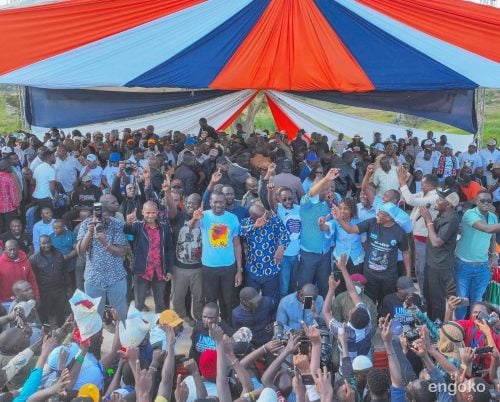
Today, however, many of those same leaders are increasingly being forced to reckon with a political reality few anticipated: the growing influence of Nairobi Senator Edwin Sifuna and the movement he helped transform from an internal ODM rebellion into one of the country’s fastest-growing opposition formations.
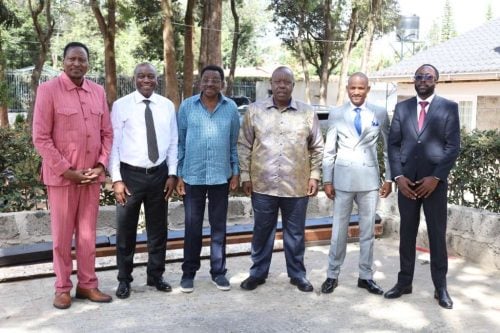
That reality was on display on Tuesday when Matiang’i, widely seen as Jubilee Party’s preferred presidential candidate, met Siaya Governor James Orengo, Embakasi East MP Babu Owino and Kisii Senator Richard Onyonka, key figures associated with the Linda Mwananchi movement.
Yet the significance of the meeting lies not in the endorsement being sought, but in who is being asked for it.
Just a year ago, many of the politicians now leading Linda Mwananchi were viewed as junior players in opposition politics. Today, presidential hopefuls are increasingly treating them as indispensable partners.
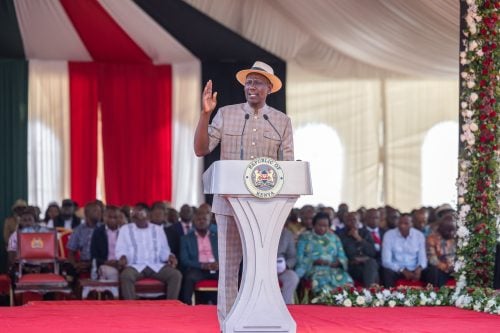
The rise of a new power centre
What began as an internal push to reclaim the Orange Democratic Movement (ODM) from leaders perceived to be sympathetic to Ruto has rapidly evolved into a national political movement.
Led publicly by ODM Secretary-General Edwin Sifuna and backed by figures such as Governor Orengo, Senator Godfrey Osotsi and Babu Owino, the faction has steadily expanded beyond ODM’s traditional support base.
Its influence has been particularly noticeable among younger voters, many of whom see Sifuna as a fresh political face unburdened by the baggage associated with previous administrations.
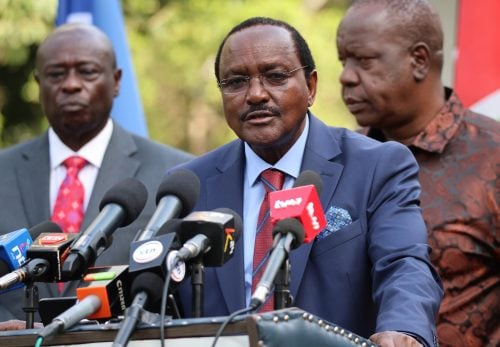
That growing popularity is beginning to unsettle the opposition’s established order. Wiper Patriotic Front leader Kalonzo Musyoka wants the opposition ticket, and Matiang’i wants the ticket
On the other hand, Former Deputy President Rigathi Gachagua is conducting consultations aimed at determining who should carry the opposition flag. Former Chief Justice David Maraga has declared his own presidential ambitions, and People’s Liberation Party (PLP) boss Martha Karua continues to position herself as a reformist alternative.
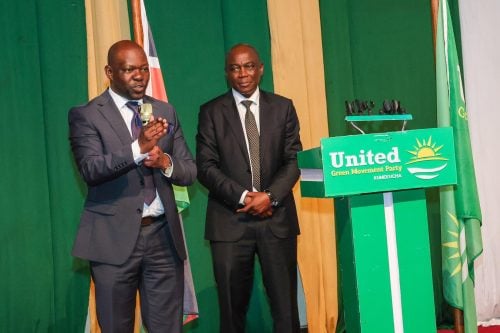
Yet increasingly, all roads appear to lead back to Sifuna.
Demanding a place on the ticket
Unlike previous opposition movements that ultimately rallied behind established political figures, Linda Mwananchi leaders are openly insisting that their growing influence must translate into representation at the highest level.
“We will soon retreat to get views of our people on how they want us to engage going into the elections. We have already made it clear that we are open to talks with every other political player, but President Ruto,” Funyula MP Wilberforce Oundo said.
“Our very bare minimum is that one of us has to be on the ticket. That person is Sifuna. His face and name must be on the presidential ballot.”
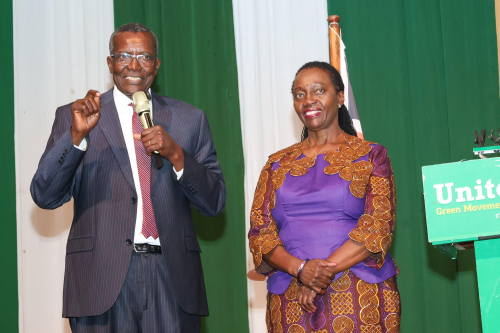
Unlike traditional coalition talks where smaller groups negotiate for parliamentary seats or government positions, Linda Mwananchi is increasingly demanding influence at the very top of the ticket.
The emergence of Sifuna has also exposed a deeper debate within opposition politics: whether the coalition should once again be led by familiar faces or embrace a new generation of leaders.
Saboti MP Caleb Amisi captured that sentiment during Maraga’s State of the Nation address.
“They should all come and support people like Maraga. If Sifuna is not going to be a presidential candidate, the only person I will allow Sifuna to deputise is Maraga. We can’t keep on doing the same things the same way and expect different results,” he said.
Although Amisi later joined opposition rallies attended by Kalonzo Musyoka and Rigathi Gachagua in Western Kenya, he maintained that Linda Mwananchi’s original mission was to create space for new leadership.
“I only welcomed them because they came to my constituency. I still believe that they should support a new face if we must continue with the idea of change,” he said.
His remarks reflect a growing sentiment among sections of the opposition that defeating President Ruto may require more than assembling familiar political alliances.
Coalition talks meet a new reality
Both Linda Mwananchi and the United Opposition have publicly expressed a desire to front a single presidential candidate.
Meanwhile, Linda Mwananchi is planning an aggressive nationwide mobilisation campaign covering at least 24 counties before making a major political declaration in Nairobi in September.
The declaration is expected to address whether the movement will field its own presidential candidate, produce a running mate or formally join a broader opposition coalition.
For now, Sifuna has remained deliberately ambiguous about his own plans.
He has neither declared a presidential bid nor confirmed whether he will seek re-election as Nairobi senator.
Yet his influence continues to grow. During a recent rally in Machakos County, he hinted at ongoing coalition negotiations while stressing the need for opposition unity.
“If Kalonzo goes to the presidential ballot alone, he can still defeat Ruto. If Sifuna goes to the presidential ballot alone, he can still beat Ruto. However, to make the work easier, we have to unite. We want to give this person one team,” he said.
Recent polling by TIFA suggests that opposition supporters increasingly view Sifuna as a viable national figure, with a Kalonzo-Sifuna ticket emerging as one of the strongest combinations tested.
For much of the past two years, opposition leaders have framed 2027 as a battle against President Ruto.
Increasingly, however, a different challenge is emerging.
The opposition must now decide how to accommodate a younger political movement that is no longer content to simply endorse candidates chosen by the old guard.
The symbolism of Matiang’i seeking support from Linda Mwananchi may therefore prove more significant than the meeting itself.
It signals a reversal of political gravity. For the first time since the end of the Moi era, Kenya’s opposition may be facing a generational succession battle before it can face an incumbent president.
And at the centre of that battle stands Edwin Sifuna, the candidate many never planned for, but increasingly cannot ignore.