Senator Sigei backs PAYE relief for low earners amid tax jitters
By Aloys Michael, February 3, 2026Bomet Senator Hillary Sigei has thrown weight behind the government’s proposal to exempt Kenyans earning below Ksh30,000 from paying Pay As You Earn (PAYE) tax, saying the move reflects a listening government and delivers on promises made to low-income earners.
Speaking during an interview on a local TV station on Tuesday, February 3, 2026, Sigei dismissed claims that the relief is coming too late, insisting the focus should be on how fast Parliament will act.
“In this case, we are dealing with about 1.5 million Kenyans, and it is a welcome move as we go down the details of do we save Ksh900 on earnings on one hand, there is still a tax aspect of Ksh1275. Globally, there is a positive trajectory towards supporting these Kenyans who are earning less than thirty thousand shillings,” Sigei argued.
“To me, the proposal is not coming late in the day. What we should be looking at is how long it will take for this proposal to be taken to Parliament and how Parliament will deal with it.

This comes after Treasury Cabinet Secretary (CS) John Mbadi announced the government’s plan to exempt over 1.5 million employed Kenyans earning below Ksh30,000 from paying PAYE tax.
Speaking in Meru on Monday, January 2, 2026, Mbadi said the Ministry will present the Tax Laws Amendment Bill before Parliament for approval of the reforms ahead of the publication of the Finance Bill 2026.
“We have agreed with the President that low-income earners in this country should be given a reprieve. He has directed me to take it to Parliament. I don’t think there is any MP who will oppose that,” he said.
“We have said the government should come for me and leave that person. Anybody earning Ksh.30,000 and below in Kenya should not pay PAYE. You pay zero.”
Moreover, Sigei has urged lawmakers to fast-track the process to avoid politicising the proposal.

“I hope Parliament will deal with it in the fastest time possible so that we avoid the temptation to say that it is a political move,” he said.
However, the senator acknowledged that while Kenyans are still grappling with deductions such as the Housing Levy and the Social Health Authority (SHA) contributions, these should be viewed as long-term investments rather than losses.
“You may feel like you are losing five hundred or nine hundred shillings, but remember you’re investing in another service,” he said,
The senator emphasised that taxation remains necessary for national development but argued that the proposed PAYE relief strikes a fair balance.
“There is no development, no growth, no government that can progress without taxation. What we are looking forward to is giving Kenyans below this tax bracket extra funds in their pockets,” Sigei stated.
According to him, exempting low-income earners from PAYE would help restore confidence among Kenyans that the government is committed to protecting those at the bottom of the income scale.
“It is about making people feel that a promise made by a government that listens is being fulfilled,” he said.
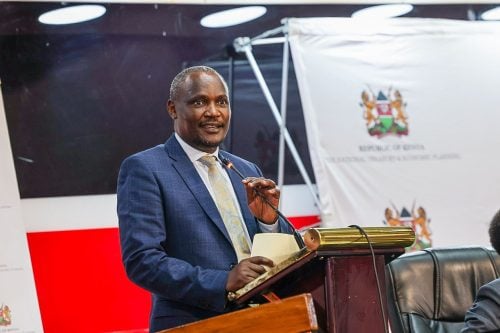
Mbadinomics
According to the National Exchequer, about 3,650,165 are salaried and 1.5 earn Ksh30,000 and below.
Mbadi added that the Bill will also include a 5 per cent PAYE reduction proposal for Kenyans earning between Ksh30,000 and Ksh50,000.
“We are reducing the tax rate by 5 per cent to 25 per cent. We are trying to put some money in your pockets,” he added.
Currently, the PAYE tax cap affects Kenyans earning as low as Ksh24,000, as experts have argued that easing the financial pressure on salaried workers could revive consumption and stabilise the economy weighed down by weak household demand.
If passed, the proposal could offer immediate relief to low- and middle-income earners and help revive household consumption in an economy strained by rising taxes and weak demand.