Advertisement
Senator Karungo slams Ruto’s govt after EPRA reduces diesel prices by Ksh10
Tuesday 19th May, 2026 12:53 AM|

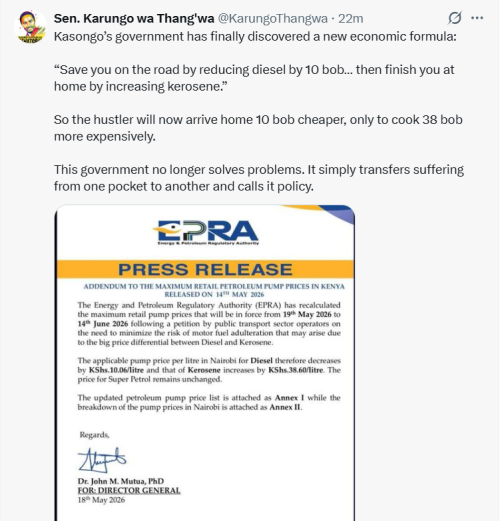
Kiambu Senator Karungo has criticised the Energy and Petroleum Regulatory Authority (EPRA) decision to reduce the maximum retail price of diesel by Ksh10.06 per litre, describing it as an “incomplete relief” that shifts the burden of fuel costs between different sectors of the economy.
In a post on X dated May 19, 2026, the senator said: “Kasongo’s government has finally discovered a new economic formula: ‘Save you on the road by reducing diesel by 10 bob… then finish you at home by increasing kerosene.’ So the hustler will now arrive home 10 bob cheaper, only to cook 38 bob more expensively. This government no longer solves problems. It simply transfers suffering from one pocket to another and calls it policy.”
The EPRA adjustment, effective from midnight on May 19 to June 14, 2026, set diesel at Ksh232.86 per litre in Nairobi, with super petrol remaining at Ksh214.25 per litre and kerosene rising to Ksh191.38 per litre. The regulator said the revision followed stakeholder consultations aimed at addressing fuel adulteration risks linked to the price gap between diesel and kerosene.
Fuel pricing adjustment and government position
Energy Cabinet Secretary Opiyo Wandayi stated that the government’s approach is intended to reduce the price disparity between diesel and kerosene, which has contributed to fuel adulteration affecting diesel engines used in transport and logistics.
You Might Also Like


“For prudence purposes… we are going to bridge the gap between the prices of diesel and petrol. That would mean the price of kerosene and petrol would have to go higher as that of diesel comes lower,” Wandayi said during a press briefing at Transcom House.
Transport stakeholders rejected the proposal, maintaining that no agreement had been reached during negotiations and confirming that strike action would continue.
The nationwide transport strike began on May 18, 2026, involving matatu operators, truck drivers, boda boda riders and other stakeholders. Demonstrations led to road blockades, business closures and disruption of learning in several regions.
Interior Cabinet Secretary Kipchumba Murkomen reported four deaths, more than 30 injuries and 225 arrests in connection with the unrest. Authorities also confirmed injuries to police officers during confrontations.
Global oil pressures and economic context
The fuel price changes have been linked to global market disruptions, including tensions affecting shipping routes through the Strait of Hormuz, which have increased international crude oil prices. Kenya, which relies heavily on imported petroleum products, has experienced rising landing costs reflected in recent price adjustments.
Deputy President Kithure Kindiki and Treasury Cabinet Secretary John Mbadi have stated that the increases are influenced by global conditions, noting that without intervention, prices could have risen significantly higher. They also cautioned that reducing taxes such as VAT and the Road Maintenance Levy would affect government revenue.
Transport stakeholders, including the Law Society of Kenya, continue to call for broader reforms in fuel taxation and pricing structures.
Author
Latest News






Advertisement
More on Inside Politics