Advertisement
MPs begin scrutiny of bill to strengthen protection of classified State information
Friday 03rd July, 2026 07:13 AM|

The National Assembly’s Departmental Committee on Communication, Information and Innovation has begun scrutinising a proposed law aimed at strengthening the protection of sensitive state information while safeguarding Kenyans’ constitutional right to access public information.
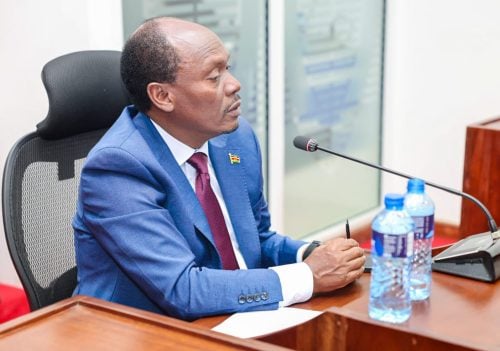
The committee, chaired by John Kiarie, on Thursday, July 2, 2026, met Owen Baya, the sponsor of the proposed Access to Information (Amendment) Bill, 2025, as lawmakers commenced deliberations on legislation that could reshape how government information is classified, protected and later released to the public.
Presenting the proposal, Baya said the bill seeks to fill a legal gap by establishing a comprehensive framework for classifying, reviewing, protecting, and declassifying sensitive information held by state institutions.
“This legislative proposal seeks to strike an appropriate balance between the constitutional right to access information and the need to protect information whose disclosure could undermine national security or the interests of Kenya,” Baya told the committee.
You Might Also Like


He argued that although Article 35 of the Constitution guarantees access to information, the current law provides limited guidance on how State agencies should classify and safeguard information whose disclosure could threaten national security.
“The current law guarantees access to information but offers limited guidance on how state agencies should classify and protect information whose disclosure could prejudice national security. This legislative proposal fills that legislative gap while preserving transparency and accountability,” he said.
Inside the proposed law
The proposed law introduces new legal definitions, including “classified information”, “classifying authority”, “declassification”, “downgrading”, and “sensitive information”, and creates a new legal framework that requires all classified records to be properly marked, registered, periodically reviewed, and automatically declassified after 30 years unless there are lawful grounds for continued protection.

It also establishes four levels of classification, Top Secret, Secret, Confidential, and Restricted, and creates penalties for unauthorized disclosure of classified information.
Defending the proposal, Baya said Kenya’s rapidly evolving digital environment demanded new legal safeguards, warning that technological changes had fundamentally altered the risk of leaking sensitive government information.
“Government agencies sometimes prefer to stick to the old ways. But cyberspace has expanded, new technologies have emerged, and new threats continue to arise. We must respond to these realities,” he said.
Baya singled out the increasing use of personal email accounts and messaging applications for official government communication, saying such practices expose Kenya to cyber attacks and compromise national security.
Drawing parallels with the United States, he cited controversies over senior government officials’ use of private email servers.
“Why is using personal email dangerous? Because government information can easily be shared or compromised. Personal accounts do not have the security systems that government platforms have.”
Exposing sensitive information
He warned that hacked personal accounts belonging to senior government officials could expose highly sensitive State information.
“Imagine if the Cabinet Secretary for Foreign Affairs or senior Treasury officials conducted official business via personal email or WhatsApp. If those accounts were hacked, confidential government information could easily end up in the wrong hands,” he noted.
He added that cyberattacks targeting government systems are more frequent than many Kenyans realise, noting that legislation must be accompanied by efforts to address broader social challenges such as unemployment among skilled ICT professionals.
Author
Emmanuel Rono
Rono is a digital journalist with a proven track record in newsroom leadership and content creation. Currently a Digital Writer for People Daily Digital, Emmanuel’s career is rooted in a lifelong passion for storytelling. Let's talk here: [email protected] or [email protected]
View all posts by Emmanuel RonoLatest News







Advertisement
More on News