Advertisement
Senator Kajwang explains lessons Kenyan politicians can learn from Keir Starmer’s resignation as UK PM
Monday 22nd June, 2026 01:26 PM|
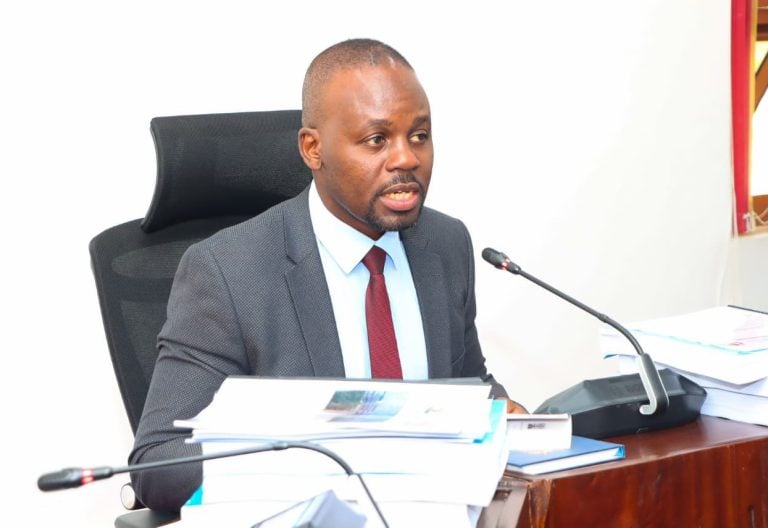
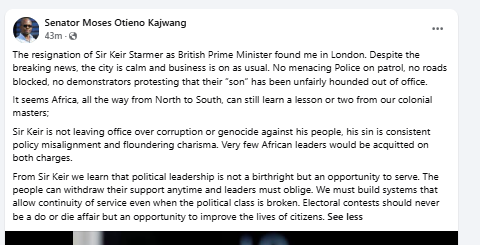
Senator Moses Otieno Kajwang has said the resignation of British Prime Minister Sir Keir Starmer is a reminder that political leadership is not a permanent entitlement but a responsibility that depends on public trust.
In a Facebook post shared on Monday, June 22, 2026, while he was in London, Kajwang said the city remained calm despite the political shock, with no signs of unrest or disruption.
“The resignation of Sir Keir Starmer as British Prime Minister found me in London. Despite the breaking news, the city is calm, and business is on as usual. No menacing police on patrol, no roads blocked, no demonstrators protesting that their ‘son’ has been unfairly hounded out of office,” he wrote.
Kajwang contrasted the situation with political reactions often seen in parts of Africa, suggesting that leadership transitions can be handled more peacefully and institutionally in established democracies.
You Might Also Like

He said Starmer was not leaving office due to corruption or serious wrongdoing but because of political disagreements and leadership questions within his party.
“Sir Keir is not leaving office over corruption or genocide against his people; his sin is consistent policy misalignment and floundering charisma. Very few African leaders would be acquitted on both charges,” he wrote.
The senator added that political office should never be treated as a permanent right but as a public trust that can be withdrawn by voters or party structures.
“From Sir Keir we learn that political leadership is not a birthright but an opportunity to serve. The people can withdraw their support anytime, and leaders must oblige,” Kajwang said.
He called for stronger democratic systems that allow leadership continuity even when political leaders fall out of favour, warning against turning elections into high-stakes confrontations.
“We must build systems that allow continuity of service even when the political class is broken. Electoral contests should never be a do-or-die affair but an opportunity to improve the lives of citizens,” he added.
Kajwang’s remarks come after Sir Keir Starmer stepped down as British Prime Minister and Labour Party leader, ending a tenure marked by major political reforms and a shift in the party’s direction.
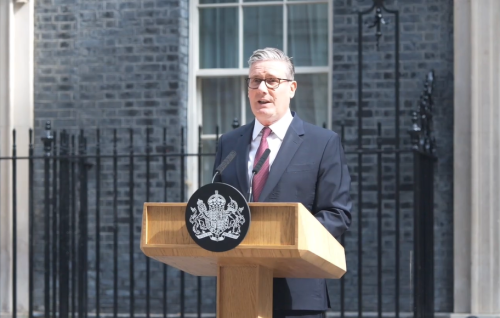
Starmer defends record in office
In his resignation statement, Sir Keir Starmer said his time in office focused on rebuilding both the Labour Party and public trust in government. He described the past two years in power as a period of major change, arguing that his administration had delivered measurable progress across the economy and public services.
“Look at what we’ve achieved in just two years. An economy that is stronger, growing faster than our peers,” Starmer said.
He said his government had overseen rising wages, falling NHS waiting lists, and higher levels of investment in infrastructure projects. According to him, these changes were part of a broader effort to restore confidence in the direction of the country after years of instability.
“Wages rising faster than inflation in every single month since we came to power. Investment secured, infrastructure being built, an end to austerity,” he said.
Starmer also listed reforms in workers’ rights, housing protections, defence spending, and social policy. He pointed to measures aimed at strengthening employment protections, improving conditions for renters, and expanding support for children in poverty.
On defence and foreign policy, he said the government had increased spending and strengthened Britain’s position on the global stage. He also highlighted continued support for Ukraine and renewed engagement with European allies.
“Our reputation in the world is restored, with Britain once again standing up for decency, respect, and the rule of law,” he said.
Starmer reflects on party journey
Beyond policy, Starmer reflected on the political journey that led to Labour forming a government after 14 years in opposition. He said the party had overcome deep internal divisions and had rebuilt its credibility with voters.
He then confirmed that he accepted the decision of his parliamentary party to replace him as leader.
“I have heard the answer of my parliamentary party to that question, and I accept that answer with good grace,” he said.
Starmer said he would remain Prime Minister until the Labour Party completes its leadership process. The party is expected to open nominations on July 9, with a new leader to be in place before Parliament returns in September.
He also promised an orderly transition of power and said he would support his successor fully during the handover period.
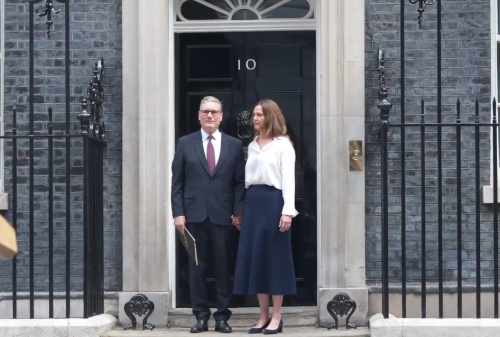
Starmer ended his statement by thanking party colleagues, Downing Street staff, and the civil service. He also spoke personally about his family, saying he would spend more time with his wife and children after leaving office.
“When I leave the biggest job in the country, I shall spend more time on the most important job, being the best husband I can to my fantastic wife, Vic… and being the best dad I can to my beautiful children, who are my pride and my joy.”
Author
Kenneth Mwenda
Kenneth Mwenda is a business, sports, and politics digital writer with over seven years of experience in journalism, covering breaking news, feature stories, and in-depth analysis across a range of beats.
For inquiries, he can be reached at [email protected]
View all posts by Kenneth MwendaLatest News


Advertisement
More on Inside Politics