Advertisement
Salasya takes on Ruto over claims that dictatorship drives development
Tuesday 27th January, 2026 10:41 PM|

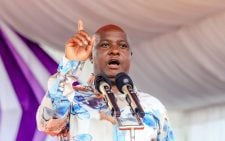
Mumias East MP Peter Salasya has pushed back against remarks by President William Ruto suggesting that authoritarian leadership can be a pathway to national development, arguing that Kenya’s progress depends on strong institutions, not coercive power.
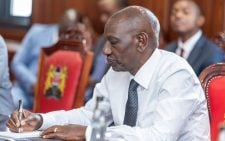
In a statement posted on X on Tuesday, January 27, 2026, Salasya responded directly to comments made by the president, who said: “The countries that have succeeded, either they have succeeded because they are a dictatorship, where once the leader says we are going here, you cannot say no, and you cannot question. That is one way of moving the country forward.”

Salasya rejected that view, saying history in East Africa shows that long-serving and authoritarian governments have not delivered broad-based prosperity.
“History demonstrates that authoritarian rule is not a prerequisite for development, particularly in East Africa,” he wrote.
You Might Also Like


He cited Uganda as a key example, noting that the country has been under the same leadership for more than four decades but remains economically strained and institutionally weak. He also pointed to Tanzania, which experienced years of centralised and authoritarian governance yet continues to face deep structural development challenges.
According to Salasya, longevity in power, without institutional accountability, has not translated into broad-based prosperity.
Institutions over strongmen
Turning to Kenya, the legislator said the country’s political history shows that power is temporary and leaders come and go, while the state endures. He observed that even during the era of strong executive control under former president Daniel arap Moi, the system still recognised the limits of political power.
“He governed and left office. President Kibaki governed and left office,” Salasya said.
Salasya singled out former president Mwai Kibaki’s administration as proof that development does not require authoritarianism. He described Kibaki’s leadership as technocratic and institutional rather than coercive.

During that period, Kenya introduced Free Primary Education, improved pay and formalisation in the public service, and moved police salaries from cash payments to bank transfers. Major infrastructure projects, including the Thika Superhighway, were also rolled out.
“These gains were achieved without coercion, intimidation, or personalisation of power,” Salasya wrote, adding that the experience underscores a constitutional truth: development flows from institutions, not from force.
He warned that attempts to govern Kenya through excessive centralised control often backfire. According to the MP, such approaches lead to political isolation, institutional paralysis and a weakened executive rather than stability.
Salasya also criticised the rollout of the Social Health Authority (SHA), saying it showed the risks of forcing policy through without proper consultation or oversight. He argued that the system was implemented before key structures were ready, including provider payment frameworks and effective parliamentary scrutiny.
“The resulting strain on the healthcare system is not accidental; it is a foreseeable consequence of governance without accountability,” he said.
Author
Kenneth Mwenda
Kenneth Mwenda is a business, sports, and politics digital writer with over seven years of experience in journalism, covering breaking news, feature stories, and in-depth analysis across a range of beats.
For inquiries, he can be reached at [email protected]
View all posts by Kenneth MwendaLatest News





Advertisement
More on Inside Politics