Advertisement
Natembeya: I’ll reform state honours system if elected president
Thursday 12th March, 2026 06:48 AM|

Trans Nzoia Governor George Natembeya has vowed to overhaul Kenya’s state honours system if he becomes president, arguing that the process of awarding national decorations has become politicised and lacks transparency.
Speaking during an interview with a local TV station on the night of Wednesday, March 11, 2026, Natembeya criticised the manner in which the government confers state honours.
He cited the recent decision to award the Chief of the Order of the Golden Heart (CGH), one of Kenya’s highest national decorations, to the late opposition leader Raila Odinga, just after his death.
According to the governor, the CGH honour is traditionally reserved for the president of Kenya or visiting heads of state, raising questions about the timing and justification of the award given to the late Raila.
You Might Also Like


“If I become the president, I will change the way state honours are given,” Natembeya said.
“They gave Raila CGH, which is reserved for the president of Kenya or visiting heads of state. Why didn’t they give him when he was alive? Why this tokenism?”
Natembeya said his administration would introduce clear guidelines explaining why particular individuals are recognised with national honours.
“So we will change that, and Kenyans will know that this one has been given this, and these are the reasons,” he said.
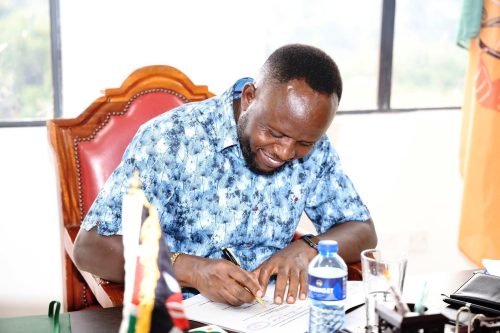
He added that the recognition system should reflect merit and documented national service rather than political considerations.
Previous state awards
The governor also questioned some previous awards, suggesting that the honours system has sometimes been applied inconsistently, questioning the Head of State Commendation (HSC) that was once awarded to Martin Kamotho, popularly known as Githeri Man, just for eating githeri as he queued to vote during the 2017 general elections.
Kamotho was photographed eating githeri, making him an internet sensation, and was later honoured by the government.
“For me, I will change that, and those things don’t even add value to me. Even there is a guy who was just eating githeri, and he was given something,” Natembeya said.
Delayed recognition
This is not the first time Natembeya has criticised the state for honouring Raila after his death.
On October 20, 2025, he lamented the timing of the award, expressing dismay at what had prevented his recognition with Kenya’s highest civilian honour while he was alive.
“Today I listened to the president’s speech and how he posthumously awarded Raila with the CGH honour. The honour is reserved only for the presidents. But it has been bestowed upon him,” he stated.
“We are a pretentious, incorrigible country. What prevented the president from honouring Raila with that CGH honour when he was alive?. Of what value is it for now? He would not have gone around hanging it around his neck,” he posed.
The politician cautioned that only through an honest reflection will Kenya be able to confront and address its challenges.
Raila’s posthumous state award
Raila was among the 2025 Mashujaa Day honourees selected through a nationwide nomination and vetting process led by the National Heroes Council, in collaboration with the Ministry of Interior.
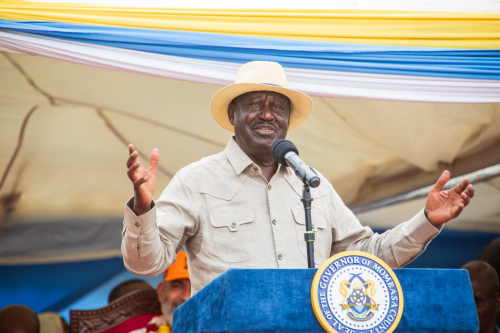
The exercise is guided and directed by the National Heroes Act, 2014.
Nominations came from county governments, public institutions, civil society, and ordinary citizens. Nominees were judged on their contributions to Kenya’s unity, progress, and heritage, with integrity and impact being key criteria.
The former Prime Minister joined Mwai Kibaki, Wangari Maathai, the founding President Jomo Kenyatta, and Daniel Toroitich Arap Moi, who were honoured with lifetime achievement honours, albeit posthumously.
Author
Mustafa Juma
View all posts by Mustafa JumaLatest News


Advertisement
More on Inside Politics