Advertisement
MPs want Kiambu delinked from wider Mt Kenya region
Thursday 07th August, 2025 04:00 AM|

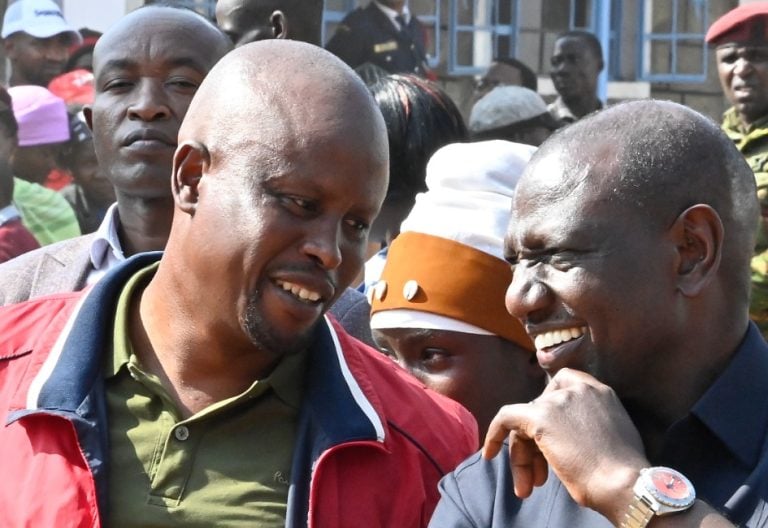
A group of parliamentarians from Kiambu are calling for the county’s formal recognition as a stand alone region, separate from the wider Mt Kenya bloc.
The MPs argue that Kiambu’s large population and unique development warrant special treatment from the national government, including a greater share of resources.
Led by Gatundu South MP Gabriel Kagombe, the lawmakers contend that Kiambu’s population of more than 2.7 million, according to the 2019 Kenya Population and Housing Census, surpasses that of Nyeri, Laikipia, Embu and Kirinyaga counties combined.
The combined population of those four counties stands at about 2.5 million—Nyeri (759,164), Laikipia (518,560), Embu (608,599) and Kirinyaga (610,411).
Lobby Parliament
You Might Also Like
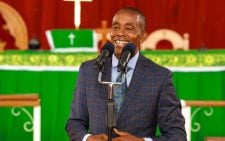
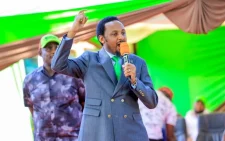
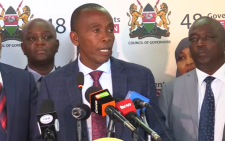
Speaking during a public engagement at Karatu village in Gatundu South, Kagombe was joined by Gatundu North MP Elijah Kururia, Thika Town’s Alice Ng’ang’a, Kabete’s Githua Wamacukuru, Kiambaa’s Njuguna Kawanjiku, and Kiambu Woman Representative Anne Wamuratha.
The MPs said they would lobby Parliament and the Executive to consider Kiambu as a distinct region in policy formulation and budgetary allocations.
The leaders argued that Kenya’s resource allocation formula must take into account population density and urban development pressures.
With Kiambu’s rapid growth and proximity to Nairobi, the county faces unique challenges in infrastructure, healthcare, housing, and social services.
The legislators insisted that Kiambu will enjoy greater visibility in national policy discussions and potentially secure higher funding allocations besides allowing it to plan development more effectively and address its unique challenges without being overshadowed by the broader Mt Kenya region’s priorities.
“Kiambu’s population is not only large but also highly urbanised, which creates a higher demand for public services. We cannot continue to be lumped together under a regional framework that does not reflect our realities. We deserve direct recognition and resources to match our needs,” stated Kagombe.
Alice Ng’ang’a noted that Kiambu is a critical economic hub that supports Nairobi’s workforce and industries, yet funding from the national government remains inadequate.
“We feed Nairobi with labour, food and business support. Yet our roads, hospitals and schools are overstretched. A stand alone regional status would help us plan and develop in line with our population growth,” she said.
Her sentiments were echoed by Kururia who insisted that Kiambu deserves special treatment, owing to its population, development needs, geographical position and urbanisation challenges.
“Kiambu is unique in all manner of ways and should be treated as a stand-alone region. More resources should be allocated to it to suit its development needs,” stated the MP.
The push for regional recognition also carries a political dimension after the MPs reaffirmed their support for President William Ruto, unlike other parts of the region where a majority of politicians have seemingly abandoned Ruto for his former deputy Rigathi Gachagua.
With a stand-alone region, the MPs hope to better consolidate influence ahead of the 2027 elections.
They dismissed efforts by some Mt Kenya politicians to front alternative presidential candidates for 2027, insisting that Kiambu remains committed to Ruto’s leadership.
“While some areas in Mt Kenya may be toying with the idea of fielding their own candidate, Kiambu is clear, we stand with the President,” added Kururia.
Remain united
Wamuratha urged Kiambu residents to remain united to strengthen their bargaining power at the national table.
“This is not the time for political divisions. It is time to rally behind one leader, speak with one voice, and demand our fair share,” she said.
The MPs also took issue with the opposition leaders, accusing them of fanning political animosity instead of focusing on development.
“They have been in government before and achieved nothing significant for the people. Now they want to blame others for the same problems they failed to fix. The people are tired of political rhetoric. They want solutions that this administration is working hard to fix,” said Kagombe.
Despite the political undertones, the lawmakers acknowledged that their own performance will ultimately be judged by the development projects they deliver.
They called on fellow leaders, in government and opposition, to focus on service delivery instead of constant politicking.
“Kenyans will not remember the political slogans we shouted. They will remember whether we built roads, expanded schools, improved hospitals and created jobs. That is the scorecard we must work on,” noted Wamuratha.
Author
Mathew Ndungu
View all posts by Mathew NdunguLatest News

Advertisement
More on Inside Politics