MP Ngogoyo questions Ruto’s church condemnation after Gachagua’s Othaya attack
By Aloys Michael, February 2, 2026Kajiado North Member of Parliament (MP) Onesmus Ngogoyo has criticised President William Ruto’s condemnation of recent attacks and disruptions in churches, questioning the sincerity of the Head of State’s call to protect places of worship amid rising political tensions.
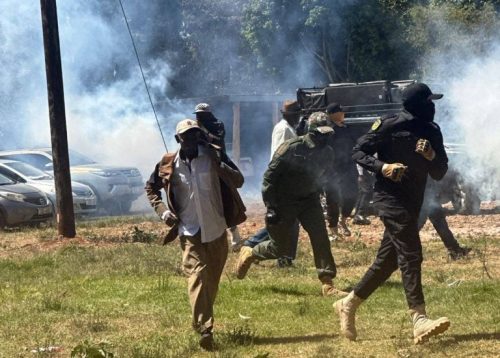
Ngogoyo’s remarks come against the backdrop of growing concern over the politicisation of churches, following a dramatic incident on January 25, 2026, at ACK Church Witima in Othaya, Nyeri County, where former Deputy President Rigathi Gachagua was attacked during a church service.
Police, accompanied by armed goons, lobbed teargas in and around the church compound, triggering widespread outrage from religious leaders and civil society.
While President Ruto has since appealed to Kenyans to uphold the sanctity of places of worship, Ngogoyo argues that the President’s condemnation rings hollow when viewed against recent actions by the state.
“Even if he doesn’t mean it, why would he see what you’d expect from a sitting president?” Ngogoyo posed during an interview on a local TV station on Monday, February 2, 2026.
In a rebuttal to Ruto, who warned against turning churches into arenas for political rivalry, hate and division, Ngogoyo said the attack on a church represents a moral red line that should never be crossed in any society.
“Kenya has had bad incidents before, but the worst is when this happens to a church,” he said. “When it happens in a place of worship, it shows that something is missing; there is no conscience somewhere in society,” the MP said.
The legislator drew comparisons with conflict zones elsewhere, arguing that churches and mosques have historically been respected even during war.
“In Southern Sudan, in all the fighting, churches and mosques are places of refuge. Even when militants are fighting, if you find refuge in a church, that church becomes a safe place,” Ngogoyo observed.
Ruto responds to Gachagua
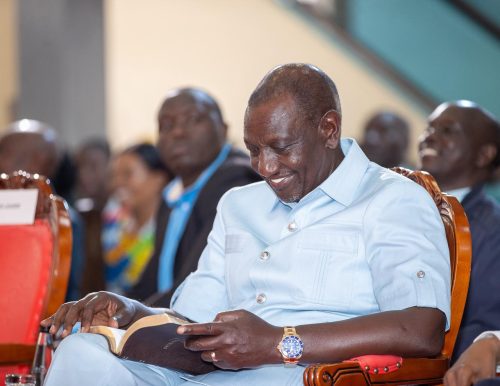
Moreover, President Ruto, speaking on Sunday, February 1, 2026, during a service at PEFA All Nations Gospel Church in Gikomba, Nairobi, had directed security agencies to ensure churches are protected from what he termed unnecessary, useless, and retrogressive politics.
He emphasised that religious spaces must remain centres of peace, spiritual reflection and unity.
“Church is a place of respect. Politics can be done, but the altar is a place of respect; we should not politicise there or spread hate and disagreements,” Ruto said.
However, Ngogoyo insists that such statements must be matched with action, particularly by security agencies that answer to the executive.
“You cannot on one hand preach respect for the altar, and on the other hand allow teargas to be lobbed at worshippers,” he said, adding that leadership demands consistency and moral clarity.
The Othaya incident has drawn fierce condemnation from the church fraternity, with the National Council of Churches of Kenya (NCCK) accusing police of violating the Constitution, which guarantees the right to worship freely.
In a statement, the NCCK described the teargassing of worshippers as deliberate, unwarranted, and unprovoked, calling it not only illegal but an attack on the body of Christ.
The council warned that the Nyeri incident was not isolated, listing it as the ninth reported case in recent years where police have allegedly attacked worshippers.
For Ngogoyo, the controversy highlights a deeper crisis of values in Kenya’s politics.
“When the state cannot protect a church, the one place society agrees should be sacred, then we must ask ourselves what kind of nation we are becoming,” he said.