Morara urges Sifuna and his allies to consider forming their own party
By Ndiritu Wanjiru, February 23, 2026Human rights activist Morara Kebaso observes that Kenya’s political landscape is dominated by tribal loyalties, and has urged the Sifuna-led faction to consider forming their own political party and leave the ODM Party
Taking to his X handle on Monday, February 23, 2026, Morara has argued that fighting for control of established parties like ODM, for instance, is likened to “removing meat from a hyena’s mouth”, an exercise in futility. For anyone seeking change, the fundamental question is: should one form a new party or join an existing one?
“Fighting for control of ODM is like removing meat from a hyena’s mouth. Akishika Ameishika. If you are removing your supporters from ODM, where are you taking them? You need a new home for them. Can you either build your own home the way Gachagua built DCP? Or take them to another man’s home, the way Matiangi went to Jubilee,” Morara said.
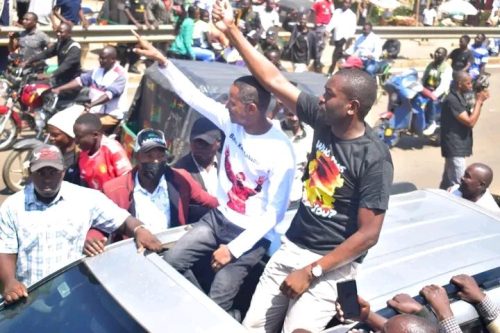
Morara has further said that forming a new party offers the promise of independence and the ability to pursue reform without being tied. However, Morara says the challenges are immense. He has observed that tribal loyalties are entrenched, and most voters remain loyal to their regional kingpins.
In the Kikuyu community, for example, Morara says most support Gachagua, and newcomers like Ndindi Nyoro risk being labelled as “Ruto projects” rather than independent leaders.on the other hand, Luhyas are largely aligned with Mudavadi’s (ANC) or Wetang’ula’s (FORD-K), and breaking these allegiances has historically proven difficult.
Morara has further noted that Kisiis are tied to Matiangi, while Kalenjins continue to rally behind William Ruto. Even Gen Z voters, while a potential wildcard, are not yet an organised bloc capable of shifting the political balance.
Joining an existing party, on the other hand, the human rights activist says, offers immediate access to political machinery, funding, and appointments. Yet it comes with a high cost: autonomy is sacrificed, and reformist ambitions are often subordinated to the interests of party leaders and financiers. Kebaso warns that those who follow this path often end up supporting the status quo, leaving systemic corruption and mismanagement unchallenged.
Morara urges Kenyans to rise above tribalism
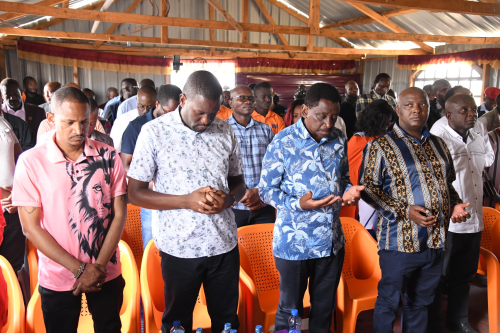
Ultimately, Kebaso argues, meaningful political change in Kenya hinges on voters’ willingness to rise above tribalism. Without this shift, even a leader with a clear vision is constrained by the community’s defence of local political “thieves” and loyalty to regional kingpins. For politicians like Babu Owino, whose home region lacks a dominant tribal leader, forming a new party may be the only viable avenue to effect change.
According to Morara, unless voters embrace leaders and parties based on principles rather than ethnicity, real change—anti-corruption measures, budgetary accountability, and lawmaking reforms—remains elusive. Kenya’s political future, Kebaso suggests, depends less on individual leaders and more on the electorate’s courage to reject tribal loyalties and support a genuinely national vision.
Morara’s sentiments have come at a time when there is a heated debate on the control of the ODM party, with two factions in place. One faction is led by ODM party leader and Siaya senator Oburu Odinga, while the other is led by Nairobi senator Edwin Sifuna, with the two sides seemingly fighting for control of the party.