Advertisement
Mbadi: Even if you oppose govt, remember it prevented economic collapse
Sunday 01st February, 2026 09:20 PM|

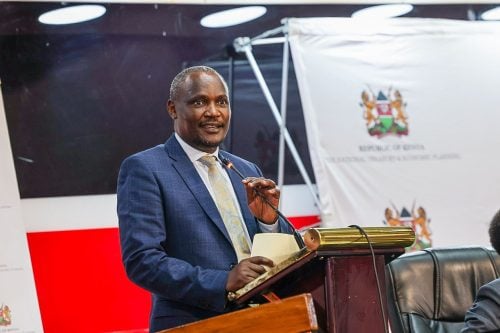
Treasury Cabinet Secretary John Mbadi has defended the government’s economic record, saying that Kenya narrowly avoided a debt default that pushed several African countries into crisis.
Speaking at a public gathering on February 1, 2026, in Kiambu, Mbadi said the administration had steered the country away from economic collapse at a time when the International Monetary Fund (IMF) warned that Kenya faced a serious risk of defaulting on its debts.
“In 2021–2022, the IMF predicted that six countries in Africa were going to default in debt repayment,” Mbadi said. “If you fail to pay your debts, it means it is a failed economy. It is a collapsed economy.”
He told the crowd that a default would have forced Kenya into harsh IMF-led rescue measures, with severe consequences for ordinary citizens. According to Mbadi, IMF intervention would have come with strict conditions that would have reshaped the public sector and cut incomes across the board.
You Might Also Like

“What will happen is IMF will come calling,” he said. “They will say, fine, we will help you, but on conditions. Number one, you must cut your civil service by 50 per cent. Half of the chiefs go home. Half of the teachers go home.”
Mbadi added that lawmakers and county officials would not have been spared. He said the number of Members of Parliament could have dropped from 290 to 145, while Members of County Assemblies would have reduced from about 1,400 to roughly 700. Salaries, including that of the president, would have been slashed by half.
To underline his point, Mbadi drew parallels with Kenya’s past, recalling the structural adjustment programmes imposed during former President Daniel arap Moi’s era.
“Remember there was this structural programme during Mzee Moi’s time,” he said. “We had not even defaulted, but one of the conditions was retrenchment. Take staff home.”

He noted that those sent away were ordinary workers supporting families and paying school fees, often receiving only two or three months’ pay as compensation.
“That is what was facing us,” Mbadi said.
The Cabinet Secretary then made what he described as the key point of his address. Of the six African countries the IMF flagged as high risk, five have since defaulted.
“Five countries out of those six have defaulted,” he said. “In the neighbourhood here is Ethiopia. The other ones were Ghana, Chad and Mozambique. It is only Kenya which has not defaulted. It is only Kenya.”
Government performance
Mbadi acknowledged that many Kenyans remain unconvinced by the government’s performance, especially as the cost of living continues to rise and unemployment remains high.
“I know many of us have been told that this government has done nothing, and we believe it,” he said. “And there is nothing wrong with believing, because we can’t think the same. If you find two people always agreeing, one of them is not thinking, or both.”
Mbadi urged Kenyans to separate dissatisfaction with daily hardships from the broader economic picture.
“Even as you have that perception, remember that this government saved us from that default,” he said. “Because we would not have an economy today.”
He challenged business owners in the audience to consider the alternative scenario.
“How would you have done business in an economy that has collapsed?” he asked.
Kenya’s public debt remains high, standing at over 70 per cent of GDP, but the country has maintained access to international markets through fiscal reforms and IMF-backed programmes. In contrast, countries such as Ghana and Ethiopia faced currency pressure, inflation spikes and debt restructuring after defaulting.
Author
Kenneth Mwenda
Kenneth Mwenda is a business, sports, and politics digital writer with over seven years of experience in journalism, covering breaking news, feature stories, and in-depth analysis across a range of beats.
For inquiries, he can be reached at [email protected]
View all posts by Kenneth MwendaLatest News



Advertisement
More on Inside Politics