Advertisement
Ledama Olekina defends fuel levies, calls out opposition over ‘cheap politics’
Monday 20th April, 2026 08:13 AM|

Narok Senator Ledama Olekina has defended fuel levies as essential for road development while accusing the opposition of misleading the public for political gain.
Taking to his official X account on Monday, April 20, 2026, Olekina argued that the push for cheaper fuel often ignores a critical reality: fuel is a major source of funding for road construction and maintenance.
Fuel levy
He further dismissed claims that lowering fuel prices automatically benefits the economy without consequences, saying such arguments overlook how infrastructure is financed.
According to him, fuel levies directly support road development projects, reduce fuel costs without alternative funding, creating budget gaps, and sustained infrastructure growth depends on consistent revenue streams.
You Might Also Like
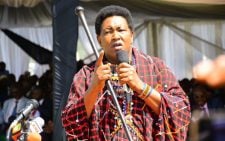
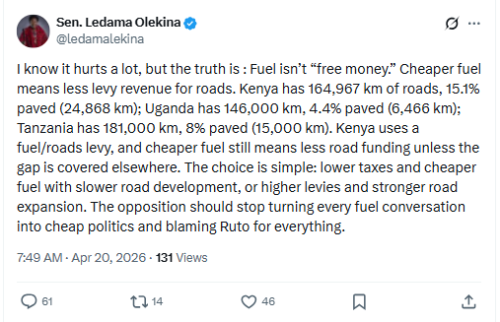
“I know it hurts a lot, but the truth is : Fuel isn’t “free money.” Cheaper fuel means less levy revenue for roads,” he stated.
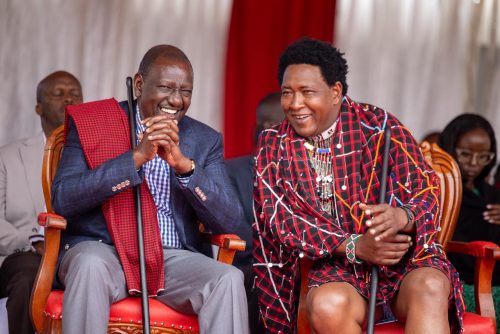
Kenya vs regional road networks
To support his argument, Olekina pointed to regional comparisons, noting that Kenya has a relatively more developed road network compared to its neighbours.
According to the lawmaker, Kenya has over 164,000 km of roads, with about 15% paved, as compared to Uganda, which he says has approximately 146,000 km, with about 4.4% paved, and Tanzania, which he says has around 181,000 km, with about 8% paved.
He argued that Kenya’s progress is largely tied to its fuel levy model, which channels funds into road expansion and maintenance.
“Kenya has 164,967 km of roads, 15.1% paved (24,868 km); Uganda has 146,000 km, 4.4% paved (6,466 km); Tanzania has 181,000 km, 8% paved (15,000 km). Kenya uses a fuel/roads levy, and cheaper fuel still means less road funding unless the gap is covered elsewhere,” he wrote on X.
Ledama slams opposition
He also took aim at opposition leaders, accusing them of turning fuel pricing into a political weapon.
“The choice is simple: lower taxes and cheaper fuel with slower road development, or higher levies and stronger road expansion. The opposition should stop turning every fuel conversation into cheap politics and blaming Ruto for everything,” Olekina stated.
Ruto’s take on fuel prices
Fuel prices remain one of the most sensitive economic issues in Kenya, affecting the cost of living, transport and food prices, and business operations.
President William Ruto has explained why fuel prices in Kenya often remain higher than in neighbouring countries, pointing to the country’s middle-income status and tax structure.
Speaking during a Sunday service at Karen Africa Gospel Church on April 19, 2026, Ruto said comparisons between Kenya and its neighbours are often misleading.
“I know many people in Kenya keep asking, you know, why is it that sometimes prices of fuel are different in Kenya from our neighbours? Sometimes maybe it’s good to let them know, because it’s important for people to know,” he said.
He said the first reason is Kenya’s economic classification.
“Kenya is a middle-income country. Our neighbours are the least developed countries. There is a big difference,” he said.
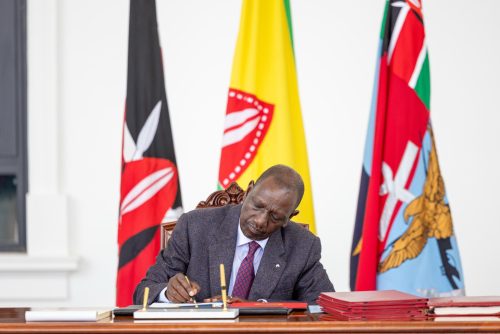
Ruto added that fair comparisons should be made with countries of a similar economic level.
“If you want to compare Kenya fairly with others, compare Kenya with other middle-income countries. That is how you will get the figures right. Middle-income countries like Kenya are possibly have higher prices than Kenya or the same,” he said.
The president also linked fuel prices to the country’s tax system and infrastructure demands.
“Our fuel supports transport infrastructure,” he said, noting that Kenya maintains a large road network compared to its regional peers.
He said the country has more than 20,000 kilometres of tarmac roads and is building an additional 6,000 kilometres.
“20,000 kilometres of tarmac to maintain here in Kenya is actually the same for the other six or seven East African countries combined,” he said.
Author
Mustafa Juma
View all posts by Mustafa JumaLatest News

Advertisement
More on Inside Politics