Advertisement
Jubilee Party holds grassroots leaders’ meeting in Samburu ahead of office opening
Monday 02nd March, 2026 01:06 PM|

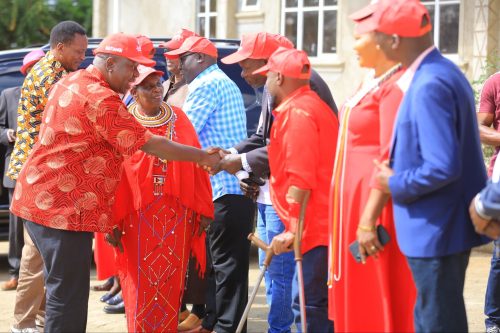
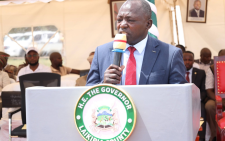
Jubilee deputy party leader and presidential hopeful for 2027, Fred Matiang’i, is on tour in Samburu County to meet with the grassroots leaders in a strategic push to popularise the outfit.
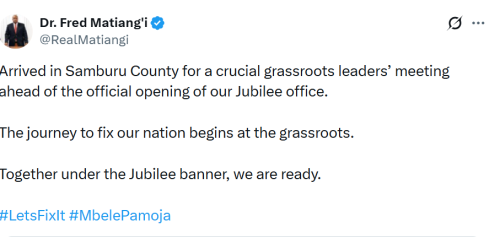
Confirming his visit to Samburu County on his social media handles on Monday, March 2, 2026, for the meeting, Matiang’i has communicated the need to re-establish party structures at the grassroots level to the local leaders, which should include strong local networks to ensure that Jubilee regains its national presence.
“Arrived in Samburu County for a crucial grassroots leaders’ meeting ahead of the official opening of our Jubilee office. The journey to fix our nation begins at the grassroots. Together under the Jubilee banner, we are ready,” Matiangi stated.
The regional office that will be opened in Samburu is also meant to be a center of coordination of party activities, recruiting members and developing leaders in the region. Party people interpret the move as an extension to an expansion plan that will see the Jubilee Party have functional offices in all regions to facilitate its restructuring politically.
You Might Also Like

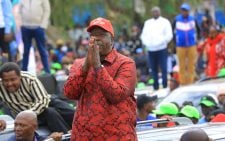
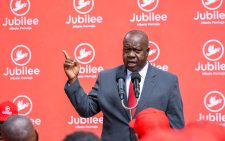
The Samburu visit by Matiangi is the most recent in a list of grassroots tours that he has been doing since he joined Jubilee and became the leading presidential contender in the party. His presence is a turning point in the party that has been experiencing a conscious rebranding exercise to portray a new image and restore the credibility of the party.
Since his installation as Jubilee deputy party leader and flag bearer for its presidential bid, Matiangi has been working on the direct approach, party offices, and consultation with county leaders in a bid to re-establish the party’s grassroots machine.
This rebranding has been tightened with the leadership of the previous president, Uhuru Kenyatta, the party leader, who has been at the forefront in guiding the reorganisation of the party.
Jubilee has attempted to reinvent itself as a national movement that can compete favorably in the upcoming election, with Matiangi coming out as the key element in its rebranding effort. The party insiders consider his technocratic background and national profile critical assets in attracting new followers and regaining confidence in Jubilee.
Jubilee’s leadership structure
Jubilee has also experienced major changes in leadership as part of its restructuring to make its internal structures stronger and increase its operational capacity.
Jeremiah Kioni, the former secretary general, was promoted to a senior leadership position, and Moitalel Ole Kenta was made secretary general to manage the day-to-day running of the party as well as its coordination with the grassroots.
Meanwhile, Vincent Kemosi became the National Chairperson, which was an indication of how Jubilee tried to put in place leaders who would spearhead the resurgence of the party. Such leadership changes have been coupled with intensive grassroots mobilisation campaigns, such as the establishment of new offices, membership recruitment, and consultation with local leaders throughout the country.
The strategy shows that Jubilee understands that it will be able to revive its political fortunes through rebuilding the ground. The fact that Matiangi was in Samburu reveals the ambition of the party to overhaul its operations in areas that previously might have been considered strongholds and to have a network that cuts across the nation that can enable it to achieve its desired goal in 2027.
His ongoing grassroots activities, combined with the restructuring and rebranding of the Jubilee leadership, give the message that this party is in need of reinventing itself and regaining its status as a significant party in the Kenyan political scene.
Author
Latest News





Advertisement
More on Inside Politics