Advertisement
Jubilee Party executive director faults Ruto’s govt over taxation and spending priorities
Tuesday 16th June, 2026 03:48 PM|

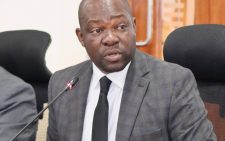
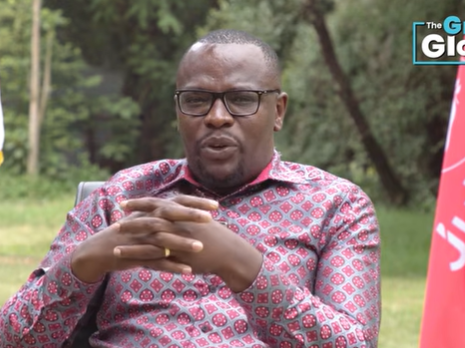
Jubilee Party Executive Director Dann Mwangi has defended the record of the fourth President Uhuru Kenyatta’s administration, saying its achievements cannot be compared to those of President William Ruto’s government.
Mwangi spoke on Thursday, June 11, 2026, during an appearance on Grind and Glory, a K24 TV political talk show hosted by Sarah Ibrahim. He responded to criticism that Jubilee leaders should not attack the current administration because some of Kenya’s present challenges began during Jubilee’s tenure.
Mwangi argued that although Jubilee had weaknesses, it delivered major projects and social programmes that improved people’s lives.
“Those are very defeatist arguments, because one, Jubilee had a lot of successes,” Mwangi said.
Healthcare reforms
You Might Also Like

He pointed to healthcare reforms, saying the National Health Insurance Fund (NHIF) functioned effectively under Jubilee. According to him, programmes such as Linda Mama and Edu Afya offered broad support to mothers and school-going children.
“Whether in healthcare, we had a functional NHIF. The same NHIF had Linda Mama, which was a very comprehensive package for pregnant women across the country. We had Edu Afya, which was also a very comprehensive package for young people who are in schools,” he said.
Jubilee infrastructure record
Mwangi also defended Jubilee’s infrastructure record. He said the administration expanded electricity access, roads and transport networks across the country.
“When you look at electrification in the country, Jubilee is the one that moved people from 30 per cent from where Kibaki left us to almost 80 per cent in the country,” he said.
He added that projects such as the Nairobi Expressway and the Standard Gauge Railway reflected what he called Jubilee’s “transformation journey”.
“There was a lot of road expansion in all parts of the country that Jubilee did. Plus even things like Express Highway, the Madaraka Express, that’s really the SGR transformation journey,” Mwangi stated.
At the same time, he admitted Jubilee was not perfect.
“There’s no government which is perfect. But it doesn’t mean that if there’s a mistake that was done during Jubilee’s time, people can’t correct it today,” he said.
Rights to call out ills
Mwangi said Jubilee leaders still have a constitutional right to criticise the current administration despite their past failures.
“So it would be a fictitious argument to argue that since Jubilee had some failures, people in Jubilee have no right to comment. In any case, that right is guaranteed in the Constitution,” he added.
He also accused President Ruto’s administration of reversing Jubilee-era policies before quietly adopting some of them later.
“When this government came into power, their major objective has been policy reversals. Anything that Uhuru did, the first thing they did in the first one or two years was doing away with most of the policies,” Mwangi said.
He claimed little had changed in the education sector apart from renaming the Competency-Based Curriculum.
“When you really look at education, except changing the meaning of CBC from CBC to CBE, there’s nothing the government has done,” he argued.
Mwangi further criticised the government’s higher education funding model, saying the new university funding formula has not worked effectively.
“The Higher Education Loans Board was functional during the Jubilee time. This government came with a very lopsided formula of awarding bursaries or finances to people in higher education, which is not working,” he said.
Taxation debate heats up
The Jubilee official also attacked the current tax regime, arguing that Kenyans now face heavier financial pressure than they did under Uhuru Kenyatta’s administration.
“During Jubilee’s time, people hardly knew there is something actually called Finance Bill because it was never a major issue,” Mwangi said.
“In fact, people always used to talk about Finance Bill from the perspective of thin taxes government would introduce maybe on alcohol or cigarettes. But currently, things have gone haywire in the country. The taxation has gone very up.”
Mwangi specifically criticised the Housing Levy, saying Jubilee handled court objections differently.
“Housing levy, for example, we had proposed the same during our time. When the courts ruled against the housing levy, we didn’t go and force people . But this government is doing the other way around,” he said.
Wasteful budget
He also criticised the proposed 2026/27 national budget, describing the Ksh4.8 trillion plan as wasteful and unsustainable.
“One, the current budget that the minister is likely to speak about today is a very expensive budget because a budget of Ksh4.8 trillion,” Mwangi stated.
He claimed much of the money would go towards recurrent expenditure instead of development.
“When you have a budget of Ksh4.8 trillion and close to 60 per cent is wages and recurrent expenditure, my taxes and your taxes will first of all be utilised to pay for recurrent expenditure,” he said.
Mwangi further claimed that excessive government spending has increased under the current administration. He cited State House expenditure as an example.
“When we served for 10 years, our budget or our consumption was Ksh90 billion. So Ksh89 billion for three years, Ksh90 billion for 10 years,” he claimed.
He went on to describe the current budget as “budgeted corruption”.
“For me, this Ksh4.8 trillion budget is budgeted corruption,” Mwangi said.
According to him, the country risks facing more taxes and borrowing to sustain government spending.
“The worst is, Kenyans will be overburdened with more taxes and more loans, whether domestically or internationally, to fund these budgets,” he said.
His remarks come at a time when debate over the Finance Bill 2026 and the national budget continues to dominate Kenya’s political landscape, with opposition leaders accusing the government of imposing heavy taxation amid rising economic pressure.
Mwangi’s latest remarks also follow his defence of former President Uhuru Kenyatta against claims that he funds the Linda Mwananchi movement. During the same interview, he dismissed the claims as politically motivated and insisted that the movement is driven by ordinary citizens frustrated by economic hardship and high taxes.
Author
Kenneth Mwenda
Kenneth Mwenda is a business, sports, and politics digital writer with over seven years of experience in journalism, covering breaking news, feature stories, and in-depth analysis across a range of beats.
For inquiries, he can be reached at [email protected]
View all posts by Kenneth MwendaLatest News







Advertisement
More on Inside Politics