Advertisement
Jubilee Party executive director refutes claims on Uhuru funding Linda Mwananchi
Tuesday 16th June, 2026 03:11 PM|
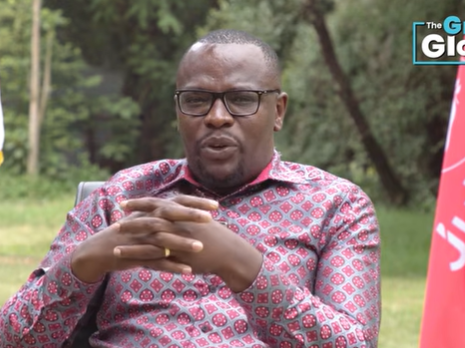
Jubilee Party Executive Director Dann Mwangi has dismissed claims that the fourth President Uhuru Kenyatta, finances the Linda Mwananchi movement, saying the claims are false and politically motivated.
Mwangi made the remarks on Thursday, June 11, 2026, during an appearance on Grind and Glory, a K24 TV political talk show hosted by Sarah Ibrahim. He was responding to claims linking the former head of state to the opposition-aligned movement, which has been holding rallies across the country.
“No, it’s not true. As far as I know, our party leader, although he is a party leader of Jubilee, even if he was to fund a party, he would fund Jubilee, not any other party,” Mwangi said.
He added that the narrative linking Uhuru Kenyatta to street protests and political mobilisation was misleading.
You Might Also Like


“There is this misconceived notion that Kenyans have to be told by Uhuru not to be happy. It is like people think they need a licence from him to go to the street. That is not the case,” he said.
Mwangi further argued that public protests and political mobilisation stem from citizens’ lived experiences, not instructions from political leaders. He said economic pressure, taxation and dissatisfaction drive demonstrations.
Uhuru does not fund Linda Mwananchi
He also rejected claims that the fourth president directs or funds the activities of the movement.
“Uhuru does not fund Linda Mwananchi,” Mwangi said.
“And obviously, Linda Mwananchi came up due to government onslaught against Sifuna. That’s why it began. Because when this government through now the allies in ODM pushed Sifuna out, that’s how Sifuna became a big name in the country and they formed Linda Mwananchi. So Uhuru doesn’t fund Linda Mwananchi.”
“But the only thing I would say, because I’m in government before, you see, when in government, you also live in an echo chamber. Because for you as a president, mostly you meet people who tell you everything in the country is going well. You might sometimes even get intelligence system telling you how the country is doing well.”
“But if you dare go to the common Mwananchi directly, the Mwananchi will actually shock you. Because you’ll realise you are leading country A, but your people in terms of their lifestyle are in country B. Those people who are in Linda Mwananchi, they’re just there because they’re not happy with what’s going on in the country.”
So they’re not there because Uhuru has told them to be there. And of course, it’s also making us look like we have peanut brains, that Uhuru must tell us what to do. Even when government is pinching us every day with taxes, Uhuru must tell us.”
“In any case, how powerful would Uhuru be that, you know, when we have a demo, for example, today, even in Homa Bay town, you know, in, for example, Nanyuki, because we’ve had demos in Nanyuki because of the Ebola quarantine issue. Does Uhuru need to go and tell people in Nanyuki to go to the streets?”
“In any case, it’s even worse Sarah because in as much as people don’t want the quarantine facility in Nanyuki, so far, our security agencies have killed four people. Just look at it broadly. Ebola hasn’t killed a Kenyan so far, but our security agencies have killed four Kenyans out of a group that is going now to the streets to say we don’t want that quarantine facility in Nanyuki.”
His remarks come amid growing political debate over the financing and influence behind the Linda Mwananchi movement, which has emerged as a vocal platform involving opposition leaders and grassroots supporters.
Funding claims spark debate
The movement has been linked to senior opposition figures, including Nairobi Senator Edwin Sifuna, who has also faced similar accusations of external funding.
Sifuna has repeatedly denied claims that Uhuru Kenyatta funds the initiative. Speaking in earlier interviews, he insisted the movement relies on internal contributions and grassroots support.
“Uhuru is not financing our rallies. I do not need a billionaire or millionaire to sponsor me. It is all propaganda,” Sifuna said. “People contribute. We have a paybill number, and Senator Godfrey Osotsi is our treasurer.”
He added that Members of Parliament supporting the movement contribute around Ksh100,000 per rally, which funds logistics such as sound systems and security.
Sifuna also said the movement operates transparently and depends on collective financing rather than external sponsors.
The funding debate has continued to shape political conversations as the movement expands its activities across the country. Supporters say it represents citizen frustration with economic hardship, while critics argue it is being used for political mobilisation ahead of the 2027 elections.
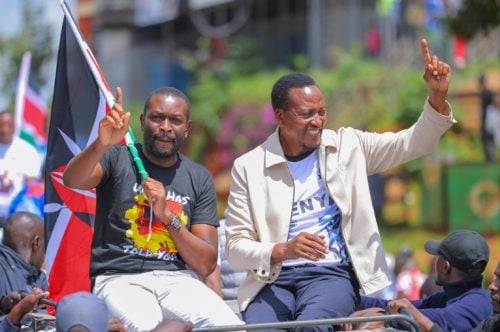
Political leaders aligned to the government side have accused opposition figures of using public anger to build political momentum. However, opposition leaders insist the movement reflects genuine public concerns.
Murang’a Governor Irungu Kang’ata, who recently joined the Linda Mwananchi movement in Thika, has also added to the national conversation by calling for dialogue between opposition figures, former Deputy President Rigathi Gachagua, and other leaders.
Speaking at a rally in Thika, Kang’ata urged opposition figures such as Sifuna, James Orengo and Babu Owino to engage in talks with Gachagua as political realignments continue ahead of the 2027 General Election.
“Sasa nimeambia huyu rafiki yangu Sifuna… watafute Wamunyoro,” Kang’ata said, calling for broader political consultations.
Mwangi, however, insisted that linking Uhuru Kenyatta to the movement is an attempt to shift attention from governance issues. He said citizens respond directly to economic conditions and not political instructions from former leaders.
“Even when fuel prices rise by 70 shillings, people react on their own. They do not wait for instructions,” he said.
He also warned against what he described as attempts to make Uhuru Kenyatta a “political bogeyman” in ongoing debates.
As debate over the Linda Mwananchi movement continues, both supporters and critics agree that it has become a key feature of Kenya’s current political landscape. Its funding, leadership and long-term political direction remain central points of public discussion.
Author
Kenneth Mwenda
Kenneth Mwenda is a business, sports, and politics digital writer with over seven years of experience in journalism, covering breaking news, feature stories, and in-depth analysis across a range of beats.
For inquiries, he can be reached at [email protected]
View all posts by Kenneth MwendaLatest News






Advertisement
More on Inside Politics