Advertisement
Uzima University defends medical school accreditation after concerns
Tuesday 16th June, 2026 04:25 PM|
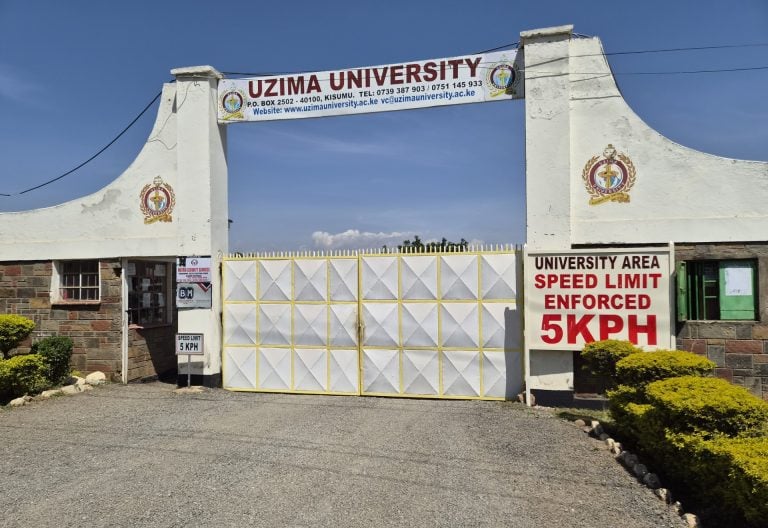
Uzima University has strongly defended the accreditation status of its School of Medicine, dismissing recent media reports questioning the institution’s ability to train medical students and demanding an immediate retraction and apology from the publishers.
Speaking during a press briefing on June 16, 2026, Uzima University Vice Chancellor Prof. Cosmas Rhagot termed the reports as misleading, inaccurate and based on outdated information that does not reflect the university’s current standing.
The reports, published by several media outlets under the headline “Alarm as Most Medical Schools Fail Standards,” claimed that a number of medical schools, including Uzima University, had failed to meet the required training standards.
However, Rhagot said the publications relied on findings from the 2019/2020 academic year, when the institution was still operating as a university college, and ignored significant developments that have since taken place.
You Might Also Like
“The publication is based on findings from over seven years ago and does not reflect the reality of today’s university standing,” Rhagot stated.
He noted that the institution has undergone extensive transformation, including receiving a Letter of Interim Authority in March 2020 before being granted a full charter in May 2025 following what he described as a rigorous assessment by the Commission for University Education (CUE), the Kenya Medical Practitioners and Dentists Council (KMPDC), and East African Community regulatory bodies.
According to the vice chancellor, Uzima University remains listed among approved institutions by relevant regulatory agencies and continues to admit and train medical students in compliance with national and regional standards.
Rhagot said the university has invested heavily in modern teaching infrastructure, including lecture halls, laboratories and other learning facilities to support quality medical education.
He noted that these investments have been guided by recommendations from regulatory bodies and international standards for medical training.
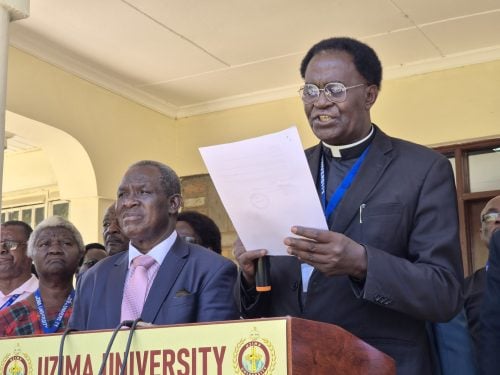
Rhagot added that the university has strengthened partnerships with teaching and referral hospitals to ensure students receive adequate clinical exposure and practical experience throughout their studies.
Among the institutions working with the university are Jaramogi Oginga Odinga Teaching and Referral Hospital and other healthcare facilities that provide students with hands-on clinical training.
The Vice Chancellor further emphasised that inspections conducted by regulators assess various aspects of medical education, including physical infrastructure, faculty qualifications, governance structures, student-to-lecturer ratios, academic programmes and access to teaching hospitals.
“The charter was awarded after a thorough and rigorous review by the Commission for University Education and other regulatory bodies. This demonstrates the credible progress and compliance of Uzima University,” he said.
Rhagot further revealed that a joint inspection conducted by East African Community partner states and medical education regulators in November 2024 awarded the university a score of 80.9 per cent.
“The university scored 80.9 out of 100 and met the required standards for training medical students. Our graduates are eligible for recognition across East African Community partner states,” he said.
He described the score as a reflection of the institution’s commitment to academic excellence and continuous improvement, adding that the university continues to recruit qualified faculty members and strengthen its academic programmes to meet evolving healthcare needs.
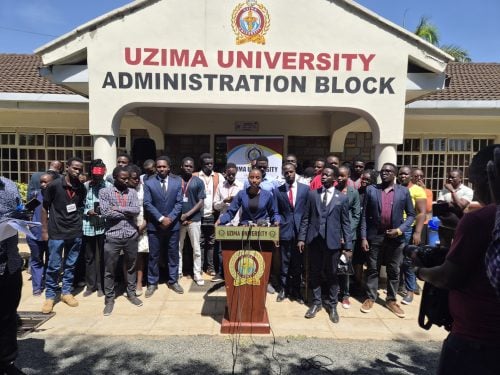
University demands retraction over reports
Rhagot argued that the omission of the university’s current accreditation status had caused reputational damage, undermined confidence among academic partners and threatened strategic collaborations with local and international institutions.
“The circulation of outdated and inaccurate information has undermined these strategic collaborations and the progress we have made. This is unacceptable,” he said.
He noted that the university has in recent years expanded collaborations with local and international partners aimed at enhancing medical training, research, innovation and clinical practice.
According to him, such partnerships are critical in improving healthcare outcomes and providing students with globally relevant education.
The university is now demanding a full retraction of the publications, a public apology, and corrective statements reflecting its current accreditation status.
It has also indicated that it may pursue legal action over damages caused by the reports.
Rhagot reassured students, parents, alumni and stakeholders that all qualifications issued by the institution remain fully accredited and recognised.
“To our students and alumni, your qualifications remain fully accredited and recognised. Uzima University remains a credible, compliant and forward-looking institution,” he said.
He urged the public to rely on information from official regulatory agencies and the university when seeking clarification on accreditation matters, maintaining that the institution remains committed to transparency, accountability and quality education.
Student leaders also rallied behind the university, describing the reports as defamatory and harmful to the future careers of medical students.
Alan Kato, a Bachelor of Medicine and Bachelor of Surgery student and the current Student President, said the reports had created unnecessary anxiety among students and stakeholders.
“We are not merely trying to defend the name of our institution. We are safeguarding the professional future of our comrades,” said Kato.
He cited the university’s latest inspection score of 80.9 percent as evidence that the institution meets the standards required to train competent medical professionals.
“We assure our fellow Kenyans that Uzima University medics embody competence,” he added.
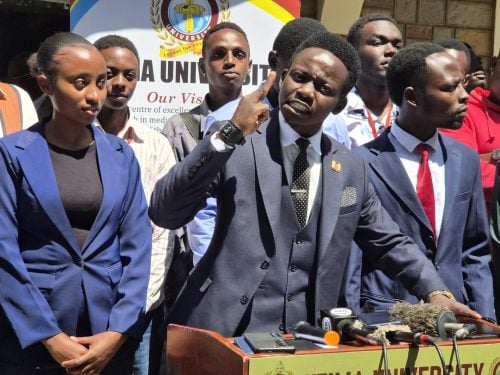
The Secretary General of the Uzima University Student Association, John Kemani, dismissed claims that the institution had failed to meet the threshold required to train future medical professionals.
“That is a false claim and highly sensationalised information. We urge the publishers to publicly apologize to the institution, the students and alumni for putting their future and reputation at stake,” he said.
The association’s Deputy President, Miriam Irongo, also defended the institution’s accreditation status, citing the 2024 inspection findings.
“The information being circulated is wrong. Regulators inspected our institution in 2024 and we scored 80.9 out of a possible 100 marks. This confirms that our institution is fully accredited to train competent future medical professionals,” she said.
Author
Latest News





Advertisement
More on News