Advertisement
Jimi Wanjigi: Ruto’s re-election could crash economy, push dollar to Ksh400
Monday 18th May, 2026 07:34 AM|

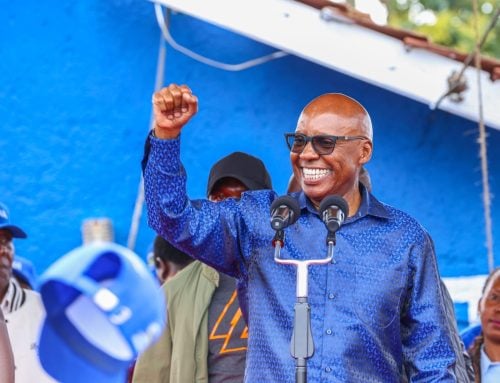
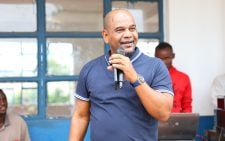
Safina Party leader Jimi Wanjigi has warned that Kenya could face a full economic crisis if President William Ruto wins a second term, saying the country risks debt default, a collapsing shilling and years of economic pain.
Speaking during a Sunday night TV interview, Wanjigi claimed the government’s borrowing model had become unsustainable and was pushing Kenya towards collapse.
“I don’t think we’ll last as a country. We will break. Something has to break. This cannot hold anymore,” Wanjigi said.
“And breaking means that you’ll see the dollar at 400.”
You Might Also Like


His remarks came amid growing debate over Kenya’s rising public debt and increasing pressure on taxpayers as debt repayment consumes a larger share of government revenue.
Wanjigi argued that the government is borrowing heavily to fund recurrent expenditure instead of productive investment.
“The borrowing they are doing per day is now close to Ksh5 billion per day, or Ksh3.3 million per minute, to sustain recurrent expenditure,” he said.
According to Treasury estimates for the 2026/27 financial year, Kenya plans to spend about Ksh4.7 trillion against projected revenue of roughly Ksh3.53 trillion, leaving a deficit of more than Ksh1.1 trillion to be financed through borrowing.
The businessman earlier stated that the debt burden had reached a level where most of the money collected from taxpayers goes directly to lenders instead of public services.
“This year, we are paying Ksh2.4 trillion in debt. Next year, it will be Ksh2.6 trillion. The following year, it becomes Ksh2.8 trillion,” he said.
“At this rate, this problem will continue until 2040.”
Wanjigi also renewed his controversial argument that some debts should not be paid because they were acquired outside proper legal procedures. He argued that public officials and financial institutions involved in such borrowing should carry responsibility for the consequences.
“The CBK brought very good laws on the CEOs of banks. You are liable for the customer’s money,” he said.
“If it goes wrong, you don’t follow the provisions of the law; you are liable. We will not lose any money as a customer. It is you who did this that is going to pay for it.”
During the interview, Wanjigi dismissed fears that refusing to honour some debts could isolate Kenya internationally or attract sanctions.
“We have enough revenue without taking any more debt, domestic or international, to take care of all our needs,” he said.
“What are they going to sanction? Our coffee? Other African countries will buy all our coffee.”
He insisted Kenya does not need to depend on foreign lenders if public finances are managed properly.
“We have more than enough money, so we don’t need them,” he added.
Ruto blamed over debt
Wanjigi also criticised the government’s strategy of refinancing maturing loans, saying taking new debt to pay old debt only delays the crisis.
“Refinancing, taking a loan to refinance that previous loan, is not solving a problem,” he said.
He accused Ruto of being part of the system that created the current debt situation.
“William Ruto, unfortunately, is part of this problem. He helped create it. He cannot solve it,” Wanjigi stated.
The Safina leader further claimed Kenya was already showing signs of distress despite the relative stability of the shilling in recent months.
The Kenyan shilling has remained largely stable at around Ksh129 against the US dollar for several months, a sharp contrast from previous periods of volatility.
Economists have linked the stability to improved foreign exchange reserves, stronger diaspora remittances, tighter monetary policy by the Central Bank of Kenya and successful repayment of external obligations, including Eurobond debt, earlier this year.
However, Wanjigi argued that the stable exchange rate hides deeper structural problems within the economy.
He said rising debt servicing costs, heavy taxation and continuous domestic borrowing were putting pressure on businesses and households.
According to budget estimates, Kenya’s public debt stood at about Ksh12.4 trillion, equivalent to nearly 68 per cent of GDP.
The government has defended its borrowing programme as necessary to finance development, maintain government operations and support economic growth while gradually reducing the fiscal deficit.
But critics warn that increasing debt obligations could limit future spending on health, education, agriculture and infrastructure.
Wanjigi said future governments would inherit the same crisis unless drastic changes are made now.
“Even if Jimmy becomes president, he will still find that debt there,” he said.
He positioned himself as a political outsider who understands the system from within and argued that Kenya needs a different economic direction ahead of the 2027 general election.
Author
Kenneth Mwenda
Kenneth Mwenda is a business, sports, and politics digital writer with over seven years of experience in journalism, covering breaking news, feature stories, and in-depth analysis across a range of beats.
For inquiries, he can be reached at [email protected]
View all posts by Kenneth MwendaLatest News



Advertisement
More on Inside Politics