Advertisement
Irungu Nyakera: UDA/ODM coalition trailing opposition, key regions slipping away
Thursday 28th August, 2025 09:25 AM|

Irungu Nyakera, Nairobi DCP patron and former chairman of the Kenyatta International Convention Centre (KICC) board, has sparked debate on social media after stating that the UDA/ODM coalition is falling behind the opposition ahead of the 2027 general elections.
In a post on his X on Thursday, August 28, 2025, Nyakera asserted that the coalition has 12 million supporters compared to 15 million backing the opposition, warning that key regions are already out of reach.
“Let’s stop the lies. The UDA/ODM coalition is stuck at 12 million against 15 million for the opposition. Mt. Kenya, Kamba, and Ksii are gone,” Nyakera wrote, highlighting what he describes as a widening gap in voter support.
Nyakera’s post suggests that the opposition is gaining traction in regions that were once considered competitive for the UDA/ODM alliance. Analysts say such claims could intensify political discourse as parties begin to strategise on voter mobilisation and engagement.

You Might Also Like


He also addressed assumptions about young voters, particularly Gen Z, cautioning against overestimating their impact.
“Also, let’s forget the fairy tale about GenZ, when it comes to elections, they will vote tribal like everyone else,” he added, emphasising his view that traditional voting patterns remain influential despite generational shifts.
Political Implications
Nyakera’s remarks come amid heightened discussions about coalition dynamics and voter trends. The post has sparked both agreement and criticism from different political quarters, with some viewing it as a warning to the UDA/ODM coalition to recalibrate its outreach strategies, while others dismiss it as speculative.
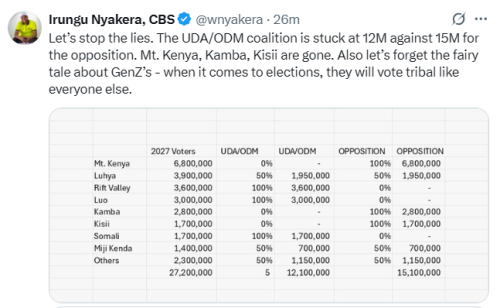
While Nyakera’s assessment focuses on numbers and regional support, political observers note that actual election outcomes will depend on voter turnout, campaign strategies, and the ability of parties to consolidate their bases. His post underscores the challenges facing the UDA/ODM coalition as it navigates the complex political terrain ahead of the next general election.
Nyakera’s post is likely to shape public debate, influence party strategies, and keep political analysts, journalists, and citizens engaged in assessing the shifting electoral landscape.
Author
Latest News







Advertisement
More on Inside Politics