Advertisement
Why Ol Kalou by-election loss presents Ruto’s allies with 3 options ahead of 2027 poll
Tuesday 21st July, 2026 07:49 AM|
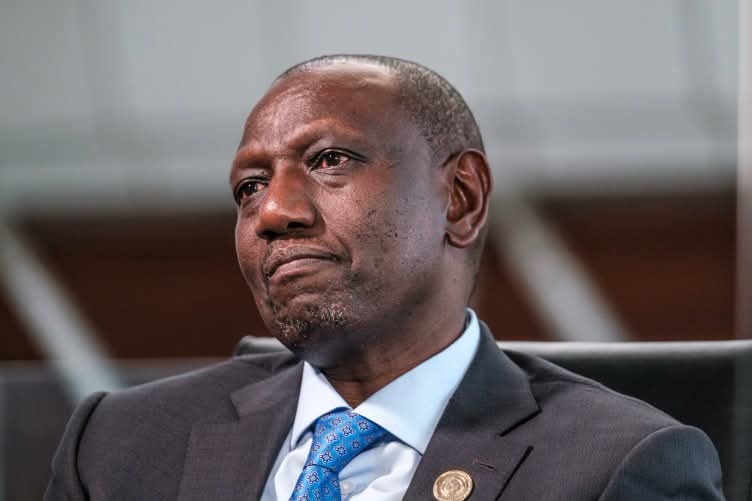
The Ol Kalou by-election was more than a defeat for President William Ruto’s United Democratic Alliance (UDA). It produced the clearest early evidence of political realignment in Mt Kenya ahead of the 2027 General Election.
The comparison with 2022 is striking. Ruto received 35,690 presidential votes in Ol Kalou. Four years later, Rigathi Gachagua’s DCP candidate secured 35,440 votes.
That is only 250 fewer. The ballots cannot identify individual voter movements, but the near-identical totals reveal a powerful aggregate shift between political vehicles.
Why the pattern has a 70 per cent chance of spreading
You Might Also Like
Mt Kenya’s electoral history shows coordinated movement towards one dominant party linked to its preferred political leadership.
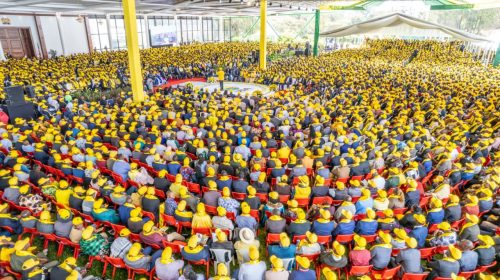
In 2013, Uhuru Kenyatta’s The National Alliance (TNA) received 97.1 per cent in Nyandarua.
It secured 96.3 per cent in Nyeri, 96 per cent in Kirinyaga, 95.9 per cent in Murang’a and 90.2 per cent in Kiambu. The 2013 results demonstrated overwhelming regional coordination.
In 2017, the dominant vehicle changed to Jubilee Party. Kenyatta received 99 per cent in Nyandarua, 98.6 per cent in Kirinyaga and 98.3 per cent in Nyeri. He secured 97.9 per cent in Murang’a and 92.6 per cent in Kiambu. Jubilee dominated all ten Mt Kenya counties.
In 2022, the region abandoned Kenyatta’s preferred presidential candidate and moved to Ruto’s UDA. Ruto received 78.8 per cent in Nyandarua, 81.7 per cent in Murang’a and 73.5 per cent in Kiambu. He secured 75.4 per cent in Ol Kalou.
The sequence is clear: TNA in 2013, Jubilee Party in 2017, UDA in 2022 and DCP emerging for 2027.
Political science explains this rapid movement. Kenyan voters often use party brands and prominent regional leaders as information shortcuts.

Oxford University research shows that voters can move collectively towards a coalition that includes influential leaders from their community. Party loyalty changes when elite alliances shift.
Research on Mt Kenya’s 2022 vote also found that economic grievances and feelings of exclusion drove voters to punish Jubilee. Ruto benefited from that anti-incumbency backlash.
Those conditions now favour Gachagua. He has a recognisable leadership claim, an organised party and a grievance narrative against Ruto. Ol Kalou supplied the missing electoral proof.
An evidence-based political risk assessment therefore places the probability of a similar DCP wave across much of Mt Kenya at about 70 per cent.
This is an analytical estimate, not an opinion poll. Incumbency, development delivery, individual candidates and differences between Mt Kenya East and West account for the remaining 30 per cent.
The three options Ruto’s allies will choose
First, one group will leave Ruto and join Gachagua’s camp. These leaders will calculate that a DCP ticket offers their strongest route back to Parliament, county assemblies and governorships.
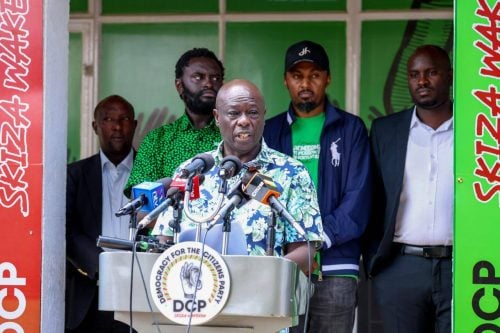
Second, another group will ditch UDA and form its own political party. This route will offer independence from both Ruto and Gachagua.
It will also require money, candidates, grassroots structures and polling agents. A weak third force will divide votes without winning power.
Third, the remaining allies will take the bull by the horns and stay with Ruto, come rain or sunshine. They will rely on UDA machinery, incumbency and government development. They will also carry Ruto’s record directly to voters.
Ol Kalou did not determine the final 2027 result. It established the direction of travel. DCP is now the leading candidate to become Mt Kenya’s next dominant political vehicle.
Ruto’s allies will join Gachagua, form their own party or remain in UDA. The political cost of delaying that decision is rising daily.
Author
Latest News





Advertisement
More on Inside Politics