Advertisement
Inside Ruto’s plan to double 2027 votes as opposition buckle up to stop bid
Sunday 18th January, 2026 08:11 AM|

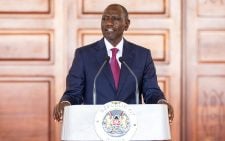
President William Ruto has set an ambitious political target ahead of the 2027 General Election: doubling the number of votes that propelled him to power in 2022.
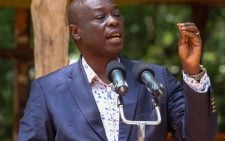
But even as the President rolls out an aggressive mobilisation strategy, a reconfigured opposition, anchored by his former deputy Rigathi Gachagua, is quietly but deliberately preparing to blunt that ambition.
Speaking to grassroots leaders from Nyeri County at Sagana State Lodge on Saturday, January 17, 2026, Ruto said his re-election strategy would focus on expanding voter turnout and broadening the United Democratic Alliance’s (UDA) national footprint.
“Zile kura tulipata wakati ule (2022) tunataka ziwe times two,” Ruto told the leaders, more than 17,000 of whom were elected recently as polling centre officials.
You Might Also Like
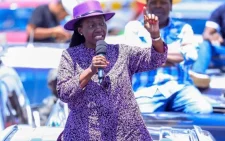


“Wale hawakupiga na sisi 2022, watapiga nasi 2027 (Those who did not vote with us in 2022 will vote with us in 2027).”

Ruto secured 7,176,141 votes (50.49 per cent) in the tightly contested 2022 election, narrowly edging out his main rival, the late Raila Odinga, who garnered 6,942,930 votes (48.85 per cent). With more than 22.1 million registered voters at the time, the President argues that millions who either stayed away or voted against him remain within reach.
At the heart of his plan is a restructured UDA, one he wants to turn into a mass party capable of sustaining political and economic continuity beyond a single term.
“We are building the United Democratic Alliance into a truly national political party,” Ruto said.
“Through visionary leadership, collaboration and unity of purpose, we are establishing a strong political unit to carry the national agenda forward and provide continuity in our development journey.”

War of words
Ruto also defended his record in office, insisting his administration has stayed the course on the, investments in infrastructure, agriculture, healthcare, industrialisation and human capital development as evidence of steady economic recalibration.
According to the President, leadership cannot be built through “noises, threats, abuses, arrogance or tribalism,” but through humility, organisation and cooperation across communities.
The opposition has been scoffing at Ruto for using violence to stop the opposition from expressing views, high taxation and unfulfilled promises against what he had promised the electorate in the 2022 polls.
Yet even as UDA sharpens its grassroots machinery, the opposition is quietly hardening its stance. At the centre of this push is Gachagua, whose fallout with Ruto has evolved from political disagreement into an open rivalry following his ouster from the Kenya Kwanza government.
Matiang’i factor
Gachagua is positioning himself as a key mobiliser, particularly in the vote-rich Mt Kenya region, which formed the backbone of Ruto’s 2022 victory.
His presence complicates the President’s plan to dominate traditional strongholds, especially as opposition strategists target Mt Kenya and Western Kenya and other regions as battlegrounds meant to be made slippery for the UDA leader.
Although the opposition has not named a presidential candidate, a delay insiders attribute to fears of early infiltration and sabotage, coordination is steadily taking shape.
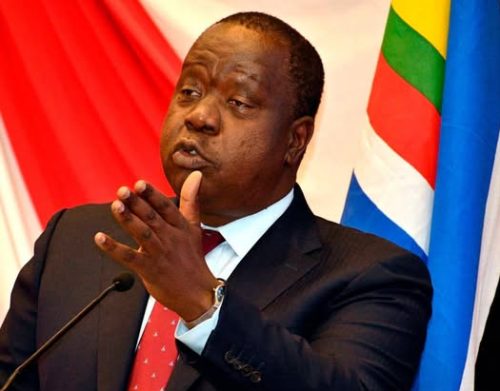
The recent inclusion of former Education and Interior Cabinet Secretary Fred Matiang’i, now Jubilee Party deputy leader, has added weight to the emerging coalition.
Matiang’i’s reputation as a no-nonsense administrator and his appeal across sections of the political divide have injected new energy into opposition talks.
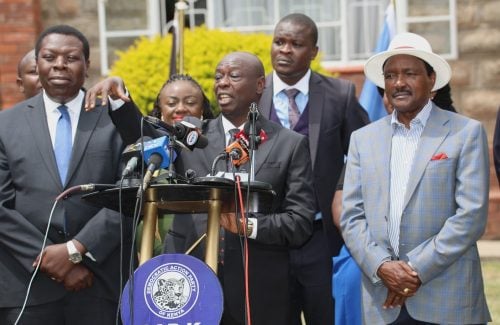
Together with Wiper Patriotic Front Party leader Kalonzo Musyoka and other seasoned figures, the opposition is crafting what allies describe as a formidable team designed to deny Ruto a second term.
The Sagana meeting, while framed as a grassroots engagement, comes amid intensified internal manoeuvres within UDA, including nationwide party elections and early coalition calculations. Political observers interpret the President’s mobilisation drive as a pre-emptive move to lock down party structures and counter looming dissent.
As 2027 approaches, the contest is shaping up less as a referendum on personalities and more as a test of organisation, turnout and regional arithmetic, with both camps keen to garner the vital Gen Z votes to triumph in the 2027 political showdown.
Ruto is betting on expansion and consolidation. His opponents, still assembling their arsenal, are betting on disruption and on turning former allies into effective challengers.
Author
Latest News



Advertisement
More on Inside Politics