Advertisement
Inside Ruto’s game plan to ringfence North Eastern ahead of 2027 polls
Saturday 06th June, 2026 12:44 AM|
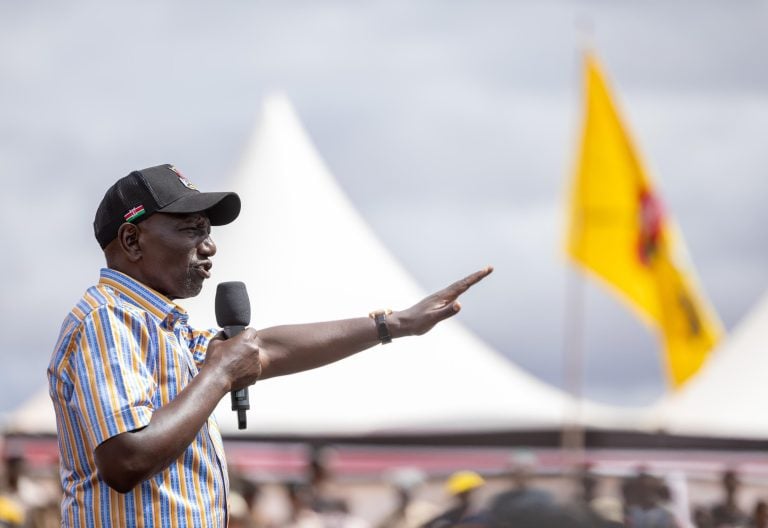
President William Ruto and the opposition are increasingly eyeing the North Eastern region as a critical battleground in the race to State House in 2027, with both sides positioning themselves to secure a bloc vote that could prove decisive.
For Ruto, the region presents an opportunity to offset political losses elsewhere, particularly in Mt Kenya, where his support base has shown signs of fragmentation since the 2022 election.
Unlike other regions, the North Eastern lacks a dominant opposition political figure capable of rallying voters against the President. The opposition team led by Wiper leader Kalonzo Musyoka and former Deputy President Rigathi Gachagua has also yet to mount significant campaigns across the vast region.
National Assembly Majority Whip Silvanus Osoro recently seized on that gap, mocking some of Ruto’s rivals during Madaraka Day celebrations in Wajir.
You Might Also Like
“I bet there is a presidential aspirant who has never stepped foot in this area and is not aware it’s in Kenya. He thinks Kenya is only their backyards only or Nairobi. When they speak, they say Kenyans have said No,” Osoro said.
The jibe came as Ruto led the nation in marking Madaraka Day in Wajir, the first time the celebrations had been held in the county since independence.
Osoro argued that aspiring presidents ignore the North Eastern at their own peril.
“To be declared President, you must garner at least 25 per cent of the votes from at least 24 counties,” the Mugirango South MP added.
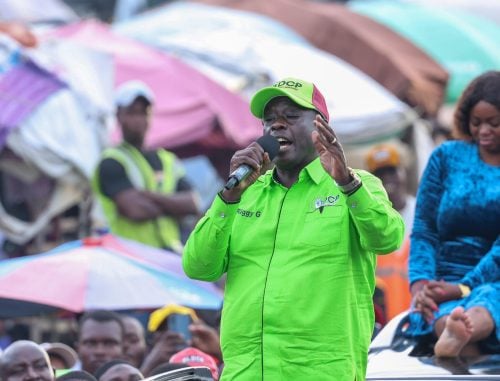
The opposition, however, is developing its own strategy for the region. Gachagua has recently opened a major political war with North Eastern leaders, including governors and MPs, accusing them of mismanaging devolved funds.
The Democracy for the Citizens Party (DCP) boss sparked controversy after suggesting that learners from outside the Mt Kenya region, particularly from areas such as North Eastern Kenya, should not be prioritised for admission into prestigious national schools in the region.
Even so, Gachagua has maintained that his outreach is directed at ordinary residents who he says have equally suffered from financial impropriety by their leaders.
For now, however, Ruto’s UDA party retains a firm grip on the region. The ruling party recently won the Isiolo South and Garissa Township by-elections, reinforcing its dominance.
Ruto’s charm offensive
Most of the region’s key political figures, including governors from North Eastern counties, remain allied to the President.
Ruto’s strategy has combined political engagement with a series of development initiatives centred on security, infrastructure, education and inclusion, targeting voters in Wajir, Mandera, Garissa, Marsabit and Isiolo counties.
Together with neighbouring Turkana County, the six counties account for nearly 1.28 million registered voters, numbers that could become increasingly significant in a tightly contested presidential race.
Even so, while North Eastern may not rival Mt Kenya in voter numbers, it has historically voted cohesively whenever local leaders rally behind a preferred candidate.
The President has spent much of the year strengthening ties with the region through repeated visits, policy reforms and high-profile development projects.
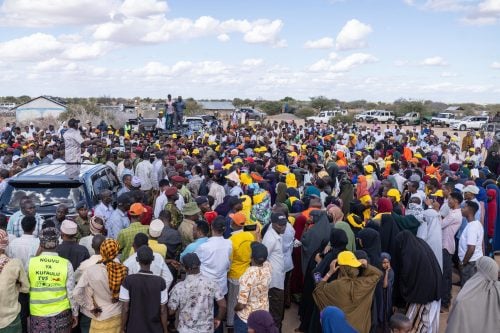
Among the flagship projects is the 760-kilometre Isiolo-Mandera road, which cuts across Isiolo, Wajir and Mandera counties. The project forms part of the Ksh100 billion Northern Kenya Gateway Corridor and is considered one of the country’s largest ongoing infrastructure investments.
Once completed, the corridor is expected to connect Kenya to Ethiopia and Somalia, boost trade, improve security and reduce travel times that have long hampered economic growth in the region.
Perhaps the most politically consequential move has been the abolition of discriminatory vetting requirements for national identity cards.
For decades, many Kenyan Somalis struggled to obtain identification documents, limiting access to voting, banking, employment and other essential services. The government’s streamlined registration process has since enabled thousands to acquire IDs for the first time.
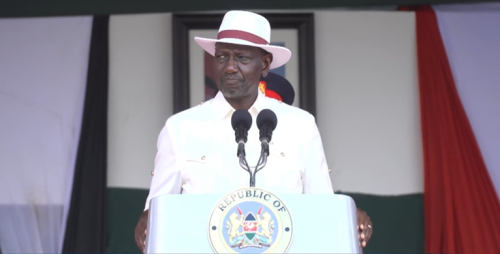
Addressing residents during the Madaraka Day celebrations, Ruto defended the reforms.
“We did not abolish verification of citizenship. We abolished discrimination,” he said.
The President also acknowledged decades of marginalisation and underinvestment in the region.
“Poleni sana ndugu zetu. It was never meant to be this way,” Ruto said, adding that hosting Madaraka Day in Wajir was “what we meant when we said we will leave no one behind.”
The administration has also invested heavily in the Last Mile Connectivity Programme, aimed at expanding electricity access, while Public Service CS Geoffrey Ruku has overseen efforts to improve access to government services, including the issuance of birth certificates and national identity cards.
As the race to 2027 gathers momentum, the battle for North Eastern is expected to intensify.
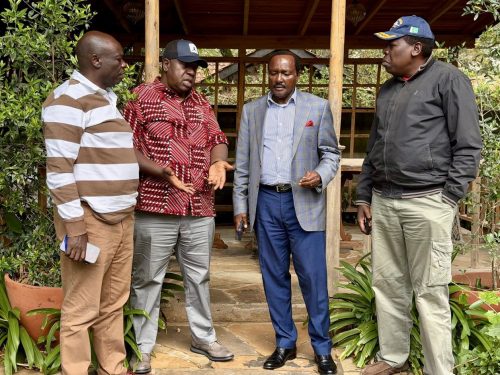
Opposition leaders, including Gachagua, Kalonzo Musyoka, Jubilee Deputy Party leader Fred Matiang’i, Martha Karua and Eugene Wamalwa, are expected to step up efforts to court the region as coalition negotiations and campaign planning gather pace.
But local leaders argue that Ruto enters the contest with a head start built on visible government interventions.
“Unlike many of his rivals, he can point to tangible interventions already being implemented in the region,” Health Cabinet Secretary Aden Duale said.
Author
Latest News

Advertisement
More on Inside Politics