Advertisement
Inside Gachagua’s game plan to hold Mt Kenya turf amid votes chessboard
Tuesday 31st March, 2026 07:24 AM|

Former Deputy President Rigathi Gachagua is crafting a calculated political strategy to consolidate control of the Mt Kenya voting bloc, even as the political landscape shifts ahead of the 2027 polls.
Gachagua’s approach blends hardline rhetoric with strategic outreach, as he seeks to position himself as the undisputed voice of the region.
In recent months, he has repeatedly branded those outside his camp as enemies of the mountain or traitors, promising to politically isolate them.
At the same time, he has adopted a softer tone when engaging former critics, embracing what he calls a gather all, scatter none philosophy.
You Might Also Like

“I have urged them to work hard to be elected. All traitors of the Kenyan people and our community who are helping William Ruto persecute our people must be voted out without fear or favour,” he said.
The remarks reflect a broader campaign narrative in which Gachagua has cast himself as the defender of Mt Kenya’s political and economic interests. He accuses President Ruto of betraying the region that overwhelmingly backed him in the 2022 election, and has framed his political mission as ensuring Ruto serves only one term.
In a notable shift from his earlier political stance, Gachagua has also moved to defend retired President Uhuru Kenyatta, whom he once heavily criticised during the run-up to the 2022 polls.
Recently, he condemned attacks against Kenyatta from some leaders affiliated with the Orange Democratic Movement (ODM), claiming they were being orchestrated indirectly by the President.
“We are seeing some ODM leaders attacking Uhuru Kenyatta. The reality is, it is not those young ODM leaders; it is William Ruto who is sending them. Our leader did his part and handed over leadership. I have said I don’t want anyone attacking Uhuru,” Gachagua said.
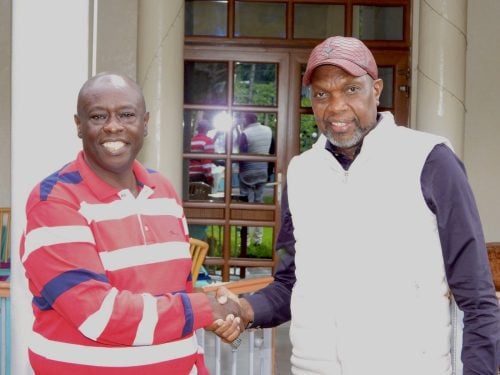
The truce
This repositioning signals an attempt to rebuild alliances within the region and present a united front, particularly after a political truce with Jubilee Deputy party leader Jeremiah Kioni.
Kioni has since praised Gachagua’s recent political manoeuvres, suggesting they have energised opposition politics in ways previously unseen.
“What Gachagua has achieved in the last one or so years, Raila Odinga was unable to achieve for all the time he led us in protests,” Kioni said at a rally in Ol’Kalou on March 25, 2026.
“This time, the country is united in saying ‘Wantam’. We give that credit to Gachagua, and you should know that he is a man. We have a leader, and I will explain why some other time.”
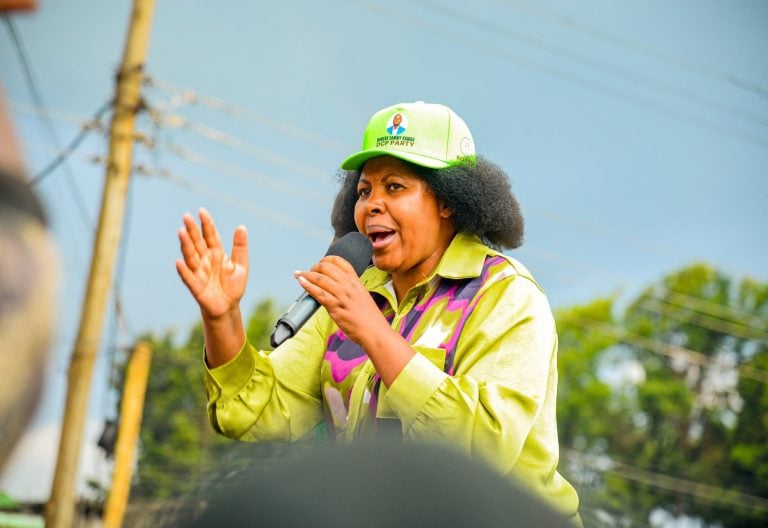
On the ground, Gachagua has maintained a relentless presence across Mt Kenya counties. His schedule includes political rallies, media appearances on local radio and television stations, and participation in church services and funerals, key social platforms that shape grassroots opinion in the region.

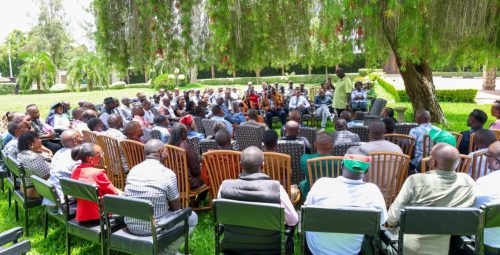
He has also been hosting delegations at his rural home, building networks with aspiring leaders and opinion-shapers.
These grassroots mobilisations are central to his plan to turn Mt Kenya into a unified voting bloc, particularly in the presidential race.
However, questions remain about whether such unity can extend to other elective positions.
Former Attorney General Justin Muturi argues that while Gachagua may succeed in influencing the presidential vote, the region’s political diversity will still shape outcomes in parliamentary and local contests.
“The mountain is a very diverse area. Remember, he has his DCP, I have my DP, Martha has PLP, there is Jubilee of Uhuru, Peter Munya’s PNU and others,” Muturi said.
“No matter what we do, the region will vote overwhelmingly for one presidential candidate, whom we will pick, but other positions will be shared with other parties, much as DCP may become the dominant one.”
As the political chessboard continues to evolve, Gachagua’s strategy depicts a broader contest for Mt Kenya’s influence, a region that has historically played a role in determining Kenya’s presidency.
Whether his blend of confrontation and coalition-building will secure lasting dominance remains one of the key questions shaping the road to the next election.
Author
Latest News

Advertisement
More on Inside Politics