Advertisement
Inside big tech’s quiet influence on Kenya and East Africa’s elections
Friday 13th March, 2026 02:13 PM|

A powerful new alliance between tech billionaires, political elites and authoritarian leaders is quietly reshaping democracy across Africa, raising urgent questions about sovereignty, surveillance and the future of elections in one of the world’s fastest-growing digital markets.
A major global civil society report warns of a dangerous convergence of power in which governments, corporate interests and technology giants are working in tandem, often with little public oversight, to consolidate control while weakening democratic safeguards.
In Africa, particularly East Africa, CIVICUS, which is a global alliance of civil society organisations and activists working to strengthen citizen action and civil society throughout the world, says that the consequences are already visible: expanding digital surveillance systems, election-period internet shutdowns, opaque security contracts with foreign firms, and a rapidly growing ecosystem of online disinformation.
“Tech companies are embedding themselves in military forces and enabling intrusive surveillance regimes,” the report released on Friday, March 13, 2026, notes.
You Might Also Like



Across East Africa, governments are investing heavily in digital monitoring infrastructure under the banner of national security and crime prevention. Facial recognition cameras, biometric databases and AI-driven analytics systems are being deployed in major cities, often financed or supplied by foreign technology firms.
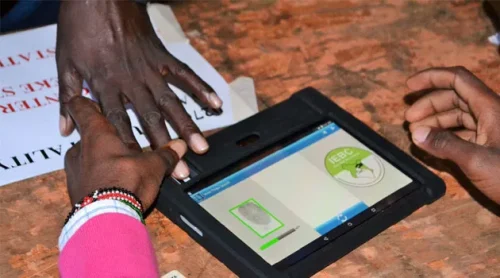
The study warns these tools can easily be repurposed to track opposition figures, journalists and activists.
Human rights organisations say such systems are frequently introduced without comprehensive data protection laws or independent oversight bodies. Weak regulatory frameworks leave citizens vulnerable to misuse of personal data and political profiling.
The report cautions that this fusion of state power and private technology risks “undermining democratic norms” while concentrating influence in the hands of a small global elite.
Elections in the digital crosshairs
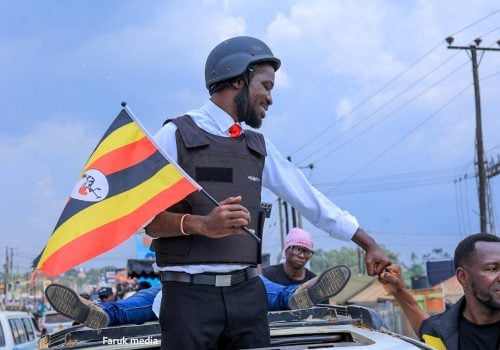
Internet shutdowns during elections have become one of the most visible tools of digital repression. Uganda’s nationwide blackout during the 2021 and 2026 polls set a precedent that analysts say could be repeated elsewhere in the region.
Such shutdowns disrupt not only political communication but also banking, healthcare, education and emergency services, effectively placing the entire society offline.
At the same time, coordinated disinformation campaigns on social media are reshaping public opinion at scale. Political actors increasingly deploy bots, troll farms and targeted advertising to manipulate narratives, often using data harvested from citizens themselves.
Moreover, the report warns that without stronger regulation, artificial intelligence could supercharge these tactics, enabling real-time monitoring of online dissent and automated propaganda.
Foreign influence and resource politics
Beyond surveillance, the convergence of tech and political power is also tied to economic interests.
Africa’s vast reserves of critical minerals, essential for batteries, renewable energy and electronics, have become a focal point of geopolitical competition.
Technology firms and foreign governments are seeking secure access to cobalt, lithium and rare earth elements, sometimes through deals negotiated behind closed doors.
CIVICUS says these arrangements can reinforce elite networks while sidelining local communities, echoing older patterns of resource extraction but with a digital twist.

Some observers describe the trend as a modern form of digital colonisation, where control over data, infrastructure and communication platforms shifts decision-making power away from citizens.
Telecommunications networks, cloud services and payment systems operated by foreign corporations can become strategic leverage points during political crises.
“When combined with state surveillance capabilities, this creates what the report calls a concentration of power’ capable of reshaping societies without democratic consent,” the study states.
Civil liberties at stake
For activists and journalists, the implications are profound. AI-powered monitoring tools can identify protest organisers, map social networks and predict mobilisation patterns before demonstrations even begin.
Legal safeguards often lag far behind technological capabilities, leaving courts struggling to address abuses.
Yet the report also highlights resistance from civil society groups pushing for transparency, stronger privacy protections and accountability for both governments and corporations.
With Africa’s population projected to double by 2050 and internet penetration rising rapidly, the continent represents one of the most important battlegrounds for the future of digital governance.
Whether technology strengthens democratic participation or entrenches authoritarian control may depend on decisions being made now, often far from public scrutiny.
The emerging alliance between strongmen, economic elites and tech oligarchs is not merely a political concern but a structural shift in global power.
For millions of Africans coming online each year, the question is increasingly urgent: who really controls the digital public square, elected governments, private corporations, or an unaccountable fusion of both?
Author
Latest News








Advertisement
More on Inside Politics