Advertisement
How courts verdict on Ruto’s cabinet gender balance could cost Kenyans millions
Tuesday 30th June, 2026 10:19 PM|
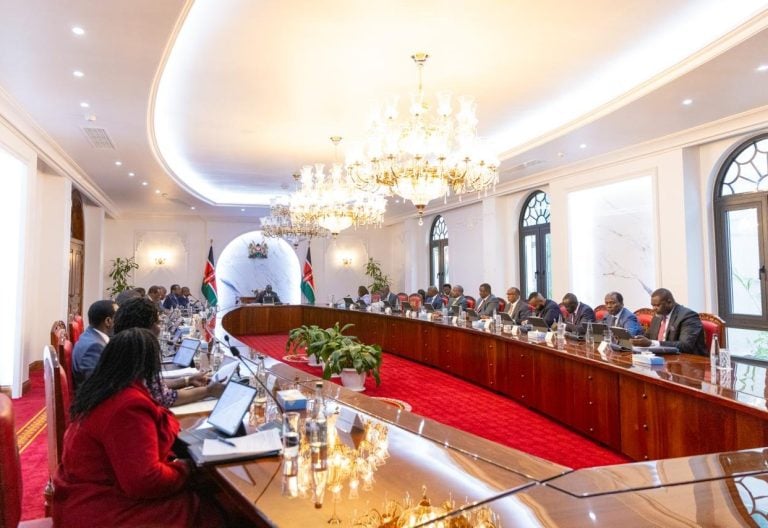
President William Ruto’s next move following the High Court’s directive to reconstitute his Cabinet within 120 days may not only reshape his administration but could also trigger millions of shillings in additional public expenditure.
On Tuesday, June 30, 2026, a three-judge bench ruled that the current Cabinet violates Article 27(8) of the Constitution by failing to meet the two-thirds gender rule, ordering the President to bring the Cabinet into constitutional compliance within four months.
Although the court did not direct President Ruto to dismiss specific Cabinet Secretaries, the ruling leaves him with limited options if he chooses to comply by replacing some male Cabinet members with women.
Such a Cabinet shake-up would likely come at a cost to taxpayers. Cabinet Secretaries are among the country’s highest-paid State officers. Under the Salaries and Remuneration Commission (SRC) pay structure, each Cabinet Secretary earns a gross monthly salary of Ksh990,000. The remuneration package includes a Ksh200,000 monthly housing allowance alongside a salary market adjustment.
You Might Also Like

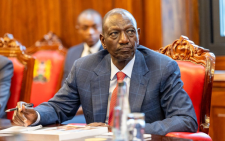

Beyond their salaries, Cabinet Secretaries enjoy a range of taxpayer-funded benefits, including official government vehicles, comprehensive medical insurance and other privileges attached to the office.
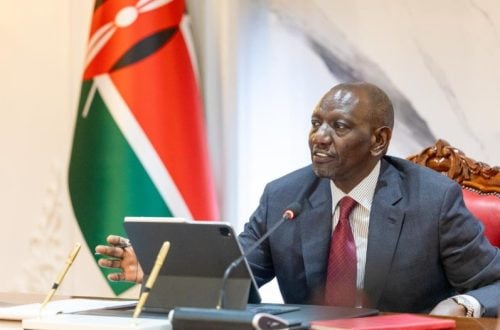
Each Cabinet Secretary is entitled to an official State vehicle with a maximum engine capacity of 3,000cc. They also receive medical cover worth up to Ksh10 million annually for inpatient treatment, Ksh300,000 for outpatient services and Ksh150,000 for maternity care. The cover extends to one spouse and up to four dependent children under the age of 25.
If President Ruto decides that replacing Cabinet Secretaries is the most practical way of meeting the constitutional gender threshold, the transition itself could generate additional public expenditure.
The government would be required to facilitate the exit of affected Cabinet Secretaries while simultaneously onboarding new appointees.
That process typically involves security adjustments, office handovers, official vehicle reassignments, orientation for incoming office holders and swearing-in ceremonies.
Taxpayers money
New nominees would also have to undergo vetting by the National Assembly before assuming office, a constitutional process that attracts administrative and logistical costs funded by taxpayers.
While Cabinet Secretaries serve at the President’s pleasure and their exit terms vary depending on applicable law and contractual arrangements, every appointment and transition requires government resources.
The High Court’s ruling therefore places President Ruto in a politically and financially delicate position.
On one hand, he is constitutionally obligated to ensure his Cabinet complies with the gender principle within 120 days. On the other hand, any major restructuring could attract criticism over increased government spending at a time when many Kenyans are grappling with the high cost of living and continued calls for fiscal discipline.

The judgment was otherwise largely favourable to President Ruto. The court upheld the legality of the President’s 2024 Cabinet reshuffle, including the reappointment of Cabinet Secretaries he had previously dismissed following anti-government protests and the appointment of opposition politicians into his broad-based government.
The judges rejected arguments that appointing members of opposition parties into the Cabinet violated the Constitution, ruling that Kenya’s constitutional framework does not prohibit the President from selecting Cabinet members from outside the ruling coalition.
The court also found that Parliament met constitutional requirements during the vetting of Cabinet nominees and dismissed claims challenging regional balance and representation in the current Cabinet.
As a result, the only successful constitutional challenge related to the Cabinet’s gender composition.
The ruling gives President Ruto until the end of the 120 days to determine how he will achieve compliance. He could opt for a broader Cabinet reshuffle, replace only enough Cabinet Secretaries to satisfy the constitutional threshold or pursue another legally permissible approach that aligns with the court’s directive.
Whatever path he chooses, the decision is likely to carry both political consequences and financial implications.
Author
Latest News







Advertisement
More on Inside Politics