Gakuya: Marjan’s resignation as IEBC CEO was in the public interest
By Aloys Michael, February 4, 2026The resignation of Independent Electoral and Boundaries Commission (IEBC) Chief Executive Officer Marjan Hussein Marjan, with a year left on his contract, has reignited debate over deep-seated structural challenges within the electoral body ahead of the 2027 General Election.
Marjan stepped down following a mutual agreement with the Commission, amid an internal probe and mounting political pressure from opposition leaders who questioned his suitability to oversee preparations for the next polls.
IEBC Chairperson Erastus Ethekon said the decision was part of ongoing reforms aimed at strengthening internal accountability and ensuring a smooth leadership transition.
In an interview on a local TV station on Wednesday, February 4, 2026, Embakasi North Member of Parliament (MP) James Gakuya said Marjan’s exit was in the public interest, arguing that long-standing tensions between the IEBC Secretariat and the Commission had made the working relationship untenable.

“His resignation was out of public interest. This is not about personalities; it is about a structural failure. The Secretariat and the Commission have, for a long time, had a very difficult partnership, and that affects the credibility and efficiency of the institution,” the MP said.
Gakuya pointed to the concentration of power and financial responsibility within the Secretariat, which he said had attracted intense political and commercial interests, hence the changes.
“We must be honest, there are huge interests around the IEBC because it controls a lot of money. The Secretary, who is the CEO, is the one in charge of procurement and tendering. Commissioners are directors, but the execution is done by the Secretariat, and that naturally creates pressure from political actors and business interests,” Gakuya argued.
Even so, the MP argues that these pressures have persisted across different commissions and are not unique to Marjan’s tenure.
“Even with a new Commission, you will still receive complaints from the public and political parties. Every person who sits in that office faces the same environment. That is why reforms must go beyond individuals,” he said.

IEBC 2027 preparedness
He maintained that the timing of Marjan’s resignation would not derail key electoral processes, including voter registration, arguing that the IEBC has sufficient institutional capacity to carry on.
“The CEO is important, yes, but he does not work alone. He is like a pilot, but the plane has a full crew. Most systems are now computerised, records are available, and protocols are in place. A new CEO can easily pick up from where his predecessor left off,” Gakuya said.
Moreover, the legislator has dismissed fears that the leadership change would disrupt preparations for the 2027 polls, saying the Commission should focus on building a cohesive team rather than clinging to individuals.
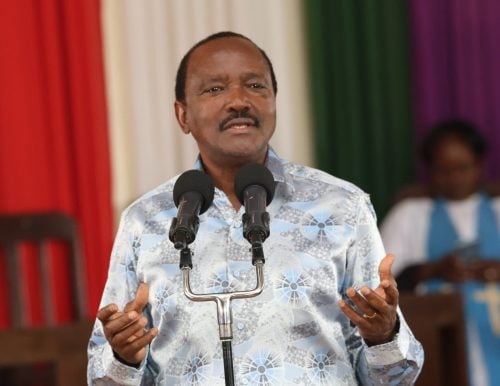
“This is the right time to bring in a new CEO as part of broader reforms. We should not act as if one person is the entire factory. What matters is strengthening systems and teamwork within the IEBC,” the MP asserted.
Marjan’s resignation followed sustained calls from opposition leaders, including Wiper Party leader Kalonzo Musyoka, who accused him of hastily renewing the contract of electoral technology provider Smartmatic.
Kalonzo warned that the credibility of the next election would be compromised if Marjan remained in office.
IEBC has since indicated that an acting CEO will be appointed as it begins the process of recruiting a substantive replacement, a move the Commission says is aimed at safeguarding institutional stability and public confidence ahead of the 2027 General Election.