Gachagua defends cousin movement, elbows Ruto’s troops over tribalism
By Aloys Michael, July 20, 2025On his high-voltage U.S. tour, former Deputy President Rigathi Gachagua lit up diasporan gatherings with fiery rhetoric in defence of what he calls the Cousin Movement while launching blistering accusations at President William Ruto’s allies for fuelling tribalism and sabotaging economic freedoms back home.
Speaking in Boston on Sunday, July 20, 25, the Democracy for Citizens Party (DCP) leader asserted that the growing popularity of the Cousin Movement—a loose but spirited coalition drawing support from Kikuyu, Luhya, Kisii, and other communities—has deeply unsettled President Ruto’s inner circle.
“They are bitter because they have seen that we are united. They thought you people in America don’t care about tradition or culture. But when they saw young girls and boys dancing musaimo with Samidoh, our songs from the 1960s, they realised this community is very much alive,” he said.
He painted a picture of cultural revival and political realignment, punctuated with emotion and vernacular flair. “Nimeenda Ukambani walifurahi kuona cousin yao,”( I went to Ukambani, and they were happy to see their cousin, he said.
“I went to Ukambani, and they were happy to see their cousin. I went to Michigan, and our cousin is there. I went to Atlanta, and they received me like family,” he said.

According to Gachagua, the Cousin Movement is not just a tribal coalition but a demand for genuine leadership.
“That’s why it’s robust and cannot be weakened by government tactics. People want the truth. People want quality leadership, not the lies they were sold on August 9.”
He accused Ruto’s administration of betraying Kenyans by failing to fulfil pre-election promises and instead weaponising state power against economic players associated with rival communities.
“They failed to deliver on their pledges. Now they are targeting businesses and sabotaging Kenyan incomes. That’s why they are fighting us—we are ready to take them home,” he said.
His remarks, steeped in both nostalgia and urgency, served as a rallying cry to the Kenyan diaspora, which he praised for its entrepreneurial zeal and patriotic spirit.
“Our hard-working spirit, our ability to create businesses and uplift everyone, is why we are admired,” he said. “That’s the real threat to them.”
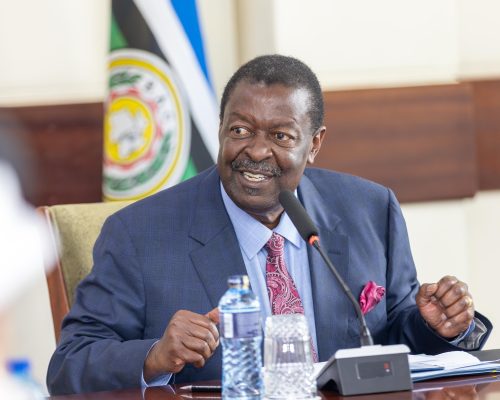
But his rhetoric, laced with cultural pride and a sharp political edge, has sparked backlash in Nairobi. Prime Cabinet Secretary Musalia Mudavadi blasted Gachagua for what he termed “the exportation of tribal politics to the United States”. Speaking to reporters back home, Mudavadi scoffed, “A former deputy president, addressing Kenyans in the diaspora in his local dialect? That is nothing but tribalism on foreign soil.”
National Assembly Speaker Moses Wetang’ula echoed similar concerns.
“Our diaspora are as diverse as Kenya itself. These divisive ethnic messages undermine our unity, no matter where they are spoken.”
Gachagua scoffs at critics
Gachagua, undeterred, fired back.
“I’m simply speaking to my people,” he said in Seattle.
“When I talk in Kikuyu, or Kisii, or Luhya, it’s not exclusion; it’s comfort. These are our languages. This is who we are. Now I challenge Mudavadi: go and talk to the Luhya in the U.S. in your mother tongue. Let’s see if they reject you.”
He didn’t stop there. With a wry smile, he told the crowd, “So now they say I’ve brought tribalism to America? No, what I’ve brought is unity. That’s why the Cousin Movement has bought everyone. I’m telling you, I have been embraced by everybody!”
At cultural nights like Ngemi Cia Ruraya and party forums across diaspora communities, Gachagua spoke of identity, economic freedom, and the need for political honesty. In one moment of candid self-awareness, he admitted, “I’ve exploded, but I’m just talking to my people,” Gachagua asserted.
On July 15, 2025, addressing Abagusii Kenyans in Boston, he added, “I am glad they understand the challenges our country is going through, and they are committed to positive change.”
Despite his bold claims, Gachagua’s movement hasn’t gone unchallenged. Ruto’s senior advisor, Makau Mutua, dismissed the entire U.S. trip on social media as a “zero-yield stunt”. “Not even one ndururu will come from this,” the advisor quipped on X.
But Gachagua is betting otherwise. He believes the diaspora will play a major role in shaping the 2027 political landscape, both through financial contributions and narrative influence. His tour may well be laying the groundwork for a broader comeback campaign rooted in cultural reclamation and populist defiance.