Advertisement
Eliud Owalo explains why era of political zoning is over
Sunday 19th April, 2026 10:52 AM|

Former Deputy Chief of Staff Eliud Owalo has dismissed the idea of political zoning, describing it as outdated and incompatible with Kenya’s current multi-party democratic system.
Speaking during a church service in Nyangori on Saturday, April 18, 2026, Owalo, who is also eyeing the 2027 presidential race, argued that zoning weakens political competition and limits voters’ choices by locking regions into predetermined political alignments.
He maintained that the practice undermines the spirit of the 2010 Constitution, which promotes democratic participation and political diversity across the country. According to him, restricting regions to specific political parties creates a situation where alternative candidates are automatically disadvantaged, even if they may have strong development agendas.
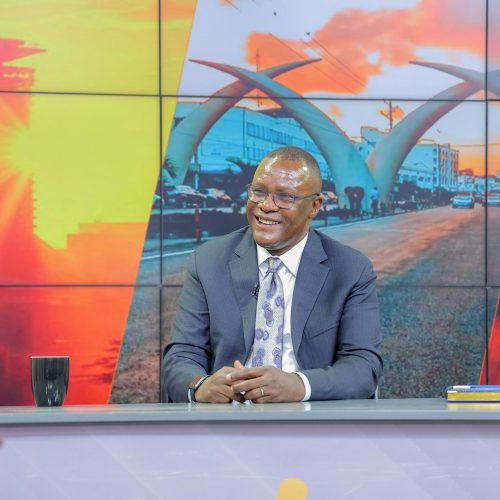
“The issue of political zoning, first of all, is wrong. That’s the bottom line. It is wrong because what is the net effect of political zoning? If you say, for example, that in Western Kenya, a given political party is the one which should fill candidates in that region, the net effect is that anybody who does not get the party ticket falls by the wayside because there is no substitute,” the 2027 presidential hopeful maintained.
Disadvantages of zoning
You Might Also Like



Owalo further observed that Kenya should instead embrace a political environment where multiple parties freely compete across all regions. He noted that voters should not be confined to “political strongholds” but should be allowed to evaluate leaders based on their performance, ideas, and development track record.
“So we cannot be having our 2010 constitutional dispensation, which articulates multi-party democracy. Yet we confine certain regions as strongholds, which are exclusively for specific political parties. We need to have a multiplicity of political parties so that Kenyans can have a variety of choice, a good political menu from which to choose,” Owalo detailed.
He likened politics to a free market system, where competition, choice, and open participation are essential for progress. In his view, a healthy democracy thrives when citizens are exposed to a wide range of candidates and political ideologies rather than being restricted to a single dominant party in a region.
Zoning talks

On the positive side, according to Otiende, it can promote democracy, but on the flip side, it can undermine it.
He stated that even former Prime Minister Raila Odinga was against zoning and the idea of having leaders elected from a single party, even in his Nyanza stronghold, instead advocating for multiple parties to win seats. He added that zoning can sideline popular politicians simply because they do not belong to the dominant party in a region.
Author
Latest News






Advertisement
More on Inside Politics