Advertisement
Blow to Ruto as Gen Z protests victims reject Ksh3M compensation offer
Thursday 23rd April, 2026 07:12 AM|

A fresh dispute has emerged over the government’s proposed compensation plan for victims of recent Gen Z-led protests, dealing a political blow to President William Ruto’s administration as affected families reject the Ksh3 million payout as insufficient.
With just four days remaining before the deadline set by the Kenya National Commission on Human Rights (KNCHR) for public submissions on the proposed reparations framework, victims and their families have voiced strong opposition to the current terms.
The framework suggests Ksh3 million compensation for deaths and Ksh2 million for cases of enforced disappearances.
However, in a press briefing on Wednesday, April 22, 2026, survivors and families argue the figures fall far short of the gravity of the losses suffered during the protests.
You Might Also Like

They are now pushing for significantly higher payouts, including Ksh5 million for those killed or who disappeared, Ksh4 million for survivors of sexual violence, Ksh3 million for those who disappeared and were later found, Ksh3 million for victims left with permanent disabilities, and Ksh250,000 for victims of unlawful arrest and detention.

“We demand the establishment of a clear, minimum tax-exempt compensation of five million shillings for loss of life and disappearance,” George Obienge, a father who lost his child during the protests, said.
Beyond financial compensation, the victims are also demanding accountability and systemic reforms.
Pressure piles on Ruto
Central to their demands is a call for President Ruto to publicly acknowledge the human rights violations that occurred during the 2024 and 2025 protests and to commit to preventing a recurrence.
“The president must publicly acknowledge what happened in 2024 and 2025,” Obienge added.
He also called for urgent reforms in policing, particularly in how law enforcement handles public demonstrations.
“Police should provide security to protestors and only shoot when their life is in danger or arrest the perpetrators,” he said.
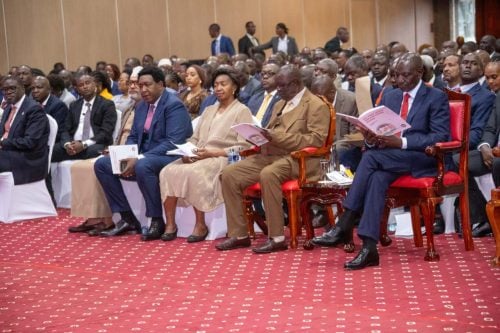
The backlash comes despite the government announcing a Ksh2 billion allocation to compensate victims of past protests and human rights violations. President Ruto announced during a joint parliamentary session at the Kenyatta International Convention Centre (KICC) in Nairobi on March 10, 2026.
“Although we are being told, and it is correct, that you can never compensate for life, we can do something about it,” Ruto said.
“We have already identified all the victims, profiled their names, and established a comprehensive list. Private resources will be used alongside the Ksh2 billion to ensure proper compensation.”
The compensation initiative is part of commitments under the 10-Point Agenda agreed upon between the United Democratic Alliance (UDA) and the Orange Democratic Movement (ODM), with the KNCHR) tasked to oversee the process and ensure fairness.
However, victims and activists have raised concerns that the process is being rushed, potentially excluding many deserving cases. They are urging KNCHR to extend the submission timeline by at least 90 days and to clearly outline the stages of registration, verification, validation, and payment.
“We are deeply concerned that this process is being rushed for political reasons,” activist Shakira Wafula said.
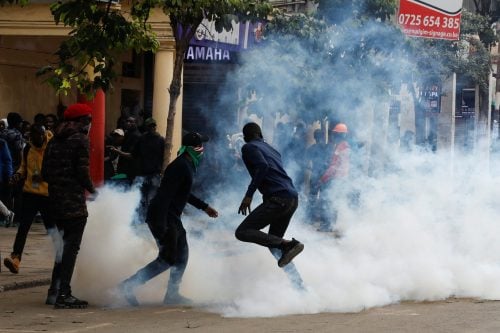
PHOTO/@channelafrica1/X
Push for deadline extension
Gillian Odawa, mother of slain protester Rex Masai, echoed the concerns.
“KNCHR must extend the current deadline by at least another 90 days.”
Kenyans have until April 27, 2026, to submit their views on the reparations framework.
President Ruto has maintained that the government aims to complete the compensation process by June, noting that systems are already in place to ensure transparency and accountability. He emphasised that while financial payments cannot replace lost lives, they represent a step toward justice.
“We believe that unless something else happens, we should be able to conclude this exercise by June,” he said.
Still, with growing dissatisfaction among victims and mounting pressure for higher compensation and accountability, the government now faces a critical test in balancing justice, public trust, and political goodwill.
Author
Latest News






Advertisement
More on Inside Politics