Agnes Zani under pressure to submit 10-point agenda full update as deadline looms
By Aloys Michael, February 11, 2026The National Dialogue Committee (NADCO), tasked with overseeing the implementation of the 10-point agenda, is under mounting pressure to submit a comprehensive progress report as the March 7, 2026, deadline approaches.
This comes after Nairobi senator Edwin Sifuna had accused the committee of inaction since August 2025, warning it has 30 days to meet its March 7, 2026, deadline without extension.
“A deadline of March 7 was given to the committee for it to submit its final report. I am here to sound the alarm that the committee has 30 days to give us a final report on the memorandum of understanding. It’s been six months, and so far they have done absolutely nothing,” Sifuna said during a recent interview.

However, despite the blotts, the committee’s chairperson, Agnes Zani, said the team is still consolidating feedback from government offices, political parties, and public forums, and is not yet ready to provide a full update on all recommendations.
“We are reviewing the NADCO report and its wide range of recommendations, including electoral justice, boundary matters, the IEBC and its selection committee, and the audit of the 2022 general elections. We are also examining key issues in the MOU, the NADCO report itself, and the 10-point agenda, particularly Article 43 concerns such as housing, education, and the cost of living,” Zani explained in an interview on a local TV station on Tuesday, February 10, 2026.
The committee is also assessing broader governance and political matters that emerged from violent protests between March and July 2023, led by the Azimio coalition
“We are looking at political party fidelity, management of national government funds, and issues related to the offices of the Leader of the Official Opposition and the Prime Minister,” she said.
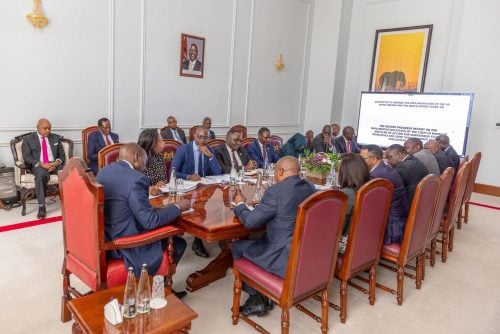
Moreover, Zani emphasised that public participation is central to evaluating the extent to which NADCO’s recommendations have been implemented.
“We are collecting views from the public because we need to assess how far the recommendations have been actualised. This committee, for the first time, has been given a mandate to ensure follow-through, and we are focused on what has been achieved,” she said.
She clarified that NADCO’s role is supervisory rather than operational.
“We are overseeing the implementation; we are secondary implementers rather than primary ones,” Zani said.
“The committee is using public consultations to gather both quantitative and qualitative insights on critical issues such as corruption, the wage bill, and inclusivity. “For instance, we visit public offices for data on matters like corruption, while also engaging with citizens to understand their perspective on progress.”
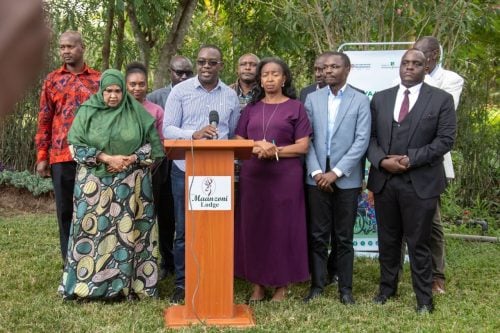
Consultations have so far been conducted in Kisumu, Homa Bay, and Migori counties, with Siaya next on the schedule. The feedback will inform the final report to be submitted to UDA and ODM leaders.
Funding concerns
On funding, Zani said the committee relies on support from political parties rather than direct government allocations.
“We operate on a need basis, with most resources coming from political bodies. All expenditures are audited by the Auditor General,” she said.
Her remarks came after Sifuna, a signatory to ODM’s account, recently stated that the party had not given any funding to the committee to carry out its functions – a statement that Zani refuted.
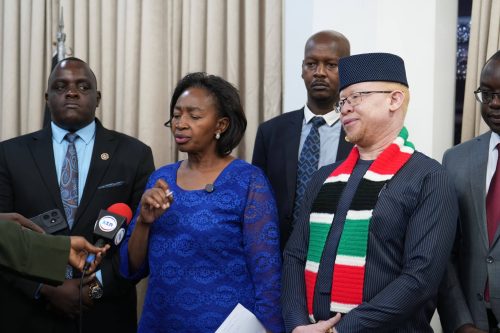
“We are not receiving the money in cash. Even when we go out to meet the public or go to the public forums, the parties will organise to make sure that the various public forums are in place. Maybe you can ask him where his sources are because I wouldn’t be able to tell,” the chair explained.
“He is not the only one among the signatories. We have about five different signatories, and any three can sign at any one particular time.”
“We are not the ones doing the rating. It is the external organs and the implementers who are going to tell us the progress. All we are doing is consolidating and putting in the data,” she stated.
“I think the notion that we’re the ones implementing, but we’re overseeing, looking at other organs and other primary responsible organs, this is the model we need to understand.”