Advertisement
State on the spot over spike in pump prices despite G2G deal
Wednesday 23rd July, 2025 08:20 AM|

The government is on the spot over the sudden spike in fuel pump prices in the recent review despite the Government–to–Government (G2G) arrangement being in place.
Established in April 2023, the arrangement was aimed at stabilising the fuel prices and the shilling as a result of the country importing the commodity from Gulf oil companies on a 6-month credit basis.
This arrangement, which was to culminate on April 30, 2025, got an extension to the first quarter of 2028 after the National Treasury made the approvals in April this year.
In the recent price review by the Energy and Petroleum Regulatory Authority (EPRA), the prices in Nairobi for Super Petrol, Diesel and Kerosene recorded a jump to retail at Ksh186.31, Ksh171.58 and Ksh156.58
You Might Also Like
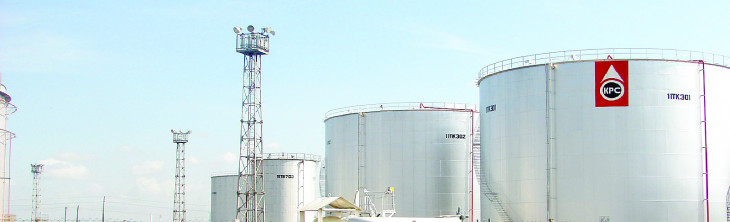


This is up from last month’s Ksh177.32, Ksh162.91 and Ksh146.93 per litre for petroleum, diesel and kerosene, respectively.
While appearing before the National Assembly Departmental Committee on Energy, the Ministry of Petroleum and Energy Cabinet Secretary Opiyo Wandayi attributed the recent jump in fuel prices to the landed cost, which was influenced by the global prices.
“The oil industry in Kenya uses the S&P Global platform as the benchmark. So, to avoid speculation, the applicable terms and conditions provide for the use of the monthly average in the computation of the on-board cost for each delivery. The pricing month is dependent upon the delivery date for each cargo,” he said.
As per the document presented before the committee, the international prices of super petrol in June increased from $671 (Ksh86,559) per tonne to $716.94 (Ksh92,485) per tonne as that of diesel increased to $616.47 (Ksh79,524) from $563.84 (Ksh72,735) per tonne in May while that of kerosene increased from $598.43 (Ksh77, 197) to $647.20 (Ksh83,488) per tonne.
“The international prices of refined products increased by 6.72 per cent, 9.33 per cent and 8.15 per cent for super petrol, diesel and kerosene respectively between the months of May and June 2025 the increase had an impact of Ksh5.17 per liter on super petrol, Ksh4.90 per litre on diesel and Ksh5.74 per litre on kerosene,” he explained.
Further trying to defend the jump, he stated that there has been a marginal decline since the past year, July 2024 to July 2025, noting that even though the prices have risen, they are still lower than what Kenyans were paying then.
“Even with the latest increase in the prices of these three products, after a long time, the prices have not yet hit where they were in July last year,” he said.
While the global fuel prices were falling, Kenyan citizens were deprived of the right to enjoy the benefits due to the binding agreement under the G2G arrangement.
However, what the legislators sought to understand was why the prices were being affected by the rise in global prices despite the arrangement being in effect.
Aside from this, he stated that compared to neighbouring countries such as Tanzania, the cost of the commodity is driven by the taxes and levies imposed.
Currently, the taxes and levies imposed on the commodity, according to Kiharu MP, Ndindi Nyoro, take up to 80 per cent of the actual price.
“Those taxes and levies that are imposed on petroleum products have to be approved by Parliament. Without Parliament’s approval, they cannot take effect,” Wandayi said.
In the June 15 price review, taxes and levies for super petrol surpassed the actual price in the sense that the landed Cost of Super petrol per litre, as indicated by the regulator, stood at Ksh76.83 while the taxes stood at Ksh80.87 cumulatively, pushing the pump prices to Ksh177.32 per litre.
The taxes and levies comprised of Ksh21.95 for the excise duty, Ksh25 for the Road Maintenance Levy, Ksh5.40 for the petroleum levy, Ksh0.75 for the petroleum regulatory levy, railway regulatory levy- Ksh1.46, and Value added tax of Ksh24.46, among other levies.
These taxes are also charged on the other petroleum products, although at slightly different rates, thus the doubling in price
Wandayi, however, noted that countries within the region have different development priorities, a factor which influences the tax policies, citing that Tanzania has a higher landed cost but with lower taxes.
Further, he highlighted that apart from the taxes and the landed cost, the prices of the commodity are also influenced by the distribution costs, gross margins and storage.
Author
Victor Mukabi
View all posts by Victor MukabiLatest News







Advertisement
More on Business