Advertisement
Parliament approves 2026/27 Budget as health and education take lion’s share
Friday 05th June, 2026 01:13 AM|

Kenya’s National Assembly has approved the revenue and expenditure estimates for the 2026/2027 financial year, adopting a budget that prioritises health, education, and social protection programmes across the country.
The Budget and Appropriations Committee presented the framework following public participation and sector consultations, with lawmakers outlining allocations aimed at strengthening service delivery while maintaining fiscal discipline.
Moving the motion, the Chairperson of the Budget and Appropriations Committee, Samuel Atandi, outlined a framework anchored on public participation and targeted investments in health, education, housing, agriculture, and environmental resilience.
“This budget is structured to strengthen Universal Health Coverage, improve primary healthcare services, and expand specialized healthcare infrastructure,” Atandi said, highlighting a health sector allocation of Ksh 175.5 billion.
Health sector funding
You Might Also Like
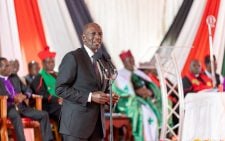
Health has been allocated Ksh 175.5 billion to support universal health coverage and strengthen healthcare delivery systems at national and community levels.
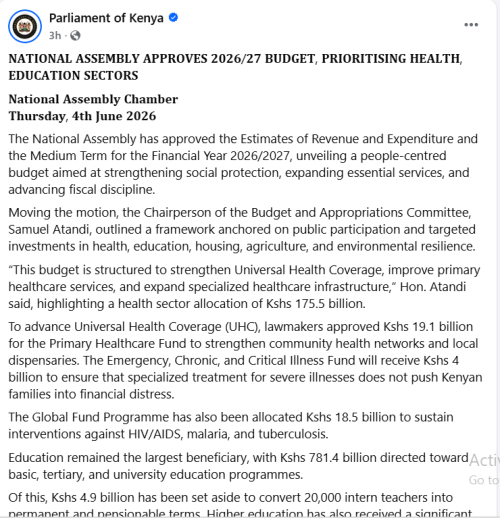
Out of this allocation, Ksh 19.1 billion has been directed to the Primary Healthcare Fund to improve dispensaries and community health services. A further Ksh 4 billion has been set aside for the Emergency, Chronic and Critical Illness Fund to support treatment of severe conditions. Another Ksh 18.5 billion will sustain programmes targeting HIV/AIDS, malaria, and tuberculosis.
Lawmakers said the funding is intended to reduce financial pressure on households and improve access to essential medical services across the country.
Education and social protection
Education received the largest share of the budget at Ksh 781.4 billion, covering basic, tertiary, and university education programmes.
Within this allocation, Ksh 4.9 billion has been set aside to convert 20,000 intern teachers into permanent and pensionable terms. The Higher Education Loans Board has been allocated Ksh 56.7 billion to support access to university education for students in need.
The budget also introduces Ksh 3.5 billion for stipends to village elders, with each expected to receive Ksh 3,000 monthly under the National Government Administrative framework.
Housing, energy and fiscal outlook
Housing has been allocated Ksh 138.2 billion, including Ksh 50 billion for the Affordable Housing Programme aimed at expanding housing units, upgrading informal settlements, and supporting job creation in the construction sector.
The energy sector has received Ksh 16.3 billion for rural electrification and Ksh 7.5 billion for expansion of the national grid. Additional funding has been directed to digital infrastructure, including ICT hubs, the Konza Data Centre, and cybersecurity systems.
Social protection programmes include Ksh 25 billion for elderly cash transfers, Ksh 8.9 billion for orphans and vulnerable children, and additional support for persons with disabilities and hunger relief initiatives. The National Youth Service has been allocated Ksh 12.5 billion to support youth skills development and employment programmes.
Members of Parliament raised concerns over rising public debt, projected at Ksh 1.1 trillion in debt servicing, and delays in payment of pending bills. They noted improvements through the electronic government procurement system, which has recorded savings of Ksh 36.9 billion, and called for faster Exchequer releases.
The approved estimates now proceed to the Appropriation Bill stage, which will authorise government spending for the 2026/2027 financial year.
Author
Latest News


Advertisement
More on Business