Advertisement
Ndindi Nyoro: Kenya trails neighbours in economic growth
Monday 15th September, 2025 07:01 PM|

Kiharu Member of Parliament Ndindi Nyoro has criticised Kenya’s economic performance, warning that the country is lagging behind its East African peers.
In remarks captured in a recent address, according to a video posted on Monday, September 15, 2025, Nyoro said Rwanda, Uganda, and Tanzania all posted stronger growth rates than Kenya.
“Kenya was actually the last in terms of growth in our region. Rwanda grew by 8.9 per cent, Tanzania grew by 5.5 per cent, while Uganda grew by 6.1 per cent in the same period,” Nyoro said.
“Narratives can only sell up to some point, and then reality knocks on the door. Kenya has the potential to be the leader in terms of economic growth in the region. Currently we are last among our neighbouring countries. That is not something to celebrate but something to call us to honour.”
You Might Also Like

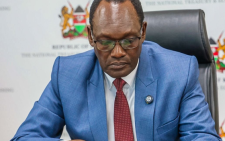

Nyoro’s remarks follow a series of warnings he has issued in recent weeks about the country’s fiscal stability. On September 6, 2025, he said Kenya is borrowing Ksh3.4 billion every day, or about Ksh140 million per hour, adding that the national debt has already crossed Ksh12.1 trillion.
The MP had also raised concerns over the government’s secretive borrowing.
He urged the government to avoid the fate of countries such as Ghana and Sri Lanka, which have faced debt crises.
Forecasts highlight cautious optimism
The World Bank reported on June 5, 2024, that Kenya’s GDP grew 5.6 per cent in 2023, supported by agriculture and services, though growth was expected to slow to 5.0 per cent in 2024 due to tight fiscal conditions, high debt service obligations, and currency pressures. The Bank projected average growth of 5.2 per cent between 2024 and 2026, assuming reforms and stable weather conditions.
Similarly, the African Development Bank’s African Economic Outlook 2024 recorded Kenya’s growth at 5.2 per cent in 2023, projecting 5.4 per cent in 2024 and 5.6 per cent in 2025, provided fiscal consolidation continues. AfDB analysts highlighted persistent challenges, including high public debt, poverty, and unemployment, and emphasized the need for sustainable and inclusive growth through institutional strengthening and transparent governance.
Most recently, on August 7, 2025, the National Treasury projected Kenya’s economy to rebound to 5.3 per cent in 2025 and 2026 under the Bottom-Up Economic Transformation Agenda (BETA), citing improved agricultural productivity, easing inflation, a stronger shilling, and lower interest rates. Treasury CS John Mbadi, speaking at the 2025 AfDB African Economic Outlook launch, cautioned that high public spending demands and limited debt space remain pressing concerns.
President William Ruto has defended his administration’s record, arguing that Kenya has avoided a debt crisis and risen to become Africa’s sixth-largest economy. He credits disciplined planning for stabilising the shilling and restoring investor confidence, asserting that the country is on a path to fast-growing economic status similar to Singapore.
Nyoro’s warnings underline the need for fiscal discipline, robust policy implementation, and structural reforms if Kenya is to reclaim its position as a regional economic leader.
Author
Kenneth Mwenda
Kenneth Mwenda is a business, sports, and politics digital writer with over seven years of experience in journalism, covering breaking news, feature stories, and in-depth analysis across a range of beats.
For inquiries, he can be reached at [email protected]
View all posts by Kenneth MwendaLatest News








Advertisement
More on Business