KNBS Consumer Index: Transport costs outpace food as Kenya’s biggest inflation driver
By Aloys Michael, July 2, 2026Transport costs have overtaken food as the fastest-growing contributor to Kenya’s cost of living, signalling a shift in inflationary pressures that is increasing business operating costs and squeezing household budgets despite easing fuel prices.
The latest Kenya National Bureau of Statistics (KNBS) Consumer Price Indices and Inflation Report shows annual transport inflation reached 16.1 per cent in June 2026, almost double the 8.6 per cent recorded for food and non-alcoholic beverages.
Although food remains one of the largest components of household spending, the data suggests the cost of moving people and goods is increasingly shaping inflation across the economy.
“Annual consumer inflation stood at 6.4 per cent in June, with price increases primarily driven by a rise in prices of items in the Food and Non-Alcoholic Beverages (8.6%), Transport (16.1%), and Housing, Water, Electricity, Gas and other fuels (3.4%) over the one-year period,” the report reveals.
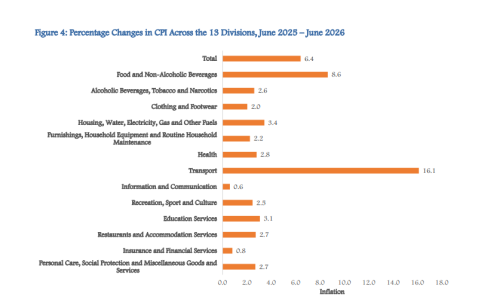
KNBS notes that the three categories together account for more than 57 per cent of the total consumer basket used to calculate inflation.
The report highlights that transport costs continue to weigh heavily on households even as fuel prices moderated during the month.
“During the period between May 2026 and June 2026, petrol prices decreased by 0.1 per cent. Diesel recorded the highest decrease at 6.3 per cent during the reference period,” KNBS said.
Despite the monthly decline in pump prices, commuters and businesses have yet to experience meaningful relief from transport expenses accumulated over the past year. National average retail prices show diesel in Nairobi fell from Ksh232.86 per litre in May to Ksh222.86 in June, while petrol edged down marginally from Ksh214.25 to Ksh214.03 per litre.
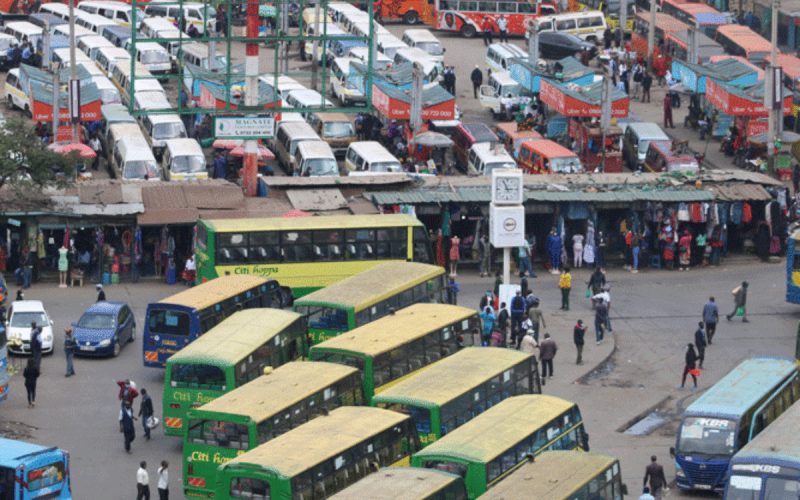
One of the clearest examples of rising transport costs is public transport. KNBS data shows bus and matatu fares on the Bungoma-Kabula route jumped from Ksh70 to Ksh100 in June, representing a 42.9 per cent increase in a single month.
The sharp rise illustrates how fare adjustments can quickly erode household purchasing power even when fuel prices stabilise.
For businesses, the implications extend far beyond passenger transport. Higher logistics expenses increase the cost of moving raw materials to factories and finished products to retailers, placing pressure on profit margins across manufacturing, wholesale distribution and e-commerce. Companies are often forced to absorb the additional costs or pass them on to consumers through higher retail prices, reinforcing broader inflationary pressures.

Households expenditure
The trend also threatens consumer spending power. As households allocate a larger share of their income to commuting and transport, they have less money available for discretionary purchases, affecting retailers, restaurants and other consumer-facing businesses.
Transport inflation has a multiplier effect because nearly every product sold in the market depends on road transport somewhere along the supply chain.
The latest figures also point to a divergence between headline inflation and underlying cost pressures. While annual inflation eased slightly from 6.7 per cent in May to 6.4 per cent in June, transport inflation remained elevated, suggesting that businesses dependent on distribution networks continue to face operating cost challenges despite the broader moderation in price growth.
The findings come amid rising concerns among logistics firms, manufacturers, supermarket chains and policymakers monitoring the cost of doing business, reinforcing the importance of efficient transport infrastructure and stable fuel pricing in containing inflation, particularly as Kenya seeks to improve supply chain efficiency and stimulate private sector growth.
While food prices have traditionally dominated conversations around the cost of living, the latest KNBS Consumer Price Index suggests a new reality is emerging.
The rising cost of mobility is becoming one of the biggest drivers of household expenditure and business costs, with consequences that extend well beyond the transport sector into every corner of the Kenyan economy.