Kenya to sign duty-free access deal with China in 30 days
By Aloys Michael, February 4, 2026Kenya is set to sign a landmark Duty-Free, Quota-Free (DFQF) trade agreement with China within the next 30 days, a move expected to significantly boost the country’s agricultural exports and rebalance its long-standing trade relationship with the world’s second-largest economy.
In an interview on a local TV station on Wednesday, February 4, 2026, Investment, Trade and Industry Cabinet Secretary Lee Kinyanjui confirmed that negotiations with Beijing have reached an advanced stage, with initial discussions already concluded.
Once signed, the deal will allow Kenyan products to enter the Chinese market at zero tariff and without volume restrictions, giving local exporters unprecedented access to a market of more than 1.4 billion consumers.

“We have finished what you may call the initial discussions. So we would be expecting that in the next maybe 30 days, we should be able to sign, and our people can export directly to China at zero tariff and zero quota, meaning nobody restricts how much you’re able to export,” the CS revealed.
Broader relations shift
The impending agreement reflects a broader shift in Africa-China relations, from development assistance to trade-driven partnerships. According to Kinyanjui, earlier engagements between African leaders and major economies often focused on external support. That narrative is now changing.
“A couple of years back, when heads of state and governments went to big nations, the conversation revolved around support. But over time, the composition is changing to market access. What can I sell in your market? What can I produce in your country? That is more sustainable, more dignified for African countries,” he said.
Kenya, he noted, is taking a lead role in championing this new approach, positioning trade and investment at the centre of its foreign economic policy.
What is means for farmers?
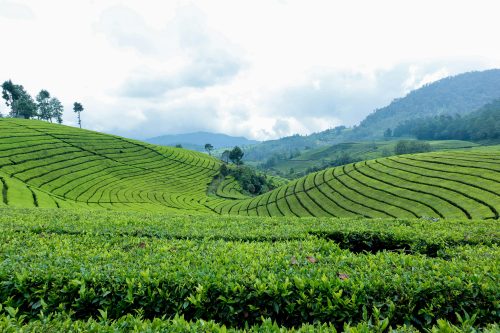
Under the DFQF framework, Kenyan farmers are expected to be among the biggest beneficiaries, particularly those producing high-demand commodities such as avocados, tea, coffee, flowers and meat products.
“China has a huge population, and if they just take even 1 per cent of their pork or avocado from us, we can completely plug into that market and change our youth and employment status,” Kinyanjui explained.
The CS added that the agreement could catalyse value addition and agro-processing, as exporters scale up production to meet Chinese demand. This, in turn, could stimulate rural incomes, job creation and foreign exchange earnings.
Correcting a structural disadvantage
Kenya’s push for duty-free access also seeks to correct a structural disadvantage it has faced for years. While many of its neighbours qualify as least developed countries (LDCs) and therefore enjoy zero-tariff, zero-quota access to major markets, Kenya’s status as a lower-middle-income country has excluded it from similar preferences.
“Kenya is a mid-level country, and all our neighbouring countries are least developed. Typically, least developed countries have zero tariffs and no quota status. But because we are higher than our neighbours, we are disadvantaged,” he stated.
This disparity has had unintended consequences. Some Kenyan exporters, he revealed, have routed their goods through neighbouring countries such as Rwanda to benefit from preferential access, effectively incurring a competitiveness penalty of up to 10 per cent.
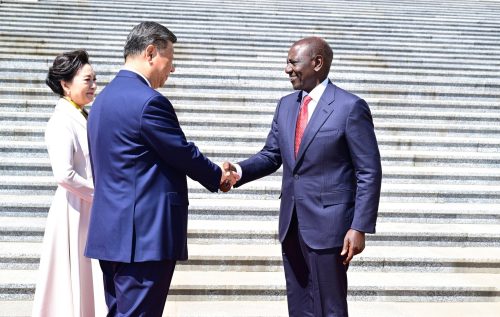
“The moment that is removed, I want to assure you our exports are going to shoot,” he said.
The DFQF agreement is expected to mark a turning point in Kenya-China trade relations, which have historically been characterised by a significant trade imbalance in China’s favour.
By opening the Chinese market more fully to Kenyan goods, policymakers hope to narrow that gap and place exports at the heart of Kenya’s growth strategy.
If finalised as planned, the agreement could redefine the country’s export trajectory and signal a new phase of engagement with global markets, one driven less by aid and more by competitive, rules-based trade.