Advertisement
Kenya to benefit as Nigerian firm inks Tanzania’s gas deal
Monday 21st July, 2025 08:20 AM|

Kenya is poised to gain a significant boost in energy supply following the signing of a memorandum of understanding (MoU) between two entities from Nigeria and Tanzania.
The agreement between Nigeria’s First Exploration and Petroleum Development Ltd (First E&P) and Tanzania Petroleum Development Corporation (TPDC) is for the joint development of the Mnazi Bay North Gas prospect in southern Tanzania.
The project, signed on July 18, 2025, in Dodoma, paves the way for the construction of a 340-kilometre sub-sea gas pipeline from Dar es Salaam to Mombasa, with connections to Tanga and Zanzibar.
For Kenya, the pipeline offers a critical new source of affordable and clean natural gas for use in power generation, manufacturing, and household consumption — especially in Mombasa and, eventually, Nairobi.
You Might Also Like

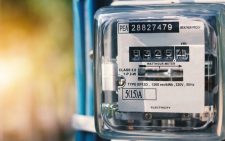

With the high cost of electricity and over-reliance on hydro and diesel power, Kenya’s industries stand to benefit from this cross-border energy infrastructure.
The availability of piped gas would significantly reduce energy costs for manufacturers, strengthen Kenya’s regional industrial competitiveness, and help meet its energy transition goals.
First E&P, a major Nigerian upstream oil and gas company with a current output of 60,000 barrels of oil per day, will finance and provide the technical expertise required to develop the Mnazi Bay North block.
The company is investing over $600 million into the initial exploration phase, with full commercial development to follow upon successful appraisal.
By bankrolling the assessment stage, First E&P signals confidence in the viability of the gas reserves and long-term commercial potential.
“By fully funding the assessment phase, FIRST E&P is demonstrating both its confidence in the block’s significant gas prospects and its long-term commitment to supporting Tanzania’s energy development,” the company said in a statement.
Kenya, which is currently grappling with a rising energy import bill and insufficient base load power, is expected to be one of the key export markets for the gas.
Energy trade flows
The pipeline to Mombasa will be the first transnational sub-sea gas infrastructure in East Africa, unlocking new regional energy trade flows.
In his remarks, First E&P Managing Director and CEO Ademola Adeyemi-Bero pointed to the company’s successful track record in Nigeria as a sign of what it hopes to replicate in East Africa.
“Our success in Nigeria, built on deep technical expertise, a high-performance team, and an entrepreneurial mindset, has positioned us to deploy our capabilities beyond our home market,” he said.
“We believe Tanzania holds world-class hydrocarbon resources, and its strategic location positions it as a natural energy hub for the region,” he Adeyemi-Bero.
Kenya’s proximity and relatively advanced infrastructure network make it a natural partner in the regional energy trade.
Once operational, the pipeline is expected to supply gas to key industrial consumers in the Mombasa Special Economic Zone (SEZ) and to independent power producers (IPPs) that can feed cleaner electricity into the national grid.
Currently, the majority of Kenya’s energy is generated from geothermal, hydro, and diesel sources.
While renewables remain a national priority, the intermittency of hydro and the rising cost of oil-based generation have forced a search for alternatives.
Natural gas offers the advantage of rapid deployment, flexible generation, and lower carbon emissions compared to coal or oil.
The investment also has implications for regional energy diplomacy. East Africa has long sought to integrate its infrastructure, but financing and political hurdles have stalled progress.
This partnership — driven by a Nigerian investor and anchored in Tanzanian gas — could become a model for how African nations cooperate to meet shared energy needs.
Mussa Makame, TPDC Managing Director underscored the project’s strategic importance during the signing ceremony in Dodoma.
“The Mnazi Bay North gas development marks a critical milestone in unlocking the commercial potential of Tanzania’s southern basin. With regional partnerships like this, we aim to transform East Africa into a gas-powered economic hub,” he said.
Author
John Otini
View all posts by John OtiniLatest News







Advertisement
More on Business