Inflation concerns linger as businesses prepare for rising fuel costs -CBK
By Aloys Michael, June 19, 2026Private sector firms in Kenya have revised their inflation expectations upwards, citing rising fuel and energy costs as the primary driver of persistent price pressures, according to the Central Bank of Kenya’s (CBK) May 2026 Market Perceptions Survey.
The survey, which gathered views from chief executives and senior officers across 400 private sector firms, shows that businesses expect inflation to remain above five per cent in the near term, though still within the official target band.
A significant 90 per cent of respondents identified higher fuel and energy prices as the main drivers of inflation.
“Rising fuel costs have increased transport, electricity, production and distribution expenses, exerting upward pressure on domestic prices,” the CBK stated in the report.
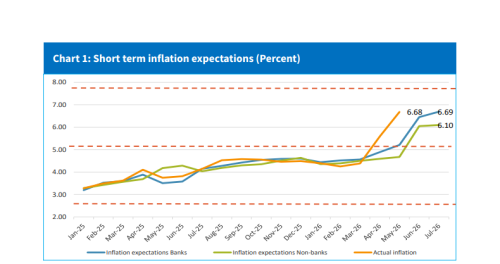
Furthermore, geopolitical tensions in the Middle East have contributed to higher freight and logistics costs, which are feeding into domestic prices.
The concerns come at a time when Kenya remains heavily dependent on imported petroleum products, making domestic prices vulnerable to movements in global oil markets. Businesses expect inflation to remain slightly above five per cent in July, reflecting what they described as the lagged effects of elevated global energy prices.
The survey also found that 71 per cent of respondents cited higher fuel prices as a key medium-term inflation risk, driven by geopolitical tensions, global commodity price cycles, and supply disruptions. This is particularly important for Kenya, given its dependence on imported fuel.
Fuel crisis
Despite these pressures, respondents expect inflation to remain well anchored around the midpoint of the target range in the medium term, supported by the continued implementation of prudent monetary policy.
The findings mirror recent movements in Kenya’s inflation rate, which has remained within the CBK’s target range despite periodic increases in fuel and food prices.

Data from the Kenya National Bureau of Statistics (KNBS) shows inflation has largely stayed below the midpoint of the target range in recent months, supported by exchange rate stability and relatively moderate food price increases.
However, the survey also identified significant downside risks to the growth outlook, primarily stemming from global and geopolitical uncertainties.
More than two-thirds of chief executives reported a high impact from geopolitical tensions linked to the Middle East.
The survey shows that businesses are responding to mounting pressure by implementing cost-cutting measures and streamlining operations.
Firms have also lowered their expectations on hiring compared to the survey conducted in March, with many respondents highlighting a continued shift from contract to permanent employment to ensure workforce stability.
The survey found that respondents expect moderate economic activity during June-August 2026, supported by strong agricultural performance and recovery in key sectors.
However, high inflation and reduced consumer spending remain key factors dampening demand for goods and services.