Advertisement
IMF raises red flags on Kenya’s economic outlook amid rising fuel costs
Wednesday 22nd April, 2026 07:24 AM|

The International Monetary Fund (IMF) has revised its economic outlook for Sub-Saharan Africa downward, including projections for Kenya, following a recent surge in fuel prices that highlights mounting economic strain.
In its latest Regional Economic Outlook for Sub-Saharan Africa, the IMF notes that although the region achieved a strong 4.5 per cent growth rate in 2025, the highest in ten years, this momentum is expected to ease to 4.3 per cent in 2026.
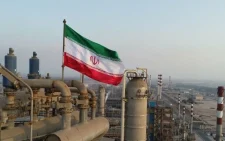
The slowdown is largely linked to the intensifying conflict in the Middle East, whose global economic spillovers are increasing costs and dampening growth prospects across African economies.
“Economic activity accelerated broadly across country groups, with regional growth estimated at about 4.5 per cent, the fastest in a decade, reflecting favourable external factors and good policies, particularly in several large economies,” the report reads.
You Might Also Like


“Regional growth is expected to reach 4.3 per cent in 2026, 0.3 percentage points lower than our prewar forecast, with significant heterogeneity across countries.”
As an oil-importing country, Kenya sits squarely in the group of nations the IMF warns will bear the heaviest burden, facing a deteriorating trade balance and a higher cost of living going into the rest of the year.

The global lender has been direct about the countries that will suffer most, and Kenya is not an exception, noting that “oil-importing, non-resource-rich countries face a deterioration in trade balance and higher cost of living”.
Inflation, which had eased to 3.4 per cent by the close of 2025, is projected to rise again to around 5.0 per cent by December 2026. This increase is expected to place additional strain on household budgets that are still struggling to recover from the income and savings losses caused by the 2020 COVID-19 pandemic.
Meanwhile, the ongoing conflict in the Middle East has emerged as another major pressure point. Prices for oil, gas, and fertilisers have surged, shipping costs have increased, and key trade routes with Gulf partners important to East Africa have been disrupted, creating further supply chain challenges.

At the same time, tourism, a crucial source of foreign exchange for Kenya, is also being affected. The IMF has warned that the conflict is dampening tourist arrivals, adding stress to an economy that had been relying on the sector to maintain its post-pandemic recovery.
“The shock has disrupted the trade with Gulf partners, reduced tourist arrivals, and is likely to dent remittances to some countries,” the IMF said.
With this in mind, the IMF notes that the risk appetite has decreased, negatively affecting financing conditions, while buffers in many countries are limited.
Additionally, the IMF notes that remittances, vital for many Kenyan households to cover education, healthcare, and daily expenses, could decline.
Funds sent from workers in the Gulf are expected to fall as economic conditions in the region weaken and employment opportunities become more limited.
Author
Latest News








Advertisement
More on Business