How Kenya’s dry spell could push up food prices in coming months -report
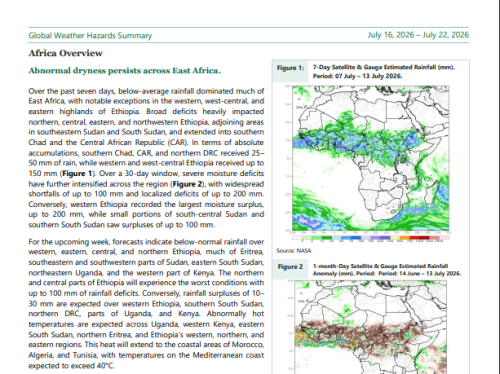
By Aloys Michael, July 17, 2026Food prices in Kenya could come under renewed pressure in the coming months as prolonged dry weather threatens maize production, livestock pasture and household food supplies, according to a new Famine Early Warning Systems Network (FEWS NET) report warning of persistent rainfall deficits and rising temperatures across parts of East Africa.
The latest FEWS NET forecast identifies western Kenya among areas experiencing abnormal dryness after more than a month of poor rainfall. The agency warns that continued below-average rainfall, coupled with temperatures above 35 degrees Celsius, could stress crops and pasture if the current weather pattern persists.
While the report does not forecast food shortages or immediate price increases, it serves as an early warning that worsening weather conditions could eventually affect agricultural production and place upward pressure on maize prices in Kenya, livestock production and the overall cost of living if rains fail to recover.
Agriculture contributes about one-fifth of Kenya’s Gross Domestic Product directly and supports millions of livelihoods, while most of the country’s maize production depends on rainfall. Any prolonged disruption to seasonal rains can therefore have significant implications for food security, rural incomes and market prices.
Maize production and livestock concerns
FEWS NET says thatacross several East African countries, including western Kenya. It also forecasts much above-average temperatures exceeding 35°C in western Kenya during the July 16-22 outlook period.
“Over the last 30 days or more, poor rainfall caused significant deficits and abnormal dryness,” the forecast reads in part.
“Abnormal dryness persists across East Africa after widespread rainfall deficits intensified during the past month.”
Forecasts indicate that western Kenya will continue experiencing below-normal rainfall while unusually high temperatures persist.
The agency explains that its weather hazards outlook is specifically designed to assess how extreme weather may affect crop and pasture conditions, providing governments, farmers and humanitarian agencies with early warning information before food security deteriorates.
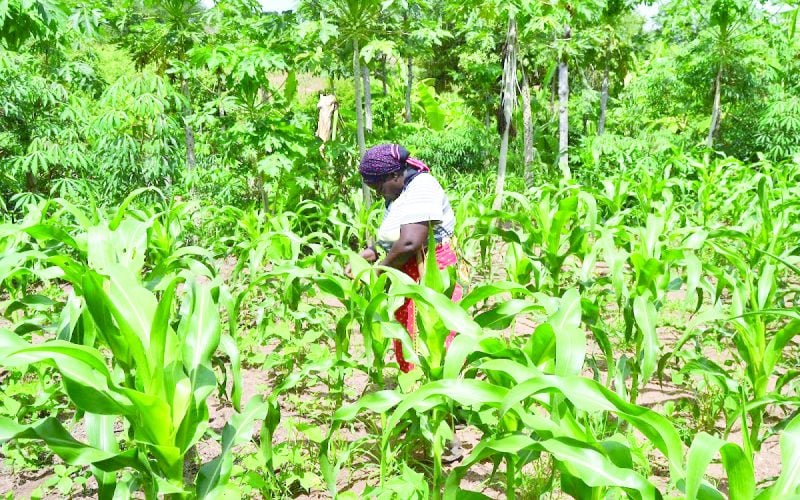
For western Kenya’s farmers, prolonged moisture deficits could reduce soil water available for crops, slow maize growth and affect yields if dry conditions continue during critical stages of the growing season.
The heat could also accelerate the drying of grazing fields, reducing pasture availability for livestock. Lower pasture quality often forces farmers to spend more on supplementary feeds, while reduced water availability can affect milk production and livestock health.
Cost of living
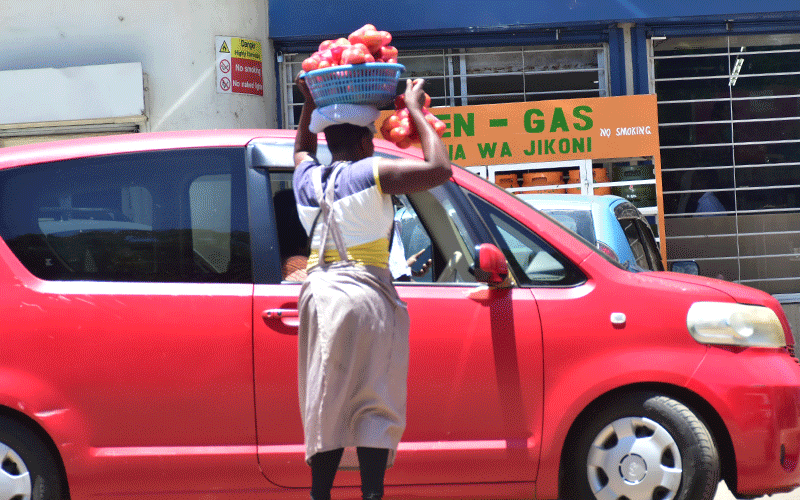
Maize is Kenya’s staple food and a key ingredient in ugali, making maize prices one of the biggest drivers of food prices in Kenya and household spending.
If the dry spell extends beyond the current forecast period, reduced harvests could tighten maize supplies, while higher livestock feeding costs could increase the prices of milk, beef and other animal products. Such developments would add pressure to household budgets at a time when many Kenyans continue to monitor the cost of living.
However, FEWS NET cautions that its outlook should not be interpreted as a seasonal climate forecast or a direct prediction of food insecurity. Rather, it identifies areas where current weather hazards have the potential to affect agricultural production if adverse conditions continue.
The report also places East Africa’s weather within a broader global climate context, noting that El Niño is present, while hot and abnormally dry conditions continue across much of the region.
For Kenya, the findings emphasise the importance of closely monitoring rainfall performance over the coming weeks.
The forecast says timely interventions, including irrigation where possible, drought-tolerant seed varieties, livestock water programmes and regular weather advisories from the Kenya Meteorological Department (Kenya Met), can help reduce the impact of prolonged dry spells on farmers.
The FEWS NET report covers the period between July 16 and July 22, but the weather patterns identified could have wider implications if rainfall deficits persist.
Farmers, grain traders, policymakers and consumers will therefore be watching upcoming rainfall closely, as the next few weeks could determine the direction of Kenya’s agriculture, maize prices, food prices in Kenya, and the country’s broader food security outlook in the months ahead.