How Iran’s war is quietly raising Kenya’s cost of living
By Aloys Michael, April 18, 2026President William Ruto’s decision to halve the Value Added Tax (VAT) on fuel to 8 per cent is being framed as a bold relief measure, but beneath the policy move lies a deeper, more uncomfortable reality.
Kenya is not fully in control of its fuel prices nor its cost-of-living trajectory.
On Friday, April 17, 2026, Ruto assented to the Value Added Tax Amendment Bill 2026 at State House, Nairobi, formally locking in the reduction from 16 per cent to 8 per cent.
The law, sponsored by Kilifi North Member of Parliament (MP) Owen Baya, moved through the National Assembly in an extraordinary one-hour sitting on April 16, 2026.
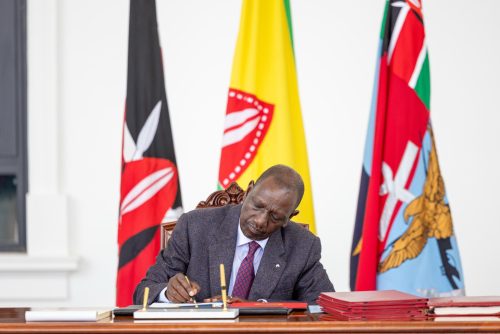
The government argues that the move is designed to cushion households and businesses from escalating fuel prices. It is also intended to regularise earlier interventions by the Energy and Petroleum Regulatory Authority (EPRA), which had already announced a downward revision of pump prices following a Treasury directive that reduced VAT on petroleum products through a legal notice dated April 15, 2026.
EPRA’s adjustment saw Super Petrol drop by Ksh9.37 per litre and Diesel by Ksh10.21 in Nairobi, partially reversing a steep earlier increase that had pushed prices up by as much as Ksh28.69 for petrol and Ksh40.30 for diesel.
Kerosene remained unchanged. The volatility captured a broader truth: Kenya’s fuel pricing is no longer just a domestic fiscal issue; it is increasingly a reflection of global instability.
At face value, the VAT cut appears to be a strong policy intervention. It lowers taxation on fuel, eases pressure on transport costs, and offers immediate political relief. But economists argue that this kind of domestic adjustment is now being repeatedly overwhelmed by external shocks that no tax policy can fully neutralise.

Inflation threats?
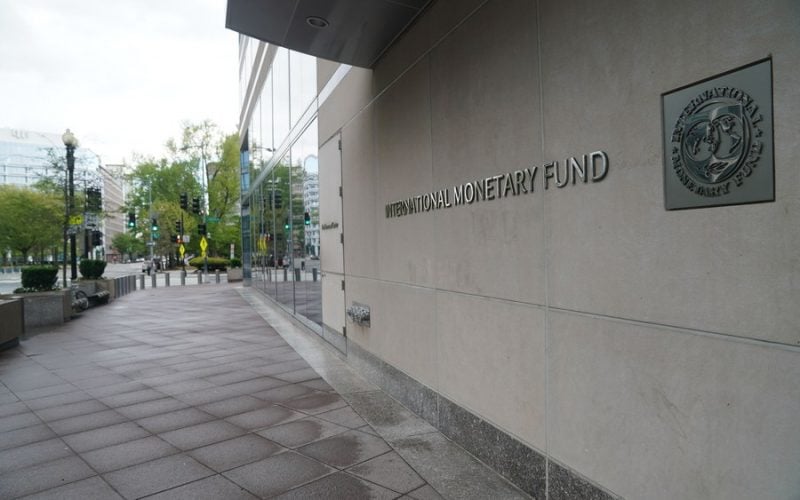
The clearest driver is unfolding thousands of kilometres away. A new International Monetary Fund (IMF) Sub-Saharan Regional Economic Outlook report released on April 16, 2026, warns that instability in the Middle East, including tensions involving Iran, is pushing up global oil, gas, fertiliser, and shipping costs.
For import-dependent economies like Kenya, the effect is immediate and unavoidable.
“The war in the Middle East has clouded the outlook. Oil, gas, and fertiliser prices, together with shipping costs, have risen sharply,” the IMF notes.
This means that even as Kenya reduces VAT, the underlying global price of fuel is rising. In effect, tax cuts are being used to chase a moving target set by international markets rather than domestic policy alone.
The transmission mechanism is straightforward but punishing. Most of Kenya’s fuel arrives through shipping routes passing near volatile regions.
Rising geopolitical risk increases insurance premiums for tankers, forces rerouting, and slows deliveries. By the time fuel reaches the Port of Mombasa, its cost has already increased, before a single Kenyan tax is applied.
From there, the impact spreads through the economy. Transport operators adjust fares upward. Manufacturers raise prices to absorb logistics costs.
Farmers pay more for fertiliser and reduce usage, lowering yields and tightening food supply. The result is a slow but persistent rise in the cost of living, even when government policy appears to be easing taxes.
The IMF projects that inflation in the region could rise to 5.0 per cent by the end of 2026, up from 3.4 per cent in 2025, with food insecurity expected to worsen if global prices remain elevated. It warns that a 20 per cent rise in international food prices could push over 20 million people in East Africa into moderate or severe food insecurity.

This context exposes the limits of Kenya’s VAT cut. While politically significant and immediately visible at the pump, it does not address the structural vulnerability of an economy heavily dependent on imported energy and fertiliser.
In this sense, Ruto’s VAT decision is both economic relief and political necessity, but also a response to forces outside Nairobi’s control. It softens the landing, but does not change the trajectory.