Advertisement
How big banks quietly squeeze billions out of their customers
Friday 18th July, 2025 05:00 AM|
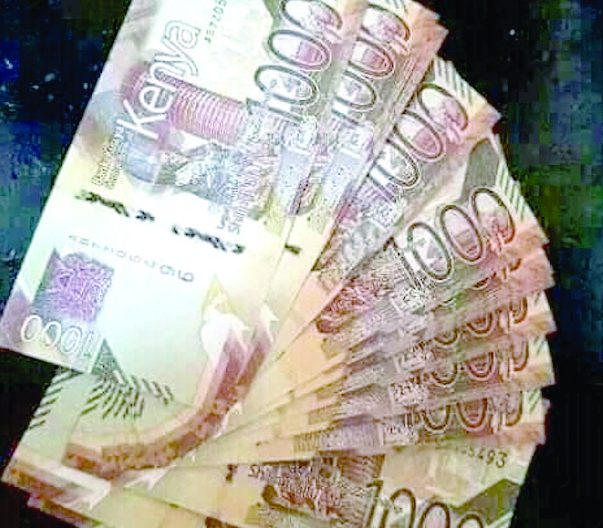
Kenya’s most trusted banks may also be the most expensive. Are customers paying more for the brand than the loan? A new analysis of personal unsecured loan data from commercial banks in Kenya reveals significant disparities in the total cost of credit charged to borrowers.
Despite offering the same loan amount over the same repayment period, banks differ by over Sh100,000 in what they ultimately charge customers. According to figures published on the www.costofcredit.co.ke by Kenya Bankers Association and reviewed alongside loan disclosures from leading lenders, customers who borrow Sh1 million payable in 60 months could face dramatically different repayment burdens depending on their bank.
The analysis focused on loans from KCB Bank, Equity Bank, Co-op Bank, DTB, Spire Bank, Prime Bank, NCBA, International Commercial Bank (Mayfair Bank) and HFC.KCB Bank charges a total cost of credit of Sh554,453 for a five-year personal unsecured loan of Sh1 million. The annual percentage rate (APR) is 18.94 per cent, one of the highest among the reviewed banks.
The same loan from Equity Bank costs Sh501,333 with an APR of 17.99 per cent. Co-operative Bank offers the same amount at a total cost of Sh488,044, translating to an APR of 17.59 per cent. Diamond Trust Bank (DTB) presents a relatively lower cost of Sh469,800 for the same loan with an APR of 16.63 per cent.
You Might Also Like


The most affordable option in the sample is HFC Bank, charging Sh365,184 with an APR of 12.97 per cent. The price difference between HFC and KCB is Sh189,269 for the same loan terms. A borrower using KCB pays 52 per cent more in total costs than one borrowing from HFC. Because loan applicants will tend to focus only on the interest rate when making a loan decision, banks have proactively adopted the Annual Percentage Rate or APR model which converts all direct costs associated with the loan (also known as the Total Cost of Credit) into one number.
“With the APR, borrowers are empowered to comprehensively compare different loan products on a like-for-like basis, based on the total cost of the facility; and therefore make better informed credit decisions,” says Kenya Bankers Association. KCB’s loan attracts monthly repayments of Sh25,908, while HFC’s repayment is just Sh22,086. This means KCB’s borrower pays Sh3,822 more every month, a difference that accumulates quickly.
Among the mainstream lenders, Equity and Co-op banks also charge considerably more than HFC and DTB. Borrowers from Equity pay Sh501,333, which is Sh136,149 more than HFC’s total. Co-op Bank’s borrower pays Sh488,044, or Sh122,860 more than HFC’s client. DTB’s margin is narrower, at Sh104,616 more than HFC’s charge.
Account maintenance charges
A look at the specific charges shows that higher costs are not always driven by interest rates alone. Additional fees and levies such as appraisal fees, insurance, negotiation fees, and account maintenance charges contribute significantly to the total cost.
For instance, KCB lists a 13 per cent annual interest rate but also includes an appraisal fee of Sh2,500, a credit life insurance fee of Sh41,000, and an excise duty of Sh11,330. These amounts raise the effective APR to 18.94 per cent. Equity Bank also charges 13 per cent in interest but includes Sh2,000 for negotiation, Sh2,500 for insurance, and Sh1,160 in monthly charges. These components increase the cost despite the base rate appearing moderate.
Co-op Bank applies a 13 per cent interest rate but adds Sh2,000 in negotiation fees, Sh1,500 for appraisal, Sh7,500 for insurance, and monthly ledger fees of Sh1,100. These hidden charges raise the effective cost significantly.
DTB charges 13 per cent interest, with Sh2,000 for negotiation, Sh3,000 for appraisal, Sh25,000 for insurance, and monthly ledger fees of Sh500. Its effective APR remains lower than its peers due to fewer cumulative charges.
HFC Bank lists an interest rate of 11.5 per cent and keeps additional charges minimal. Insurance is Sh14,000, with an application fee of Sh2,000 and a Sh1,000 monthly charge, resulting in a lower total cost and APR.
The central bank’s cost of credit calculator, using a standard example of a Sh1 million loan over five years, shows an average total cost of Sh443,289. The lowest cost in that calculator is Sh365,184, matching HFC’s figure, while the highest is Sh465,607. KCB’s cost of Sh554,453 exceeds even the highest scenario modelled in the official calculator. This suggests borrowers using some of the country’s largest banks may be paying above market benchmarks.
Market share data from the Central Bank of Kenya shows that KCB, Equity, and Co-op hold some of the largest customer bases in the country. These banks also benefit from widespread branch networks and high brand recognition. Despite this, they do not offer the most competitive loan pricing. Customers who assume that bigger banks offer better deals may not be aware of lower-cost alternatives.
Loan types across the banks are largely similar. All the lenders reviewed provide personal unsecured loans repayable in 60 months, with the same principal of Sh1 million.
Interest rates across the board are clustered around 13 per cent, except for HFC, which charges 11.5 per cent. However, effective borrowing costs differ widely due to non-interest fees. None of the reviewed banks present a zero-fee or fixed-fee structure. Charges vary depending on the institution and can significantly alter the APR. Borrowers at DTB repay Sh24,496 monthly, while those at Co-op pay Sh24,001, and Equity’s clients repay Sh24,861. These figures contrast with HFC’s lower monthly obligation of Sh22,086.
While large banks advertise convenience and customer service, their pricing structures indicate a higher cost burden. Customers may not easily access full loan breakdowns unless they explicitly ask for them.
Author
John Otini
View all posts by John OtiniLatest News







Advertisement
More on Business