Advertisement
G7 ministers warn of global economic risks amid energy shocks and trade imbalances
Tuesday 19th May, 2026 07:42 PM|
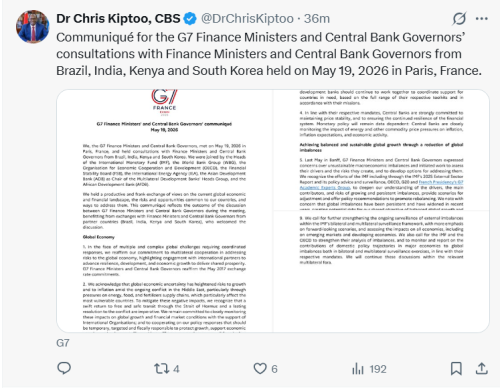
G7 Finance Ministers and Central Bank Governors have warned of rising risks to the global economy, citing energy market disruptions linked to the ongoing Middle East conflict and widening global trade imbalances.
Meeting in Paris on May 19, 2026, under France’s G7 Presidency, the group noted that the global outlook is being shaped by “multiple and complex global challenges requiring coordinated responses,” according to their communiqué.
The discussions were also joined by counterparts from Brazil, India, Kenya, and South Korea, alongside international financial institutions including the IMF, World Bank, OECD, and the International Energy Agency.
Energy and supply chain pressures
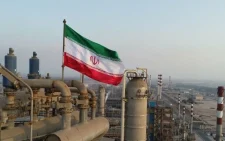
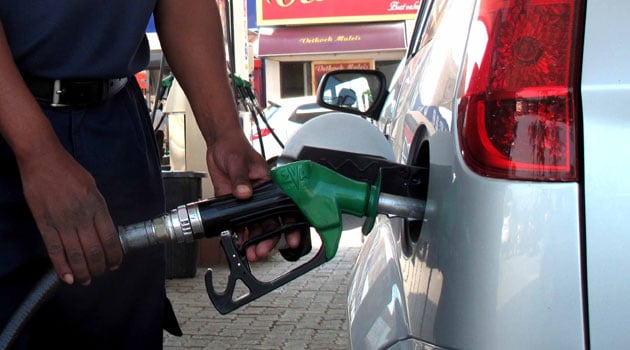
A major concern raised during the meeting was the impact of disruptions to energy, food, and fertiliser supply chains, particularly around the Strait of Hormuz. The ministers said the situation has increased volatility in global markets and called for a swift return to safe transit and a lasting resolution to the conflict.
You Might Also Like



They warned that vulnerable economies are most exposed to rising costs and reaffirmed the need for temporary, targeted, and fiscally responsible policy responses.
The communiqué also emphasised the importance of maintaining well-functioning commodity markets, avoiding arbitrary export restrictions, and strengthening supply chain resilience through diversification.
Trade imbalances and policy coordination
G7 officials also highlighted concerns over persistent and widening global current account imbalances, building on discussions from previous meetings.
They noted that these imbalances are driven by savings-investment gaps, fiscal and sectoral policies, and non-market distortions. According to the communiqué, failure to address them could heighten trade tensions and trigger disorderly financial adjustments.
The group outlined policy directions encouraging deficit economies to strengthen domestic savings and fiscal consolidation, while surplus economies were urged to boost domestic demand, invest in productivity, and reduce market distortions.
The ministers called for enhanced surveillance by the IMF and OECD to better monitor global economic trends.
Central bank stance and Kenya’s participation
Central banks reaffirmed their commitment to price stability and financial system resilience, stating that monetary policy will remain data-dependent amid ongoing commodity price pressures.
Kenya’s Principal Secretary to the National Treasury, Chris Kiptoo, participated in the consultations, reflecting Africa’s involvement in global economic discussions.
The communiqué also welcomed coordination efforts by multilateral development banks and called for continued cooperation to safeguard financial stability.
With the upcoming Leaders’ Summit in Evian, attention is expected to shift toward concrete measures to address global economic risks and strengthen long-term resilience.
Author
Latest News








Advertisement
More on Business