Advertisement
CS Wandayi: Fuel prices could decline soon as global oil market stabilises
Friday 29th May, 2026 09:56 PM|

The Energy and Petroleum Cabinet Secretary, Opiyo Wandayi, has hinted at a possible gradual reduction in fuel prices in the coming months, citing early signs of stabilisation in the global oil market.
Speaking in Migori on Friday, May 29, 2026, during the Matatu and Bodaboda sector empowerment event, Wandayi said that although global oil prices have risen in recent months, there are signs that international market pressures could soon ease.
“Changes in demand patterns and improved supply routines are gradually stabilising international markets,” Wandayi said.
While cautioning that the global situation remains unpredictable, he expressed optimism that Kenyans would progressively begin to feel the benefits once international market conditions improve further.
You Might Also Like



“In the fullness of time, as global conditions stabilise, Kenyans can expect the benefits to be felt progressively through the system,” he added.

His remarks come amid public concern over high fuel prices following recent increases announced by the Energy and Petroleum Regulatory Authority (EPRA), which triggered protests by transport operators.
He further assured Kenyans that the country’s fuel supply remains secure, accessible and stable despite recent fluctuations in international oil prices.
The CS maintained that Kenya is not facing any fuel shortage, attributing the stable supply to the G-to-G fuel importation arrangement, which he said has cushioned the country against supply shocks.
“It may look like a miracle that in Kenya the debate has been about price and not availability,” Wandayi stated, noting that several countries have struggled with fuel shortages amid global market instability.

Wandayi defends G to G deal
Wandayi has also defended the government-to-government (G2G) fuel procurement framework, saying it has played a key role in stabilising fuel prices in the country despite ongoing global market fluctuations.
Speaking in a press briefing on Friday, May 29, 2026, the CS said the arrangement has helped Kenya manage fuel supply more predictably and avoid extreme price shocks that have affected other markets.
“Additionally, we continue to benefit from the stability of the G2G framework in pricing. In that regard, our freight and premium costs remain relatively stable. Let me explain this again: freight and premium are key components of the landed cost in Mombasa,” Wandayi stated.
He noted that under the G2G system, key cost components such as freight and premium charges have remained relatively stable, shielding the country from volatility in international shipping and insurance costs that often push fuel prices higher.
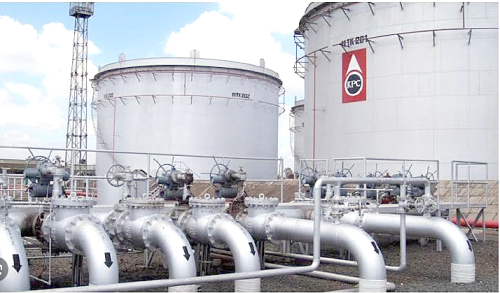
He explained that while global benchmark prices continue to fluctuate, the stability of freight and premium costs has been a major advantage for Kenya.
Wandayi added that freight and premium charges form a significant part of the landed cost of fuel in Mombasa, and keeping them fixed under the framework has allowed Kenya to benefit from cost predictability even during periods of global disruption.
He pointed out that Kenya’s freight and premium costs currently stand at about Ksh10,140 per tonne for diesel, Ksh10.9k per tonne for petrol, and Ksh12.6k per tonne for jet fuel, figures he contrasted with open market systems where the same costs have risen as high as 250 to 300 US dollars per tonne.
He further argued that this stability has helped cushion Kenyan consumers from sharper fuel price increases seen in other countries exposed to open-port procurement systems.
According to him, the framework has not only stabilised pricing but also ensured consistent fuel availability, preventing shortages that have affected parts of the region and beyond.
Author
Latest News








Advertisement
More on Business