Advertisement
Opiyo Wandayi: Kenya may see gradual fuel price drop after US–Iran deal
Monday 15th June, 2026 11:10 AM|

Global oil prices have fallen sharply after reports of a US–Iran peace deal mediated through Pakistan, raising fresh questions in Kenya about whether petrol and diesel prices will drop in the coming pricing cycle.
While the international market has reacted quickly, Energy Cabinet Secretary Opiyo Wandayi says any relief at the pump will take time and depend on whether global stability holds.
Speaking in a televised interview on Monday, June 15, 2026, Wandayi said Kenya could see gradual changes in fuel prices, but only if the geopolitical truce remains stable and oil prices continue to ease.
“The desirable outcome for government is to minimise the application of the fuel subsidy,” Wandayi said.
You Might Also Like


His remarks come at a time when global oil benchmarks, including Brent crude, have dropped after news of a deal between the United States and Iran to reopen key shipping routes, including the Strait of Hormuz.
Global oil prices fall
Oil markets reacted quickly to the reported peace breakthrough. Brent crude fell to around $83.18 (about Ksh10,730) per barrel, down nearly 5 per cent in Asian trading, while US oil also dropped by more than 5 per cent, according to international market reports.
The fall followed an announcement by Pakistan, which has been involved in mediation efforts, that an agreement had been reached to ease tensions and restore oil flow through the Strait of Hormuz. US President Donald Trump said the deal would allow “the reopening of the key Strait of Hormuz shipping route,” while Iran confirmed elements of the agreement through its deputy foreign minister.
Markets responded positively, as the Strait of Hormuz carries about 20 per cent of global oil and liquefied natural gas shipments. During earlier tensions, fears of closure had pushed Brent crude as high as $120 per barrel, creating pressure on global fuel prices.
Analysts, however, warned that supply chains may not return to normal immediately. Some shipping disruptions and logistical delays could continue for weeks or even months as tanker backlogs clear and marine security stabilises.

What it means for fuel prices in Kenya
Kenya imports all its petroleum products, meaning local fuel prices depend heavily on international crude oil trends, shipping costs, and exchange rates. Any reduction in global oil prices usually takes time to reflect at the pump due to procurement cycles and government pricing mechanisms.
In his interview, CS Wandayi explained that Kenya typically reacts to international price changes with a delay.
“International fuel shocks or gains are felt about a month later,” he said. “We should only be a month behind.”
He noted that Kenya imports around 600 million litres of fuel products monthly, including diesel, petrol, and jet fuel. Because of this structure, local prices reflect earlier global purchase costs rather than real-time market shifts.
Wandayi also said the government continues to use a fuel subsidy to stabilise prices when global costs rise.
“But because of the subsidy, we have reduced it at the pump,” he said during the interview. “The desirable outcome for government is to minimise the application of fuel subsidies.”
According to him, the subsidy is funded through levies collected at the pump, making it limited in scale and difficult to sustain when global prices remain high.
EPRA fuel prices for June–July 2026 cycle
Motorists have already received slight relief after the Energy and Petroleum Regulatory Authority (EPRA) announced new pump prices for the June–July 2026 cycle.
EPRA said Super Petrol and Diesel prices have been reduced, while Kerosene remains unchanged. The regulator attributed the adjustment to changes in global oil prices, landed import costs, and exchange rate movements.
| Fuel type | New price in Nairobi (Ksh per litre) | Change |
|---|---|---|
| Super Petrol | 214.03 | -0.22 |
| Diesel | 222.86 | -10.00 |
| Kerosene | 191.38 | 0.00 |
EPRA confirmed that the new prices took effect from midnight and will remain in place for 30 days.
The regulator said the landed cost of Super Petrol fell by 0.56 per cent between April and May, while diesel slightly increased in import cost. Kerosene recorded a small drop in landed cost.
The authority also linked the price adjustment to a nearly 4 per cent drop in global oil prices before the review period. US crude and Brent crude both eased in early June trading following reduced geopolitical tensions.
To cushion consumers, the government will spend about Ksh10.3 billion from the Petroleum Development Levy Fund to subsidise diesel and kerosene.
How the fuel subsidy affects pricing
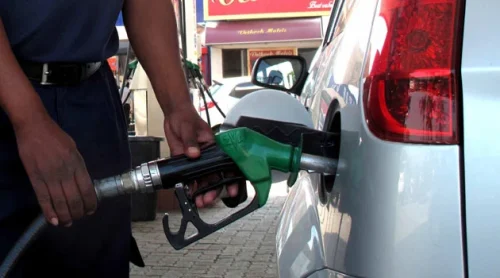
The fuel subsidy system in Kenya works by cushioning consumers when global oil prices rise. It ensures that petrol, diesel, and kerosene prices do not increase sharply even when international costs spike.
Wandayi explained that the government collects a fixed levy per litre, which funds the subsidy pool. However, he noted that this pool is limited and depends on fuel consumption levels.
He added that the government’s long-term goal is to reduce dependence on subsidies and allow market forces to determine prices more freely, provided global conditions remain stable.
Author
Kenneth Mwenda
Kenneth Mwenda is a business, sports, and politics digital writer with over seven years of experience in journalism, covering breaking news, feature stories, and in-depth analysis across a range of beats.
For inquiries, he can be reached at [email protected]
View all posts by Kenneth MwendaLatest News







Advertisement
More on Business