Advertisement
Concerns mount over subsidy funds use amid fuel prices rise
Thursday 24th July, 2025 05:40 AM|

While Kenyans have started feeling the impact of the recent spike in fuel prices in the country, concerns mount over how the money raised under the Petroleum Development Levy (PDL) was utilised during the just-concluded financial year.
Currently, the cost of essential services such as transport has started going up amid shrinking spending power by Kenyans under the current tax regime.
During the 2024/25 financial year, the PDL was able to collect a sum of Ksh26.373 billion, up from the Ksh24.158 billion collected in the financial year 2023/24, according to a report by the Ministry of Energy and Petroleum that was presented before the National Assembly Departmental Committee on Energy.
Out of this amount, the government spent Ksh13.688 billion to cushion consumers against the relatively high prices,
You Might Also Like
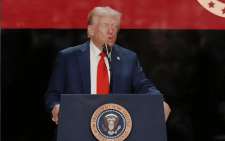
In the current financial year, the kitty has been allocated Ksh25 billion, according to the committee Chairman, John Odege.
“You may wish to note that during FY2024/25, GoK stabilised the petroleum pump prices throughout the Financial Year. For the pricing cycle from July 15, 2025, to August 14, 2025, the projected amount required for stabilisation was Ksh2.5 billion,” Cabinet Secretary Opiyo Wandayi responded.
He added that the pump pricing cycle coincided with the start of the Financial Year 2025/2026, a time at which the ministry did not have the requisite funds in their books to commit to payment of the stabilisation.
With this being the current state of affairs, Kenyans are left exposed to global fuel price fluctuations that have seen the recent hike in fuel prices by more than Ksh8 per litre.
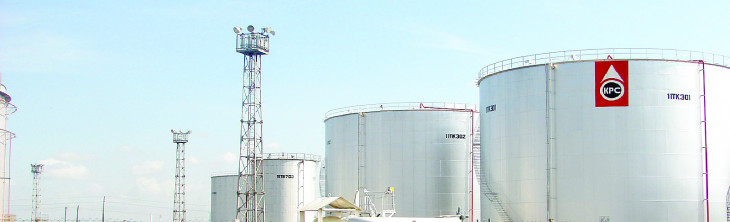
Through the presentation, he mentioned that aside from stabilisation of local petroleum pump prices in instances of spikes occasioned by high landed costs above a threshold as determined by the Energy and Petroleum Regulatory Authority (EPRA), the fund is also designed to contribute to the development of the oil industry largely.
“Development of the oil industry may include, but not limited to, construction of common user facilities (pipelines, storage tanks, manifolds, etc.), road and rail network, and fuel marking to curb dumping and adulteration,” he highlighted.
Meanwhile, the Ksh13 billion fuel stabilisation amount was paid to oil companies, including Gulf Energy, which got Ksh9.466 billion, Galana Energies – Ksh1.853 billion, One Petroleum- Ksh998 million, Asharami Synergy – Ksh257 million, Oryx Energies, which got Ksh1.11 billion and Texas Energy, which received Ksh1.65 million.
There are no clear details on how the remaining amount was utilised, thus triggering accountability and transparency issues.
Also, important to note, for the October to November review month of 2024, there is no record of the amount that was spent, yet the rest of the months’ figures have been indicated.
The total amount is, however, less than that which was paid in the previous financial year, which amounted to Ksh19.19 billion despite the financial year drawing in less funds for PDL.
When asked whether there are future projections on the fuel pump prices, he mentioned that, “International oil prices are influenced by demand and supply, geopolitics and seasons, which are beyond the Government’s control.”
However, Standard Chartered Chief Investment Officer, Manpreet Gill, who was speaking during a media briefing, noted that currently there is a lot of oil supply globally compared to demand, a factor which poses a gap for oil prices but doesn’t necessarily mean a short-lived volatility.
He observed that while there is a geopolitical issue at hand, it should not have a lasting impact on oil markets because the channel that interrupts markets does not really get interrupted, emphasising that this is the reason why the price range had remained constant for a long period.
Author
Victor Mukabi
View all posts by Victor MukabiLatest News




Advertisement
More on Business