Advertisement
CBK Survey: How Kenyan companies are cutting costs amid inflation risks and tight credit
Wednesday 17th June, 2026 12:22 PM|
Kenyan companies are aggressively slashing costs and embracing automation to navigate a challenging economic environment marked by persistent inflation, weakening consumer demand, and stubbornly tight credit conditions, a new Central Bank of Kenya (CBK) survey reveals.
The May 2026 CEOs Survey, released on Wednesday, June 17, 2026, which gathered insights from over 1,000 business leaders across sectors including manufacturing, financial services, agriculture, and tourism, showed cautious resilience amid significant headwinds.
While respondents expressed sustained optimism about Kenya’s economic growth prospects over the next 12 months, they are bracing for turbulence driven by both domestic pressures and global uncertainties.
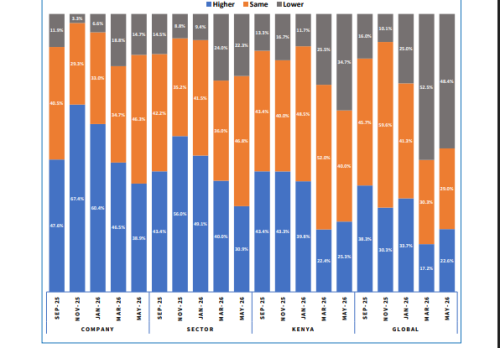
Most respondents reported mixed business performance in the second quarter of 2026 compared to the first quarter, citing slower growth in demand and sales.
You Might Also Like


“The slowdown was primarily driven by reduced customer spending, delayed payments, weaker market activity, and heightened economic uncertainty amid ongoing global conflicts,” the survey reads.
The high cost of doing business emerged as the single most significant domestic constraint cited by CEOs.
Respondents identified the business environment, economic environment, geopolitical tensions, macroeconomic volatility, and energy prices as the key factors hindering growth. Production and operational costs have been driven upward by elevated fuel prices, imported inflation linked to supply chain disruptions, and the implementation of additional levies.

Credit rates and operating costs
Even as the CBK has shifted to an easing monetary policy stance since August 2024, access to affordable credit remains a major hurdle for businesses.
While 62.5 per cent of respondents acknowledged a decline in bank lending rates, most reported that the reduction had been gradual, less than two per cent.
The survey reveals that lending rates, alongside collateral requirements, credit appraisal procedures, and documentation requirements, continue to be key constraints to borrowing.
“Despite the easing in monetary policy, 21.9 per cent of the respondents reported an increase in lending rates,” the study notes.
Confronted with these pressures, Kenyan companies are turning inward, prioritising efficiency and innovation over expansion.

A significant majority of firms reported adopting technology and automation over the past year. Key initiatives include enterprise resource planning systems, process automation, artificial intelligence adoption, and digital solutions to support regulatory compliance such as E-TIMS and E-Government Procurement platforms.
These efforts, according to the survey, have improved productivity, decision-making speed, operational resilience, and competitiveness.
However, the transition has not been without challenges, as firms cited resistance to digitisation from existing workforces, system integration complexities, skills gaps, and budget constraints.
Additionally, power outages and unreliable internet connectivity were reported to undermine efficiency gains from digital technologies.
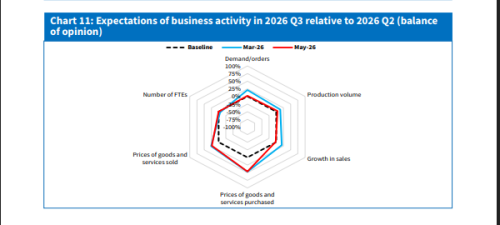
To navigate the challenging landscape, firms indicated plans to strengthen cost and risk management frameworks, accelerate digitisation and innovation, diversify markets and products, and invest in sales and marketing initiatives.
“Cost optimisation, diversification, innovation, and operational efficiency remain at the heart of strategic priorities over the medium term,” CBK says.
Despite the challenges, there is a glimmer of optimism, with the respondents expecting business activity to remain stable in the third quarter of 2026, supported by favourable weather conditions, relatively stable macroeconomic conditions, technological innovation, and expected growth in seasonal demand.
Most firms reported operating below or near full capacity, giving them the flexibility to accommodate any unexpected increases in demand.
Author
Latest News







Advertisement
More on Business