Advertisement
Audit report flags taxpayers’ billions lost in Eurobond buyback deal
Wednesday 17th June, 2026 07:27 AM|

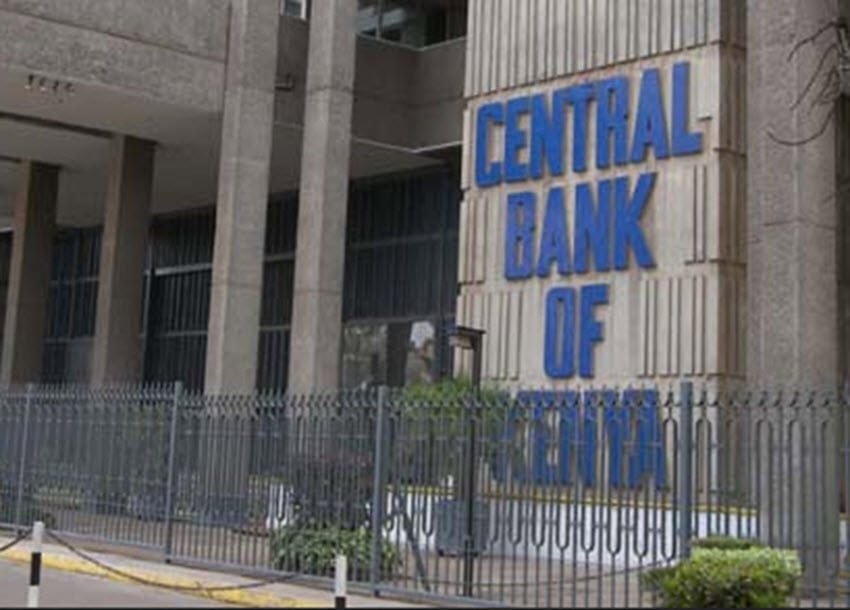
Kenya’s strategy of buying back Eurobonds has come under renewed scrutiny after an audit report revealed that taxpayers have borne billions of shillings in additional costs, even as the country’s overall debt burden continues to grow.
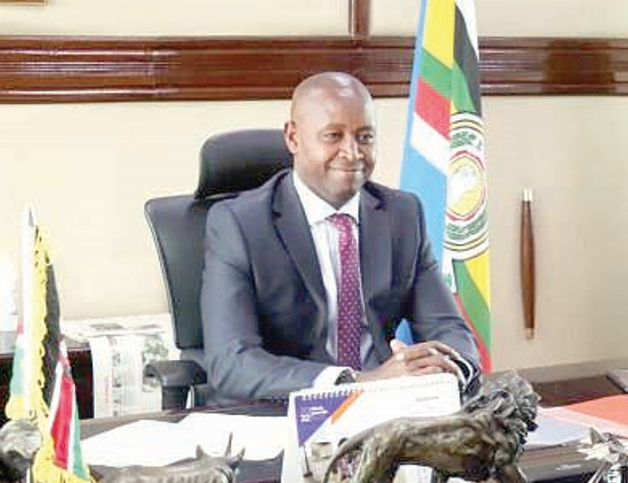
A report by Controller of Budget (CoB) Margaret Nyakang’o indicates that the government’s Eurobond liability management programme has offered short-term relief from looming repayments but has failed to deliver a lasting solution to Kenya’s debt challenges.
According to the report covering the first nine months of the 2025/26 financial year, the buyback programme largely involves replacing maturing debt with new borrowing, raising concerns over its long-term effectiveness and cost to taxpayers.
“Kenya’s foreign bond buybacks are a tactical measure, not a permanent solution. They provide short-term fiscal space and reassure investors, but they do not reduce the country’s overall debt stock in the long run,” Nyakango says.
You Might Also Like

The findings emerge as the National Treasury, under Cabinet Secretary John Mbadi, considers returning to international financial markets to secure fresh loans in the upcoming fiscal year.
Between March 2025 and February 2026, the government spent Ksh222.7 billion repurchasing three Eurobond issues. The transactions comprised Ksh78.3 billion in March 2025, Ksh86.3 billion in October 2025, and Ksh58.1 billion in February 2026.
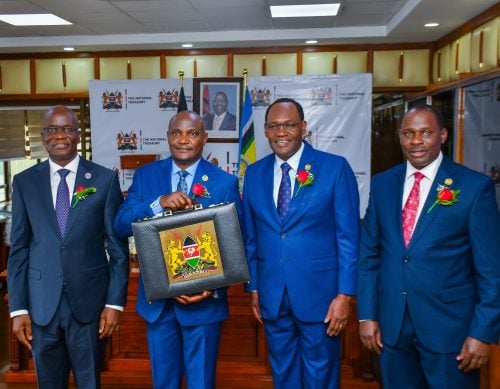
Treasury has maintained that the exercise helped reduce refinancing pressure by retiring part of Kenya’s 2028 Eurobond obligations while extending repayment timelines to 2032 and 2037.
However, the CoB notes that the process came with high costs. The government paid approximately Ksh6.1 billion in premiums and accrued interest during the transactions.
The report further questions the source of financing used for the buybacks. To fund the operation, Kenya issued new Eurobonds worth Ksh195.5 billion through seven-year and 12-year notes at an average yield of 8.7 per cent.
“This essentially implies that Kenya swapped the old debt for the new rather than reducing the overall debt stock,” the report states.
Rising public debt
Despite the liability management efforts, Kenya’s total public debt rose to Ksh12.82 trillion by the end of March 2026, up from Ksh11.8 trillion recorded in June 2025.
Domestic debt accounted for Ksh7.14 trillion, while external obligations stood at Ksh5.68 trillion.

Government borrowing from the domestic market increased substantially during the review period. Treasury bonds rose by Ksh688.2 billion, from Ksh5.11 trillion in June 2025 to Ksh5.8 trillion in March 2026. Treasury bills also expanded by Ksh155.5 billion to reach Ksh1.19 trillion.
The report shows that Kenya spent Ksh1.35 trillion servicing debt during the first nine months of the financial year.
Out of this amount, Ksh763.2 billion was used to repay domestic debt, while Ksh588.9 billion went toward external debt obligations. External debt payments included Ksh419.7 billion in principal repayments and Ksh166.6 billion in interest charges.
The growing debt-servicing bill continues to reduce the amount of money available for development projects and essential public services.
Concerns over use of borrowed funds
The audit findings coincide with concerns raised by Members of Parliament (MPs) over the use of external borrowing.
In its review of the 2026/27 budget estimates, the National Assembly’s Public Debt and Privatisation Committee warned that some commercial loans secured under liability management operations are not being used solely to retire existing debt.
Instead, lawmakers noted that part of the borrowed funds is being channelled through the Consolidated Fund to support government spending and finance the budget deficit.
“A portion of the proceeds is used to finance the overall budget deficit and support approved government expenditures through the Consolidated Fund,” the committee said.
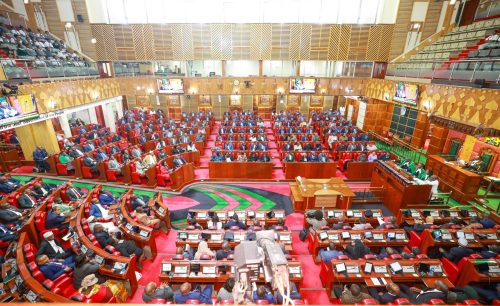
The committee also questioned the practice of pooling commercial loans into the general budget despite potentially expensive borrowing terms.
“Although these are commercial loans, they are not ring-fenced for specific projects but are pooled within the Consolidated Fund for general budget financing, even where they may be obtained on potentially unfavourable terms,” the committee noted.
The observations reinforce concerns that recent Eurobond buybacks have primarily replaced old debt with fresh obligations rather than reducing Kenya’s overall liabilities.
Nyakang’o also highlighted Kenya’s continued exposure to foreign exchange risks.
The report notes that approximately 52 per cent of the country’s external debt is denominated in US dollars, making debt repayments vulnerable to movements in the exchange rate.
“With 52 per cent of Kenya’s debt denominated in US dollars, any depreciation of the shilling between 2026 and 2028 may erode the actual benefits realised from the extended seven- and 12-year debt maturities,” Nyakang’o warns.
She further cautions that heavy reliance on international capital markets exposes Kenya to global economic developments beyond its control. Rising global interest rates or tightening liquidity conditions could significantly increase future borrowing costs.

IMF forecasts rising debt levels
The International Monetary Fund projects that Kenya’s debt-to-GDP ratio will increase to 71.6 per cent in 2026 and 72.4 per cent in 2027, approaching the peak level of 73.4 per cent recorded in 2023.
To address the growing debt burden, Nyakang’o recommends a combination of stronger revenue collection measures, expansion of the tax base, enhanced tax compliance, tighter expenditure controls and reduced fiscal deficits.
She also advocates for selective bond buybacks, diversification of financing sources, development of domestic capital markets, accumulation of foreign exchange reserves and greater transparency in debt management.
“Eurobond buybacks are a double-edged sword. They can stabilise the debt trajectory by smoothing maturities and lowering refinancing risks if used wisely. However, they entail the risk of costly stopgap measures if relied upon without addressing underlying fiscal imbalances,” Nyakang’o says.
Treasury’s future borrowing plans are expected to face increased scrutiny, particularly against the backdrop of the projected Ksh1.1 trillion budget deficit for the current financial year.
Lawmakers have described the deficit as the largest ever projected at the beginning of a financial year, warning that continued borrowing could further expand the country’s debt burden.
“This indicates a continued expansionary fiscal policy stance and points to sustained growth in the public debt stock,” the debt committee said.
Author
Latest News







Advertisement
More on Business