Advertisement
AfDB urges Kenya to broaden tax base improve compliance
Thursday 10th July, 2025 05:20 AM|

The African Development Bank Group (AfDB) has proposed key reform measures to enhance Kenya’s ability to mobilise its own capital for development in its newly-released Country Focus Report (CFR) for Kenya.
Released under the theme “Making Kenya’s Capital Market Work Better for its Development”, the report shares the latest data and analysis on Kenya’s economic performance, highlighting key growth opportunities and risks.
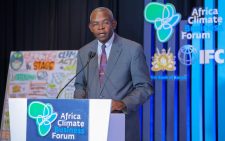
George Kararach, the Bank’s East Africa lead economist, detailed several pragmatic recommendations on fiscal capital, business and financial capital, natural capital and human capital.
He said Kenya needs to broaden the tax base and improve compliance, especially through informal sector integration and digital tax administration.
You Might Also Like


Also needed is the expansion of access to affordable credit, deepening capital markets, and crowd-in green and blended finance.
“Scale-up value-addition in agriculture and mining, while enhancing carbon market readiness and natural capital accounting in addition to align skills development with future jobs in green growth, digital innovation, and manufacturing,” said Kararach.
The CFR advocates for a coordinated, inclusive, and sustainable capital strategy, anchored in tax reform, public-private partnerships, and institutional strengthening for Kenya’s equitable long-term development.
The report presents strategies to better mobilise and utilise Kenya’s fiscal, natural, business, financial, and human capital for inclusive and sustainable development.
It aims to foster dialogue among policymakers and stakeholders to drive forward impactful reforms for better capital deployment.
The report revealed that Kenya’s real economic growth in 2024 grew by 4.6 per cent despite recent macroeconomic stability, but slowed due to weak industrial activity, low investment, and climate shocks.
The report calls for well-sequenced reforms that will broaden fiscal revenue, formalise the informal sector, deepen financial markets, and maximise the country’s human resource dividend to achieve higher growth rates.
“The Kenyan economy has remained resilient,” Kenrick Ayot, a senior deputy director at Kenya’s National Treasury, said at the launch, where he represented the Cabinet Secretary, John Mbadi.
Diversified economy
He added: “The strong growth, above the average global growth rate of 3.3 per cent, reflects the impact of sound and deliberate policies as well as the resilience of our well-diversified economy.”
Ayot explained how steps taken by the government so far had helped to strengthen macro-economic indicators, leading to a decline in inflation to 3.8 per cent in May 2025 from a peak of 9.6 per cent in 2022, and appreciation of the Kenya shilling from Ksh159.7 to the US dollar in January 2024 to Ksh129.3 by end-May 2025.
The bank projects a growth rate of 5.3 per cent of the Kenyan economy this year, driven by enhanced agricultural productivity, growth in the services sector and the implementation of the government’s policies aimed at increasing growth through the country’s Bottom-Up Economic Transformation Agenda.
In highlighting the findings of the CFR, the Bank’s Country Economist for Kenya, Caroline Ntumwa, observed that despite Kenya’s progress in infrastructure, finance, and services, Kenya’s capital quality remained weak, with fiscal capital burdened by debt.
Further, the capital quality she added is strained by limited business innovation, uneven financial access, declining natural capital, and poor learning outcomes and skills gaps within human capital. Structural challenges persist across all forms of capital, exacerbated by capacity and regulatory gaps.
The CFR advocates for a coordinated, inclusive, and sustainable capital strategy, anchored in tax reform, public-private partnerships, and institutional strengthening for Kenya’s equitable long-term development.
Speakers during the launch suggested that Kenya’s $5 billion (Ksh645 billion) diaspora remittances be invested into productive investments, deepening capital markets, and strengthening university–industry collaborations to tackle youth unemployment and skills gaps.
Author
Nicholas Waitathu
View all posts by Nicholas WaitathuLatest News







Advertisement
More on Business