Advertisement
Ghost Mulee: What Harambee Stars need to challenge top teams
Thursday 27th July, 2023 09:45 PM|
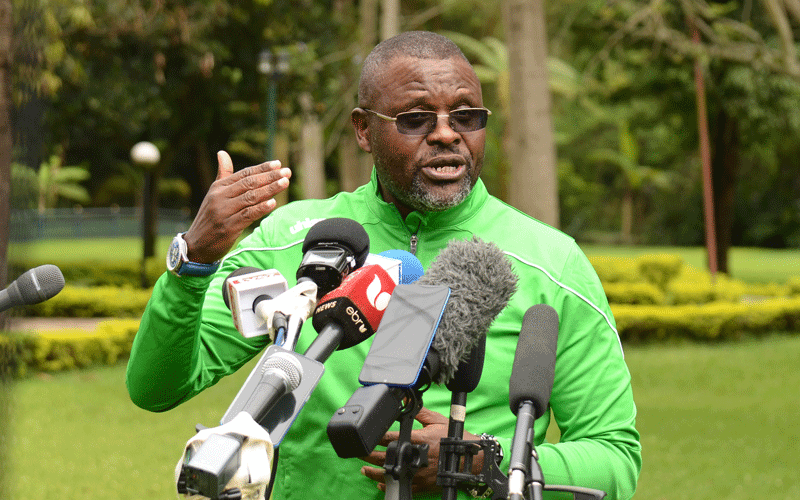
Former Tusker head coach Jacob ‘Ghost’ Mulee has explained what Harambee Stars need in order to challenge the top teams in the world.
The coach was invited to the Zetech University Sports Awards Luncheon, where he discussed ways the national team can become competitive. He cited the example of Morocco, who had an impressive campaign in the 2022 World Cup finals in Qatar but got eliminated in the penultimate stage by France.
Mulee, who has handled the national team on two occasions, said although there should be a mixture of local and international players in Harambee Stars, there is a need to prioritise foreign-based players.
Ghost Mulee’s take
“I was at the World Cup in 2022, and I did my own analysis. When you look at all those teams in the World Cup, Morocco made it up to the last four, but they had only three local-based players.
“When you look at players playing abroad, they have the right kind of training, week in and week out, without disruptions.
“Not that I don’t respect players who are playing at home, but that is a different ball game altogether, so I think if we can have a good combination to get players with that Kenyan blood playing abroad with a few local players, there is a possibility to challenge big teams,” Mulee said as quoted by a local publication.
Mulee was in charge when Kenya qualified for the 2004 Africa Cup of Nations finals in Tunisia, where the team failed to progress out of the preliminary stage. He took charge again in 2020, when he was appointed to replace Sebastien Migne, the coach in charge at the 2019 AFCON finals in Egypt, but resigned in September 2021 after leading Kenya in World Cup qualifiers against Uganda and Rwanda.
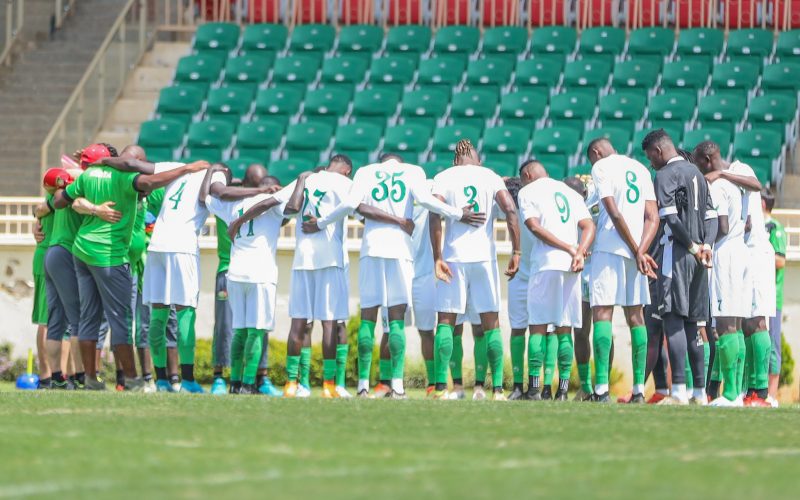
The 2026 World Cup qualifier groups are already out, and Harambee Stars will battle Ivory Coast, Gabon, Gambia, Burundi, and Seychelles in Group F.
As Mulee insists on having more foreign-based players in the squad, Harambee Stars head coach Engin Firat has always emphasized playing top nations in order for Kenya to be competitive.
The Turkish coach has been consistent in calling for long-term priorities and advises that short-term objectives, including immediate positive results, should not lead to intense criticism of him and the players.
Author
Joel Sang
View all posts by Joel SangLatest News





Advertisement
More on Sports