Advertisement
Chelsea boss fumes over VAR inconsistencies following Caicedo’s red card
Monday 01st December, 2025 06:56 PM|
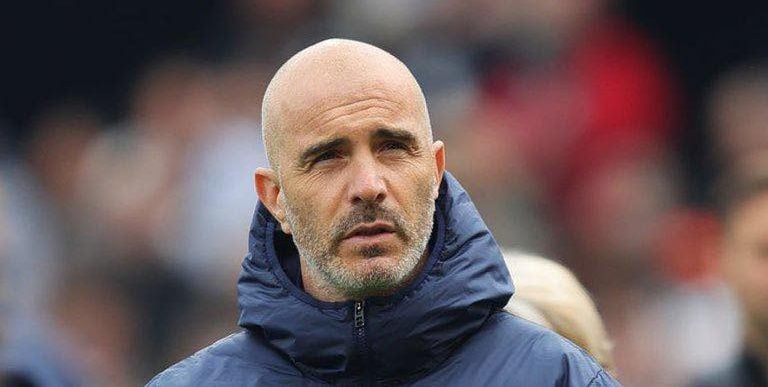
Chelsea boss Enzo Maresca was frustrated. It was not because of the dismissal of Moises Caicedo against Arsenal on Sunday, November 30, 2025. It was about what he perceived to be a lack of consistency.
You can see his point. Last month Tottenham midfielder Rodrigo Bentancur was booked for a foul on Reece James, which the VAR agreed with. Yet when Caicedo was cautioned for a similar challenge on Mikel Merino, there was an intervention for a red card.
“It’s a red card, but why was Bentancur’s against Reece James not a red card when we were at Spurs away?” Maresca asked.
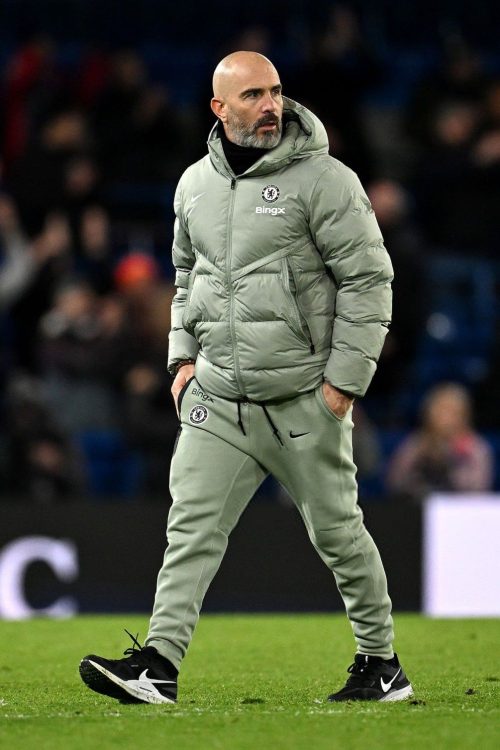
“So us, as a manager, we struggle to understand why they judge in a different way. Moises’ is a red card, yes.
You Might Also Like


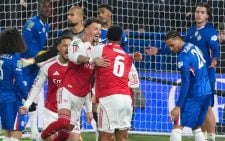
“Bentancur’s is a red card, yes. Why don’t they give him a red card? It’s just that we struggle to understand. The reality is that it’s a red card. But why do they judge it differently?”
So, what was the difference?
Outcomes are partly dependent on who the VAR is, which makes consistency very difficult. No two fouls are ever the same and there are always subtle differences. Bentancur only stepped in, while Caicedo jumped slightly and his contact point was higher.
There was also a clear buckle of Merino’s ankle, which is something a VAR looks for as an indication of excessive force. His boot was also shifted back on the turf.
In Bentancur’s case, the Premier League’s KMI Panel supported the yellow card by four votes to one. They unanimously agreed there should be no VAR intervention because the challenge was low, slightly late and reckless.
The KMI Panel will back the decision to send off Caicedo. But it will not be long before another similar tackle is judged as only a yellow card.
Since the start of the 2023-24 season the KMI Panel has logged 12 errors on serious foul play reviews.
Did the VAR tell the referee to show a yellow card?
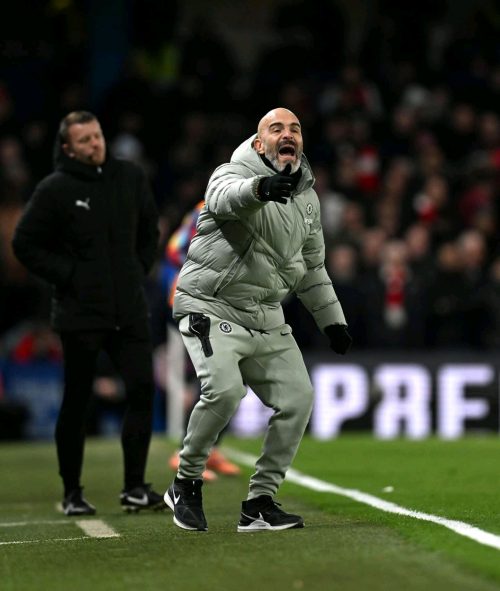
Moises Caicedo will be banned for three games after his red card against Arsenal.
The situation seemed confusing at first. Was referee Anthony Taylor being told to book Caicedo so it could be reviewed?
There is a simpler explanation. Taylor played advantage to Arsenal because the loose ball was with Eberechi Eze. When it went out for a throw, the referee went back to book Caicedo, who was injured and needed treatment. Referees are instructed to wait until the offending player is on their feet before issuing a card.
So the delay was not because VAR was checking the foul. It was because Caicedo was with the physio.
The VAR will begin checking the tackle, but there will be no communication with the referee until he shows a card. In this case, John Brooks as the video referee concluded that the force was enough for a red card. But he had to wait for Taylor to indicate his decision.
As soon as Taylor showed yellow, the VAR sent him to the monitor, as the check had completed during treatment.
Play restarted with a throw in only because Taylor had played advantage. If he had not, it would have been a free kick. In a roundabout way, VAR protocol meant Arsenal were penalised for Taylor not getting the red card correct.
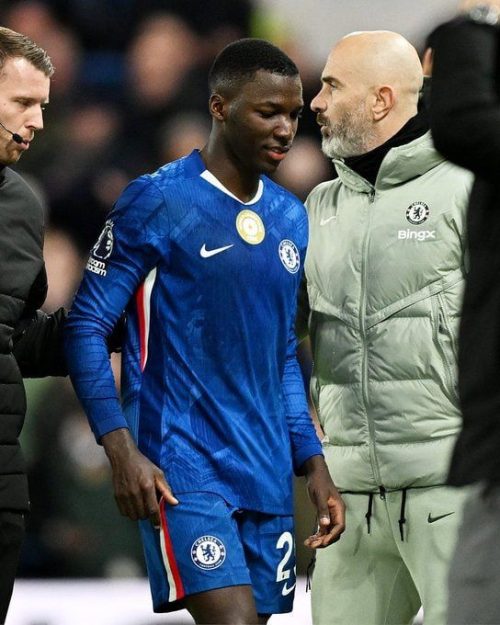
Kavanagh rejects red card review
Also on Sunday, for only the second time in the Premier League, a referee rejected a red card review at the pitchside monitor.
Chris Kavanagh had not given a foul against Jhon Arias. Unlike the Arsenal incident, the restart was a free kick to Aston Villa. The VAR, James Bell, felt Arias jumped in with both feet and endangered Boubacar Kamara’s safety.
Arias was off the floor and took a risk. He made contact with the top of Kamara’s boot. It did not have the level of force needed for a red card, even if it was not a great challenge.
A worse example came last season with Manchester United’s Lisandro Martinez. He escaped a red card after a challenge on Crystal Palace’s Daichi Kamada. Martinez jumped in with both feet, but a guideline says a player should not be sent off if the tackle stops before hitting the opponent. He landed in front of Kamada.
The VAR in that Palace vs Manchester United match was Chris Kavanagh.
There was no VAR review to upgrade Martinez’s yellow to a red. The KMI Panel reluctantly backed the decision unanimously. They said they “felt very strongly that this type of challenge has no place on the pitch”.
Should Chelsea’s goal have been ruled out for offside?
Another weekend brought another set of subjective offside calls.
Kavanagh again ruled out a Wolves goal because Arias was offside near goalkeeper Emiliano Martinez. There were similarities to Andrew Robertson’s offside for Liverpool at Manchester City when he ducked under the ball, though Arias was a clearer offence.
But a possible offside on Chelsea’s goal seemed to go unnoticed.
James floated a corner from the left. Trevoh Chalobah flicked a header into the net.
However, Enzo Fernandez was standing in an offside position. He was very close to Piero Hincapie and Cristhian Mosquera.
Did Fernandez influence the defenders’ decisions? If he had not been there, might they have had a better chance of stopping the header?
Fernandez did not attempt to play the ball. He was not directly engaging with Mosquera. But he did have his arm on Hincapie’s back.
A strong case can be made for offside. Once again, it comes down to consistency.
The VAR team reviewed it and decided Fernandez had no impact on the defenders. If we had not seen the Robertson decision, this might not even be a talking point.
Should Hincapie have seen red for an elbow?
Moments after Caicedo’s red card, Hincapie jumped for a ball with Chalobah. The Chelsea defender came off worse after contact from Hincapie’s arm to his face.
“I asked the referee and he said to me that it was not an elbow,” Maresca said. “He had a black eye with ice at half time. But they judge in a different way.”
Referees should not consider injury when making decisions, even though it does happen. A cut or bruise can result from many types of contact.
When assessing a possible elbow, referees consider several points. Was it an unnatural challenge? Was the fist clenched? Was the elbow thrown? Was extra force created? None of these applied. A yellow card was the correct decision.
Lewis Cook’s red card at Sunderland was much clearer. He raised his elbow to the head of Noah Sadiki. Although he did not clench his fist, the arm was lifted dangerously.
Author
Latest News




Advertisement
More on Sports