Willis Otieno questions fuel pricing as Kenyans face rising pump costs and cost-of-living pressure
By Emmanuel Rono, May 15, 2026Safina Party Deputy Party Leader Willis Otieno has questioned the fuel pricing and quality in Kenya, asking whether recent changes in the petroleum sector amount to genuine reform for consumers.
In a statement on his X account on Friday, May 15, 2026, Otieno stated that fuel used to be cheaper when it was cleaner, raising concerns that Kenyans are now paying higher prices for what he termed ‘lower-quality petroleum products’ while wages remain largely stagnant.
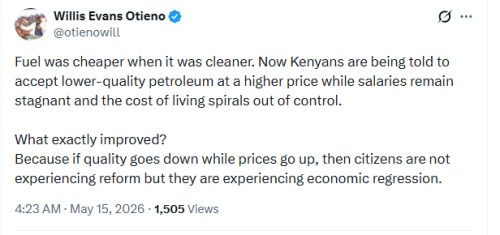
“Fuel was cheaper when it was cleaner. Now Kenyans are being told to accept lower-quality petroleum at a higher price while salaries remain stagnant and the cost of living spirals out of control,” Otieno wrote.
This comes following the latest pricing review of fuel announced on Thursday, May 14, indicating that the cost of Super Petrol and Diesel has gone up by Ksh16.65 and Ksh46.29 per litre, respectively, while the price of Kerosene remains unchanged.
Recent policy shift
He further questioned the value of recent policy shifts in the sector, asking what tangible improvements consumers are experiencing if both cost and perceived quality are moving in the wrong direction.
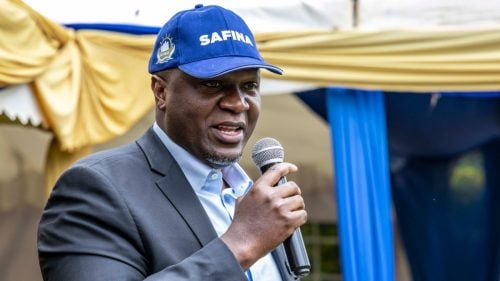
“What exactly improved? Because if quality goes down while prices go up, then citizens are not experiencing reform but they are experiencing economic regression,” Otieno questioned.
Ksh5B subsidy
According to the pricing breakdown released by EPRA for the period between May 15 and June 14, 2026, the government was forced to absorb part of the actual fuel costs through the Price Stabilisation mechanism, particularly on diesel and kerosene.

“The government will, in this cycle, cushion the consumers through the Petroleum Development Levy (PDL) Fund by utilising approximately Ksh. 5 billion to subsidise the prices of diesel and kerosene,” EPRA stated.
Without government intervention, diesel and kerosene prices would have been even higher. EPRA’s pricing sheet indicates that the government applied a ‘Price Stabilisation Deficit/Surplus’, which means the state absorbed part of the cost to prevent a major spike in pump prices.